 AGreenNest
Low-Light Indoor Plants
Gold Dust Dracaena: A Low-Light Shrub
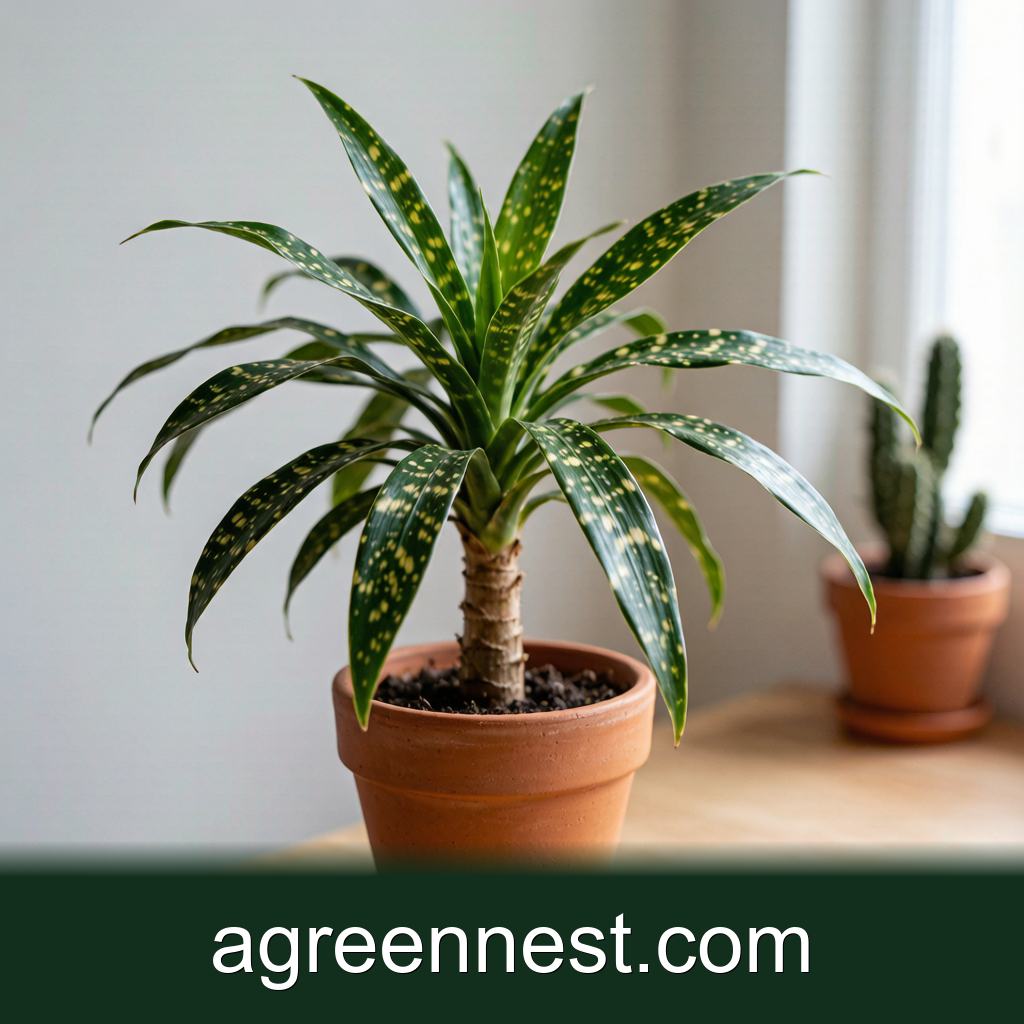
Gold Dust Dracaena is built for dim rooms. It tolerates bright, indirect light and actually suffers in hot direct sun. Water when the top 2-3 cm of soil feels dry (14 days between waterings), and keep humidity modest. A north or east window, or a few feet back from a bright one, is the sweet spot.
Most "low-light plants" are really "tolerant of abuse" plants that slowly fade in a dark room. The gold dust dracaena is one of the few that looks good doing it. Its leaves are deep green with scattered pale yellow spots, like paint flicked from a brush, and it holds that pattern even in a north-facing room where a calathea would have curled up weeks ago.
Where it comes from
Dracaena surculosa grows on the forest floor in West and Central Africa, where it receives dappled light filtered through a tall canopy. That origin explains the whole care story: it evolved to cope with shade and to wait between rains. In the wild it stays low and suckers into a clump, which is why it fits a shelf or a corner better than a tall upright dracaena.
It is not a cousin of the spotted begonia, despite the look. It belongs with the fragrant dracaena and the Madagascar dragon tree, but it is shorter and bushier than either, usually 30 to 60cm indoors.
The three demands
Treat these as the non-negotiables and the plant stays spotted and upright for years.
Light. Bright indirect light brings out the densest spotting, but it tolerates a north window or a spot 2 to 3m from an east window. What it will not take is hot direct sun, which bleaches the leaves to pale yellow. If the spots fade and the stems stretch, it needs more light, not less.
Water. Let the top 3 to 4cm of soil dry before watering, which works out to every 10 to 14 days in a warm room and every 3 weeks in winter. Pour until it runs from the drainage holes and empty the saucer. This is the one place people go wrong, so a moisture meter takes the guesswork out better than any schedule. Compare it with the general watering method if your other plants disagree.
Humidity and warmth. Aim for 40 to 50 percent humidity and 18 to 24°C. It shrugs off normal dry household air better than most dracaenas, but brown leaf tips appear below 35 percent. A mister versus humidifier decision matters more in winter than summer.
The one killer
Overwatering in a cold, drafty spot. The combination of wet soil and temperatures under 15°C rots the roots from the base up, and by the time the leaves yellow the damage is done. I lost my first one to exactly this: a windowsill over a radiator gap that stayed cold at night while the soil stayed damp. Keep it away from leaky windows and air conditioning vents, and it will outlast plants that cost three times as much.
If the base ever goes soft, act on the overwatering signs guide before the rot spreads.
How it fits with the other dracaenas
The dracaena group roundup covers the taller types, but the gold dust fits well in small spaces. Where a Dracaena fragrans needs headroom, this one sits on a bookshelf and fills a 30cm gap. It also pairs well in a grouped display: its spotted leaves break up the solid green of a snake plant or a ZZ plant beside it.
Styling it in a real room
Because it stays compact, it is ideal for the plant grouping rules that call for a mid-height filler between floor plants and hanging ones. On a plant shelf, set it one shelf below a trailing pothos so the spots catch the light. It also handles a north window better than almost anything else you could put there, which is why it tops many low-light lists alongside the best low-light houseplants.
Frequently Asked Questions
Why are the yellow spots on my gold dust dracaena fading?
The plant is getting too little light. Move it closer to a window or to a brighter indirect spot; the speckling returns as it makes new leaves. Old faded leaves will not re-spotted, so trim them once new growth shows color.
Is gold dust dracaena toxic to pets?
Yes, like all dracaenas it contains saponins that upset cats and dogs if chewed. Keep it on a shelf or in a room pets cannot reach, and check the pet-safe plant list for alternatives if you share space with a grazer.
How often should I repot it?
Every two to three years, or when roots circle the pot. Use a well-draining mix with extra perlite, because the one killer is wet soil. Spring is the right time, and go only one pot size up.
Why are the leaf tips turning brown?
Usually dry air below 35 percent or a build-up of fertilizer salts. Flush the soil with plain water every couple of months and lift the humidity a little in winter.
Can it grow under a grow light instead of a window?
Yes. A grow light on a timer 10 to 12 hours a day keeps the spotting vivid in a basement or windowless office where no natural light reaches.
Gold dust dracaena is the low-light plant I point people to when they want something that looks intentional rather than merely alive. Give it bright indirect light, water by feel every week or two, and keep it warm, and the spotted leaves carry a dim corner for years. If you are building a low-light collection around it, the complete low-light care path lays out the next steps in the right order.
Sources & further reading
GreenNest authors research and write every guide independently. The external links below are reputable references we recommend for deeper reading — they are not the sources we copied from.
- UF/IFAS Gardening Solutions — UF/IFAS
- Clemson Home & Garden Information Center — Clemson Extension
- Royal Horticultural Society — Houseplant care — RHS
Recommended Tools for Low-Light Indoor Plants Care
Free, no-signup helpers matched to this guide.
Free Ebooks to Explore
Downloadable handbooks — no email required.
Share Your Plant Story
Grown something tricky, or found a trick that finally worked? Tell us in the comments, or see what other readers are sharing on our Community page. The best reader tips get folded back into our guides.
Join the Conversation
Have a tip or a question about Gold Dust Dracaena: A Low-Light Shrub? Share it below — comments are saved on our server.