 AGreenNest
Succulent Care
Paddle Plant Care: The Flapjack Succulent
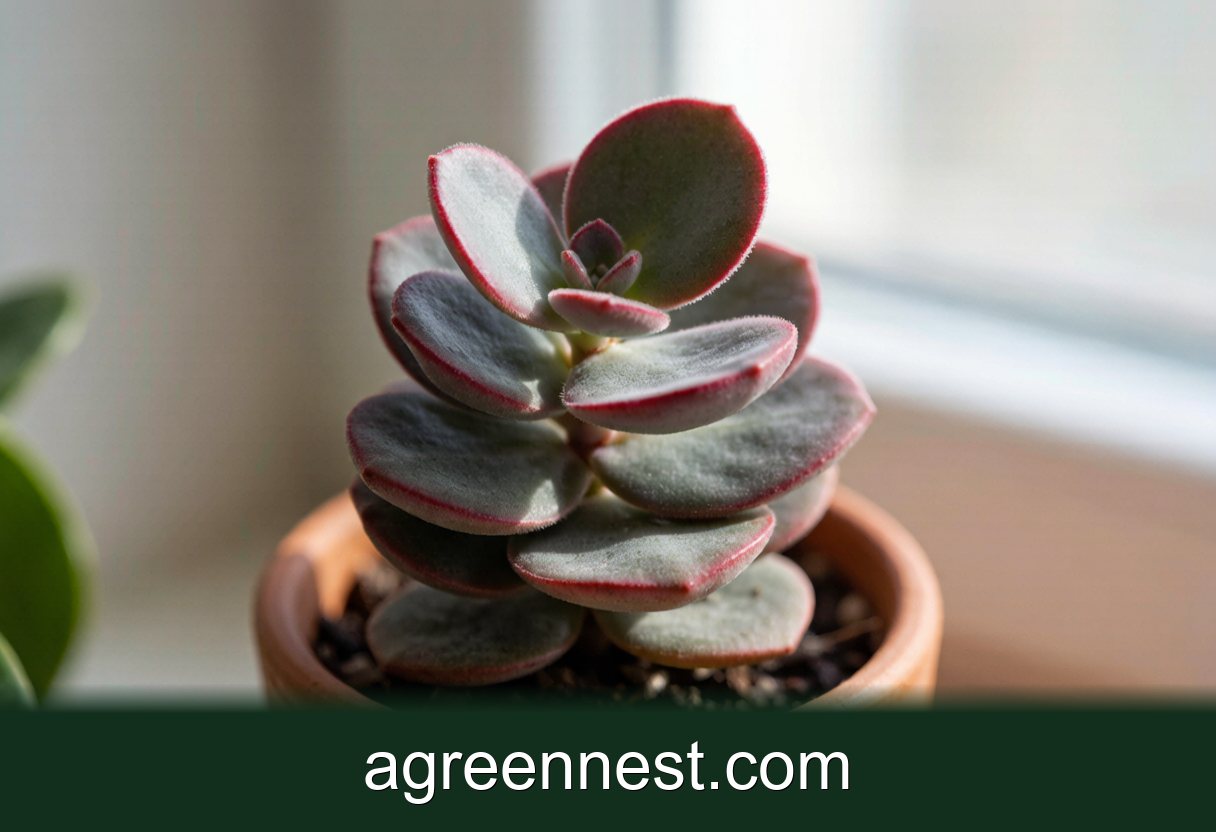
The paddle plant (Kalanchoe luciae) is a stacking succulent whose flat leaves flush red at the edges under bright light. Give it 4 to 6 hours of direct or bright indirect sun, water only when the top 3 to 4cm of soil dries, about every 10 to 14 days in summer, and grow it in gritty, fast-draining mix.
The first time a paddle plant blushed for me, I thought I had scorched it. The leaf edges had gone a deep coral red overnight, and I nearly moved it out of the sun in a panic. That red is the whole point. Kalanchoe luciae saves its best colour for the plants that get the most light, and mine had finally landed on the right windowsill.
Where the flapjack gets its shape
Kalanchoe luciae comes from the rocky highlands of southern Africa, where it grows in thin soil, strong sun, and long dry spells. It is often sold as flapjack, paddle plant, or desert cabbage, and it is frequently confused with its cousin Kalanchoe thyrsiflora. Our complete succulent guide covers the family habits, but this one has a look all its own.
The leaves are flat, round, and stacked in opposite pairs so a young plant looks like a short pile of pancakes. A mature rosette sits 20 to 30cm tall and just as wide, with grey-green paddles dusted in the same powdery farina you see on echeverias. Give it enough light and the top and rim of each leaf turns rose to burgundy.
Why does it turn red at the edges?
That blush is a stress response, and in this case stress is good. Bright light and cool nights push the plant to build red pigments that act like a sunscreen over the green chlorophyll. A well-lit paddle plant glows red at the rim and fades to grey-green in the centre.
A plant kept in dim light stays flat green and grows floppy. So the colour is your best gauge of whether the light is right. If yours is green all over, it wants more sun, not less. The light and temperature guide explains how that light and warmth combine to trigger the pigment.
How much light does a paddle plant need?
Aim for 4 to 6 hours of direct or very bright indirect light a day. A south or west window is ideal indoors. This is a sun lover, more so than most shelf succulents, and it colours up best on a bright sill with some gentle direct sun.
Too little light and the stack stretches, the gaps between leaf pairs widen, and the whole plant leans toward the glass. If your brightest window still falls short, especially through a dim winter, run a grow light for 10 to 12 hours a day about 20 to 30cm above the leaves. Do watch for scorch on a hot summer pane, where the farina can burn if leaves press the glass.
How often should I water it?
Water only when the top 3 to 4cm of soil is fully dry, roughly every 10 to 14 days in spring and summer and every 3 to 4 weeks in winter. Soak the pot until water runs from the drainage hole, then let it dry out hard before the next drink.
The mistake I see most is a small splash on a fixed schedule, which keeps the roots damp and rots the base. Because those flat leaves hold a lot of water, a paddle plant copes with a missed watering far better than an early one. A moisture meter takes the guesswork out of the slow winter dry-down, and the common mistakes guide lists the other traps that catch owners out.
Soil, pot, and keeping the base dry
Use a gritty, fast-draining mix: 2 parts cactus or succulent soil to 1 part pumice or coarse perlite. It should shed water in seconds, never hold a soggy clump. If your bagged mix feels heavy, build a lighter one with our succulent soil recipe.
A terracotta pot pulls moisture from the root zone and suits this plant far better than a glazed one. Pick a pot only slightly wider than the rosette, with a drainage hole, and pot up just one size when the roots fill the current one, usually every 2 to 3 years.
Why is my paddle plant growing a tall stalk and dying?
This one surprises people. Kalanchoe luciae is monocarpic, which means the main rosette flowers once and then dies. When a mature plant sends up a tall spike of small, tubular, sweet-scented yellow flowers, that rosette is spending its last energy.
Do not panic and do not treat it as a disease. Before or after it blooms, the plant almost always produces offsets, or pups, around the base. Those carry on after the parent fades. You can let it flower for the show, then remove the spent rosette once the pups are established. It is the plant's natural cycle, not a care failure.
How do I make more of them?
Offsets are the easy route. In spring, twist off a rooted pup from the base and set it in gritty mix, where it roots in 2 to 3 weeks. Leaf cuttings work too: remove a whole healthy leaf, let the cut end callous for a day or two, then rest it on dry mix until a tiny plantlet forms at the base. The three propagation methods guide covers the timing, and the first month care guide walks through settling a new plant in.
Frequently Asked Questions
Q: Is the paddle plant toxic to cats and dogs?
A: Yes. Like other Kalanchoe species it contains compounds that can upset a pet's stomach and heart rhythm if eaten. Keep it well out of reach of curious cats and dogs, and choose a safer succulent if you cannot.
Q: Why are the lower leaves going soft and see-through?
A: Soft, translucent lower leaves usually mean rot from too much water, not thirst. Check the base: a healthy rosette is firm, a rotting one is mushy and may smell musty. If you catch it early, the rotting succulent rescue walks through the dry, cut, and repot steps.
Q: My paddle plant is green and floppy, not red. What is wrong?
A: Not enough light. The red rim only appears with strong sun, and a green, leaning plant is stretching toward the window. Move it to your brightest sill or add a grow light, and expect the colour to build over a few weeks.
Q: Should I remove the flower spike?
A: You can. Since the flowering rosette dies afterward, some growers cut the spike early to redirect energy into the offsets. I usually let it bloom for the scent and the bees, then remove the spent rosette once the pups have taken hold.
Q: The leaves look wrinkled and thin. Is that a problem?
A: That is thirst, not rot. Wrinkled but firm leaves plump back within a day or two of a thorough soak. The wrinkled leaves guide helps you tell dry, papery thirst from wet, soft rot.
The paddle plant rewards light more than fuss: give it a bright sill, a hard dry-down between waters, and grit under its roots, and it repays you with those stacked, red-rimmed paddles. Let it flower when its time comes, keep the pups, and the plant carries on. For the wider picture, our complete succulent guide is the page I would read next.
Sources & further reading
GreenNest authors research and write every guide independently. The external links below are reputable references we recommend for deeper reading — they are not the sources we copied from.
- Royal Horticultural Society — Houseplant care — RHS
- Missouri Botanical Garden — Missouri Botanical Garden
- NC State Extension — Plant Toolbox — NC State Extension
Recommended Tools for Succulent Care
Free, no-signup helpers matched to this guide.
Free Ebooks to Explore
Downloadable handbooks — no email required.
Free Ebook
The AGreenNest Succulent Care Handbook
The complete, beginner-to-confident guide to growing fat, happy succulents — 10 chapters and a 20-plant directory.
Share Your Plant Story
Grown something tricky, or found a trick that finally worked? Tell us in the comments, or see what other readers are sharing on our Community page. The best reader tips get folded back into our guides.
Join the Conversation
Have a tip or a question about Paddle Plant Care: The Flapjack Succulent? Share it below — comments are saved on our server.