 AGreenNest
Plant Care Accessories
How to Set Up a Grow Light Timer (Step by Step)
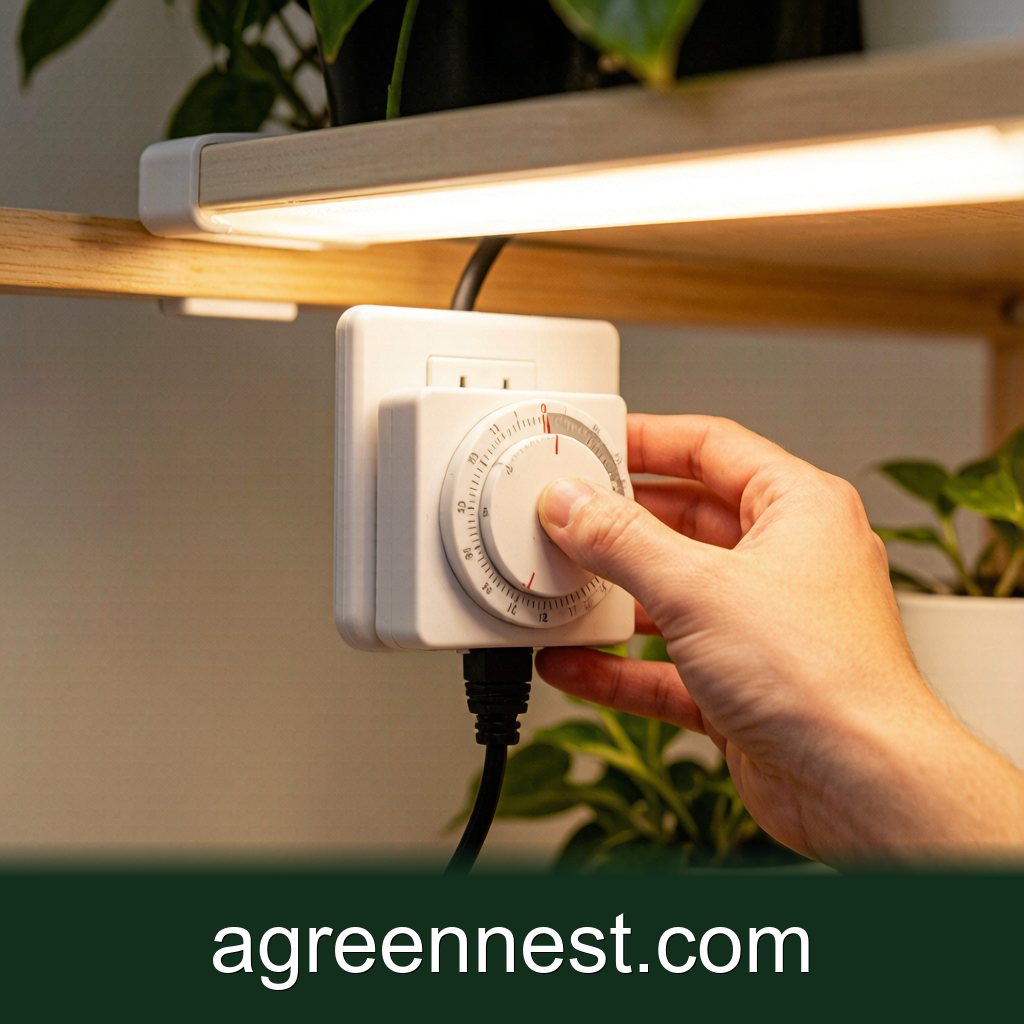
Pick the accessory that matches the job: for A Grow Light Timer (Step By Step), a calibrated tool removes the guesswork. Calibrate it once (most read low out of the box), then measure at the root zone, not the air. Check a few hours of direct sun the same way, and let the numbers drive your routine.
My first seedling tray grew tall and floppy because I forgot to switch the light off, and the plants never got a dark period to rest. A timer fixed that in five minutes, and it has run my shelf ever since. Here is how to wire one up and set the hours without guessing.
Mechanical, Digital, or Wifi: Which Timer Should You Buy?
A mechanical timer is the dial type with 15 or 30 minute pins, priced $6 to $10, and needs no wifi or battery. A digital timer costs $12 to $25, sets on and off to the minute, and keeps its program on a coin cell during outages. A wifi timer runs $20 to $35 and adds app scheduling plus an away mode, which is handy if you travel. For a single shelf I still use a mechanical one, since there is nothing to crash.
How Do You Check the Load Before Plugging In?
Read the watt rating on the timer box. A 4-foot LED fixture draws about 30W, which is well inside a standard 15-amp timer rated to 1800W. The danger starts when you stack three fixtures on one timer and approach 500W, or when you use a timer not rated for the load. Total the watts before you commit, and leave headroom of at least 20 percent so a warm day never pushes you past the limit. If you are choosing the light itself, our 2026 grow light roundup notes the draw of each model.
Step-by-Step Wiring and Programming
- Plug the timer into the wall outlet and leave the light unplugged for now.
- Set the current time using the dial or the digital buttons, matching AM and PM.
- Program the on and off blocks. On a mechanical timer push down the pins for the hours you want light.
- Plug the grow light into the timer's outlet, not the wall.
- Test by turning the dial forward (mechanical) or running a manual on/off cycle (digital) to confirm the light responds.
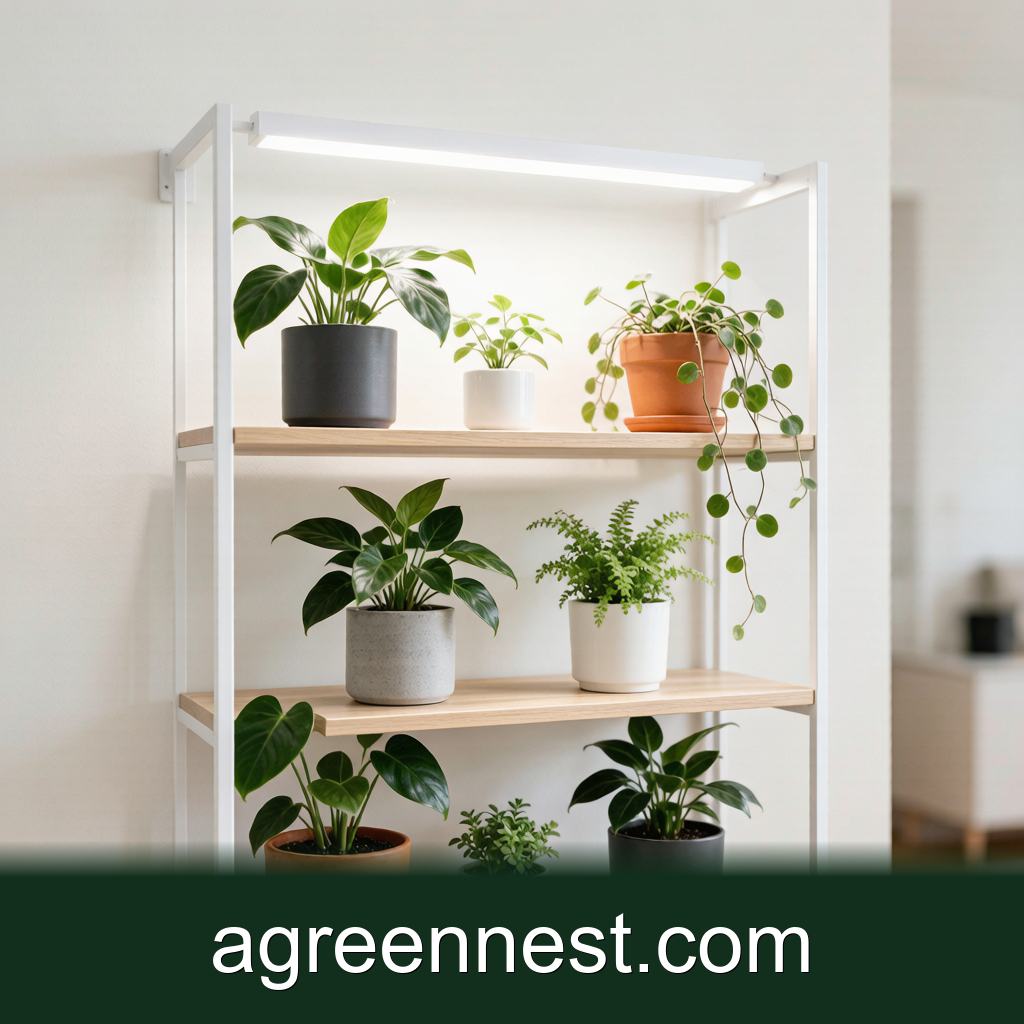
This whole sequence takes under ten minutes, and mistakes are rare if you follow the order. Mount the fixture only after the timer controls it, which the choosing and using grow lights guide covers in more detail.
How Many Hours Does Each Plant Type Need?
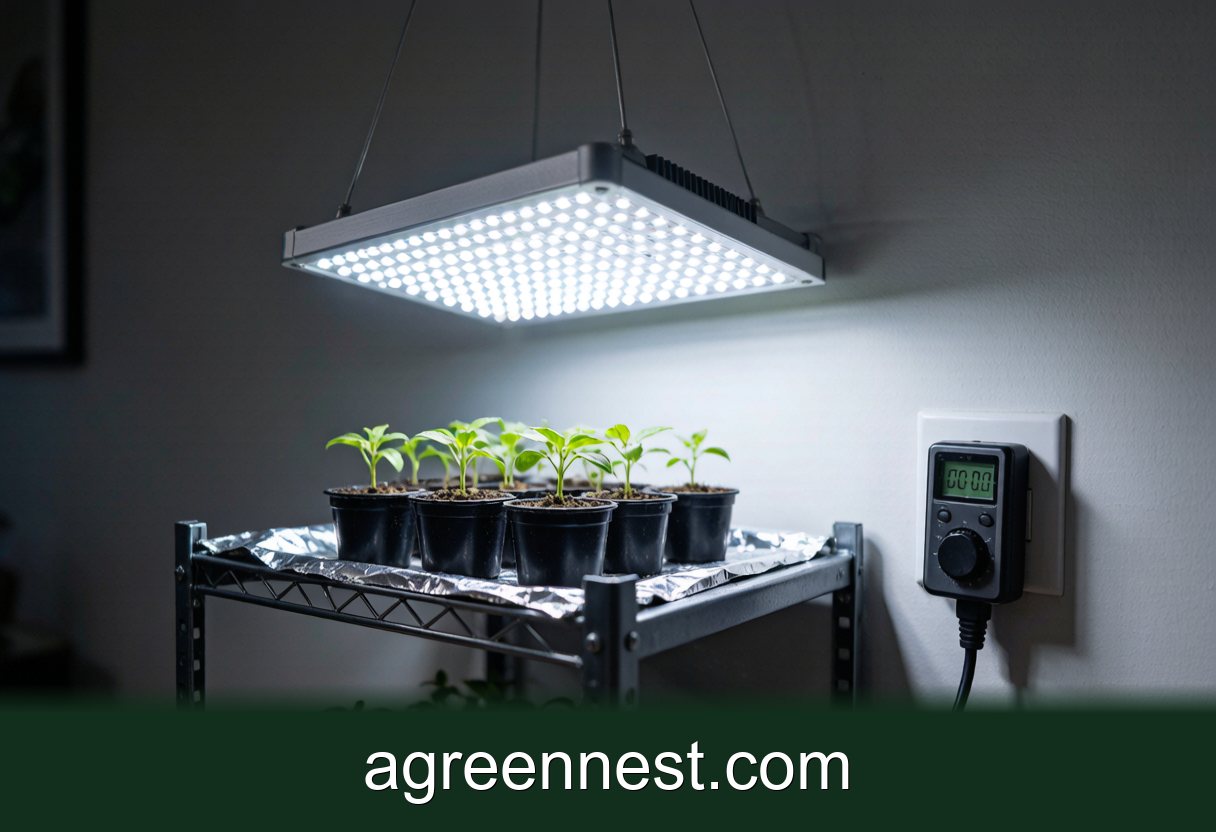
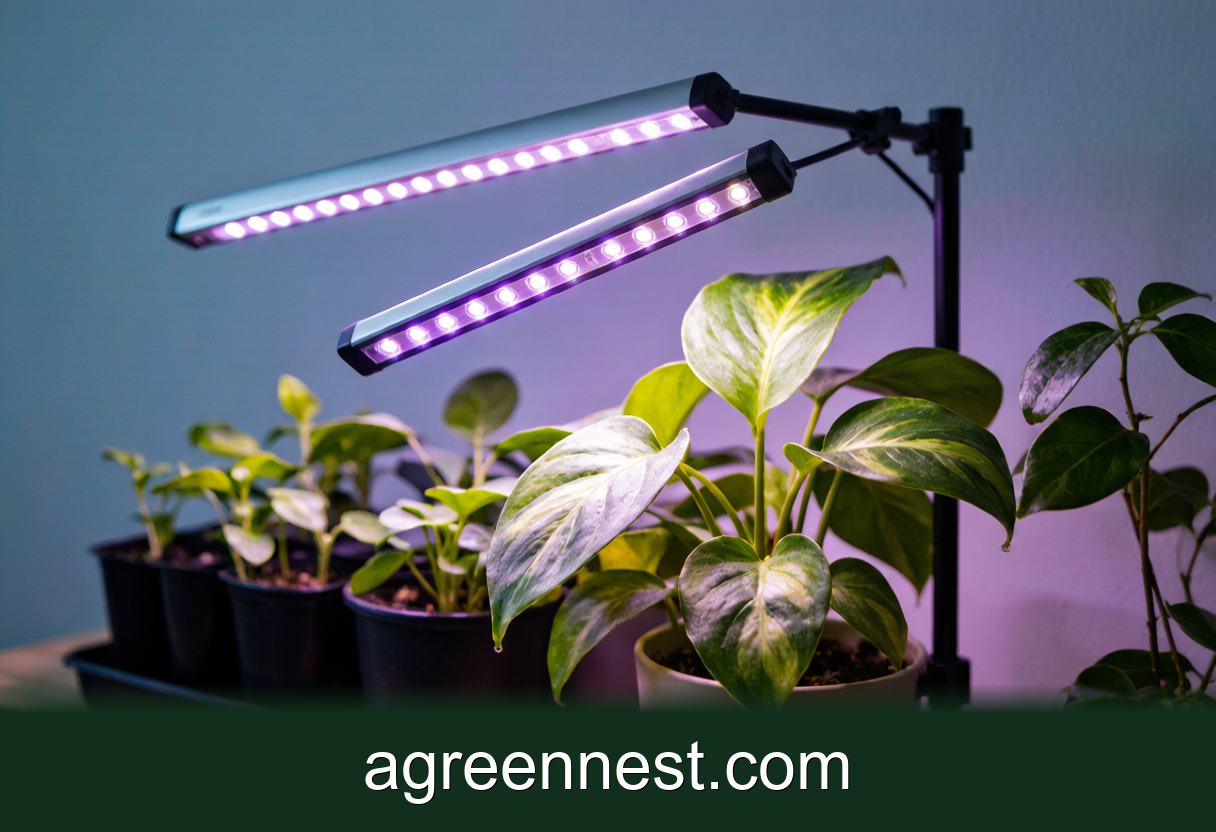
Seedlings want a long day, about 16 to 18 hours, because they are building structure fast and have no reserves. Mature succulents do better on 12 to 14 hours, since they evolved with a clear day and night and will stretch if lit around the clock. Low-light foliage like pothos (Epipremnum aureum) is happy with 10 to 12 hours. I set my shelf to 14 hours for mixed use and adjust by group. For the succulent numbers specifically, succulent light and temperature needs lays out the daily minimums.
A few plants are short-day, meaning they flower only when the night passes 12 hours. Christmas cactus and poinsettia fall in this group, so keep their timer under 12 hours through autumn or they refuse to set buds. Most leafy houseplants do not care either way, but when you grow a known short-day species the schedule is the difference between blooms and bare stems.
What Are the Most Common Photoperiod Mistakes?
The biggest error is no dark period at all. Plants use the night for respiration and to set their internal clock, so 24-hour light often makes them weak and leggy. The second is seasonal drift, where you keep a summer 18-hour schedule into winter and over-dry the soil. A third is treating every species the same, which is why the low light versus direct sun guide is worth a read before you program. Beginners also forget to reset the clock after a power blink, so check the timer monthly.
How Do You Run a Timer Safely?
Keep the timer and the plug well above any saucer or tray, since water and a live outlet are a poor mix. Use a GFCI outlet in a basement or greenhouse, and do not daisy-chain timers. If the fixture has a fan, that is another few watts to add to your load math. A lettuce crop (Lactuca sativa) under a steady 12-hour cycle stays compact and needs no extra fuss. New to this gear? The beginner grow light guide walks through the safer setups first.
One more safety note: avoid cheap extension cords, which overheat when a 30W to 60W load runs 16 hours a day through a thin wire. Use a 14-gauge cord at minimum, or better, move the shelf closer to a wall outlet. Also keep the timer away from curious pets, because a chewed cord turns a simple schedule into a shock risk. I label each timer with the plant group and the hours, so a house sitter can read the shelf at a glance.
Frequently Asked Questions
Q: Can one timer control several grow lights at once?
A: Yes, as long as the combined wattage stays under the timer's rating, which is usually 1800W. Three 30W LED bars total just 90W and share one timer with room to spare.
Q: What happens to the schedule during a power outage?
A: A digital or wifi timer keeps the time on its backup cell and resumes correctly, while a mechanical timer also resumes but may drift a few minutes if the dial was bumped.
Q: Do succulents really need a timer, or can I use daylight?
A: A timer helps in winter when windows give under 10 hours. Set it to 12 to 14 hours so the plants get a steady day length instead of a dim, inconsistent one.
A timer turns a grow light from a thing you must remember into a thing that just works, and the right photoperiod keeps seedlings compact and succulents from stretching. Start with a mechanical dial if you are unsure, then move to digital once you know your hours. The fixture the timer controls matters less than the schedule you set, so get the hours right first.
Recommended Tools for Plant Care Accessories Care
Free, no-signup helpers matched to this guide.
Free Ebooks to Explore
Downloadable handbooks — no email required.
Free Ebook
The AGreenNest Succulent Care Handbook
The complete, beginner-to-confident guide to growing fat, happy succulents — 10 chapters and a 20-plant directory.
Free Ebook
Haworthia & Haworthiopsis Care Handbook
A focused guide to the striped, forgiving Haworthia clan.
Sources & further reading
GreenNest authors research and write every guide independently. The external links below are reputable references we recommend for deeper reading — they are not the sources we copied from.
- UF/IFAS Gardening Solutions — UF/IFAS
- University of Minnesota Extension — U Minnesota Extension
- NC State Extension — Plant Toolbox — NC State Extension
Share Your Plant Story
Grown something tricky, or found a trick that finally worked? Tell us in the comments, or see what other readers are sharing on our Community page. The best reader tips get folded back into our guides.
Join the Conversation
Have a tip or a question about How to Set Up a Grow Light Timer (Step by Step)? Share it below — comments are saved on our server.