 AGreenNest
Succulent Care
Best Soil for Succulents: DIY Gritty Mix Recipe
If you are new to Best Soil for Succulents, keep it simple: bright, indirect light (a south or east windowsill is ideal), and water sparsely. These plants hate wet feet, so always let the soil dry completely between drinks (5 days between waterings).
Walk down any garden aisle and you will see bags labeled potting soil. Almost all of them will quietly harm your succulents. The best soil for succulents is nothing like the fluffy stuff meant for ferns and tomatoes. My first Echeveria elegans died in standard mix within three weeks, and the cause was plain to see once I pulled it free.
Why Regular Potting Soil Kills Succulents
Standard potting soil is designed to hold water. It is full of peat and fine compost that stay damp for days after a single watering. Succulents keep water in their leaves and have shallow roots, so they rot in that sponge-like environment. The roots turn black, the plant wobbles, and the lower leaves go mushy from the bottom up. The real fix is not just less water. It is the right soil that drains in minutes rather than hours.
Most bagged mixes also include a wetting agent that keeps the surface damp on purpose. That helps tomatoes but drowns a desert plant. I learned this after losing two Haworthia in a single rainy spring, both planted in a mix that looked innocent enough at the garden center.
What Does a Gritty Mix Actually Contain?
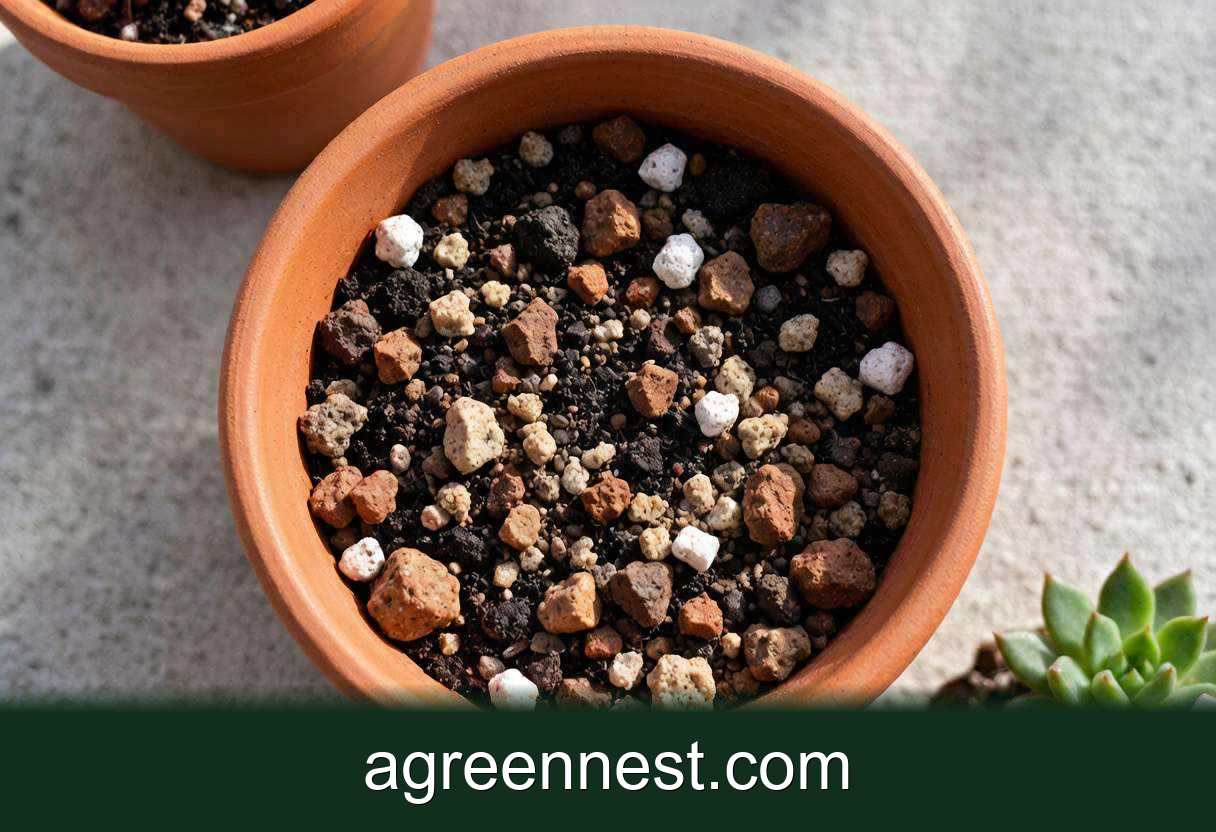
A proper succulent mix is mostly inorganic grit with a little organic matter for slow feeding. The goal is air pockets around the roots and fast drainage. Four ingredients build the base of almost every good blend.
Coarse sand or horticultural grit improves drainage and adds weight so top-heavy pots stay put. Perlite or pumice gives white volcanic bits that hold air instead of water. Small crushed gravel or turface keeps the structure stable when wet. A little cactus soil provides a small nutrient base without the moisture trap. Each of these plays its own job in the pot.
Sand anchors the mix so a tall rosette does not topple in a breeze. Perlite keeps the top loose so new roots can break through with ease. Gravel stops the soil from turning to soup after a heavy rain. The small soil portion feeds slowly, and only slowly, which is exactly what succulents prefer. The finished mix should feel loose and crunchy, never clumpy or muddy after you add water.
How Do You Build the GreenNest Gritty Recipe?
Here is the blend I mix in a bucket on the patio, easy enough for a Saturday morning. Combine 3 parts coarse sand, 3 parts perlite, 2 parts cactus soil, and 2 parts small crushed gravel. That comes to roughly a 40/40/20 split of grit, mineral, and soil by volume.
For extra dry lovers like Lithops or Haworthia cooperi, push the ratio to 50 percent grit and 50 percent perlite with almost no soil. Use coarse builder's sand and never fine play sand, because the fine grade compacts into a paste. Rinse gravel to remove dust that would clog the pores. Mix in a wide tray with your hands, and wet the blend lightly only after it sits in the pot, never before you measure. Store the extra mix in a dry bin where it keeps for several years.
Which Pot and Drainage Setup Works Best?
Soil is only half the battle. Your pot must also drain. Always choose a container with a drainage hole, and skip decorative pots without one unless you nest a plastic liner inside. Terracotta is the champion here. Its porous walls pull moisture from the soil, and that speeds drying while protecting the roots.
Pair gritty soil with a terracotta pot and you solve most succulent problems at once. Aim for a pot that is only one size larger than the root ball, about 2 to 3 cm wider in diameter. Keep the plant in bright indirect light at around 65 to 75°F (18 to 24°C) while it settles into the new home. A saucer is fine as long as you empty it ten minutes after watering.
How Do You Top Dress and Finish the Pot?
A top dressing of small gravel, crushed granite, or decorative grit does more than look neat. It keeps the lowest leaves off damp soil, which cuts rot and removes pest hiding spots. Spread a half-inch layer after potting, but avoid the plant's crown where the stem meets the mix.
This layer also stops soil from splashing onto leaves during watering, a common cause of marks and mildew on a fat leaf. For a clean look, match the grit color to your decor, because the function stays the same no matter the shade. A tidy top dressing makes the whole pot read as intentional rather than hastily planted.
How Can You Tell the Soil Is Wrong?
Watch the surface and the smell. Soil that stays wet more than 4 to 5 days after watering is a red flag. A musty odor rising from the pot means trouble below. Lower leaves that yellow and drop while the soil still feels damp are a clear signal. A white crust of salt on top shows mineral buildup from hard water.
Any of these means your mix is too rich or too dense. Repot into gritty soil as soon as you notice them. Wait 3 to 5 days after the move before the first light watering, and keep the crown above the soil line. Catch the problem early and the plant bounces back within a single season. Ignore it and the rot climbs the stem within a month.
Frequently Asked Questions
Q: Can I use regular potting soil for succulents?
A: No. Regular potting soil holds too much water and causes root rot. Always use a gritty, fast-draining succulent mix built from sand, perlite, and a little cactus soil.
Q: What is the best DIY succulent soil recipe?
A: Mix 3 parts coarse grit, 3 parts perlite, 2 parts cactus soil, and 2 parts gravel for a fast-draining 40/40/20 blend. Dry lovers need closer to 50 percent grit.
Q: Do succulents need a drainage hole?
A: Yes. A drainage hole is essential. Pair gritty soil with a terracotta pot to keep the roots dry and healthy through the growing season.
Great soil is the foundation of every healthy succulent. Mix your own gritty blend at home using the recipe above, then grab our free light calculator to pair the right spot with the right mix. For a complete repotting checklist, read our succulent ebook and keep your plants thriving for years.
Recommended Tools for Succulent Care
Free, no-signup helpers matched to this guide.
Free Ebooks to Explore
Downloadable handbooks — no email required.
Free Ebook
The AGreenNest Succulent Care Handbook
The complete, beginner-to-confident guide to growing fat, happy succulents — 10 chapters and a 20-plant directory.
Free Ebook
Haworthia & Haworthiopsis Care Handbook
A focused guide to the striped, forgiving Haworthia clan.
Sources & further reading
GreenNest authors research and write every guide independently. The external links below are reputable references we recommend for deeper reading — they are not the sources we copied from.
- UF/IFAS Gardening Solutions — UF/IFAS
- Royal Horticultural Society — Houseplant care — RHS
- NC State Extension — Plant Toolbox — NC State Extension
Share Your Plant Story
Grown something tricky, or found a trick that finally worked? Tell us in the comments, or see what other readers are sharing on our Community page. The best reader tips get folded back into our guides.
Join the Conversation
Have a tip or a question about Best Soil for Succulents: DIY Gritty Mix Recipe? Share it below — comments are saved on our server.