 AGreenNest
Low-Light Indoor Plants
Aglaonema vs Dieffenbachia: Spot the Difference
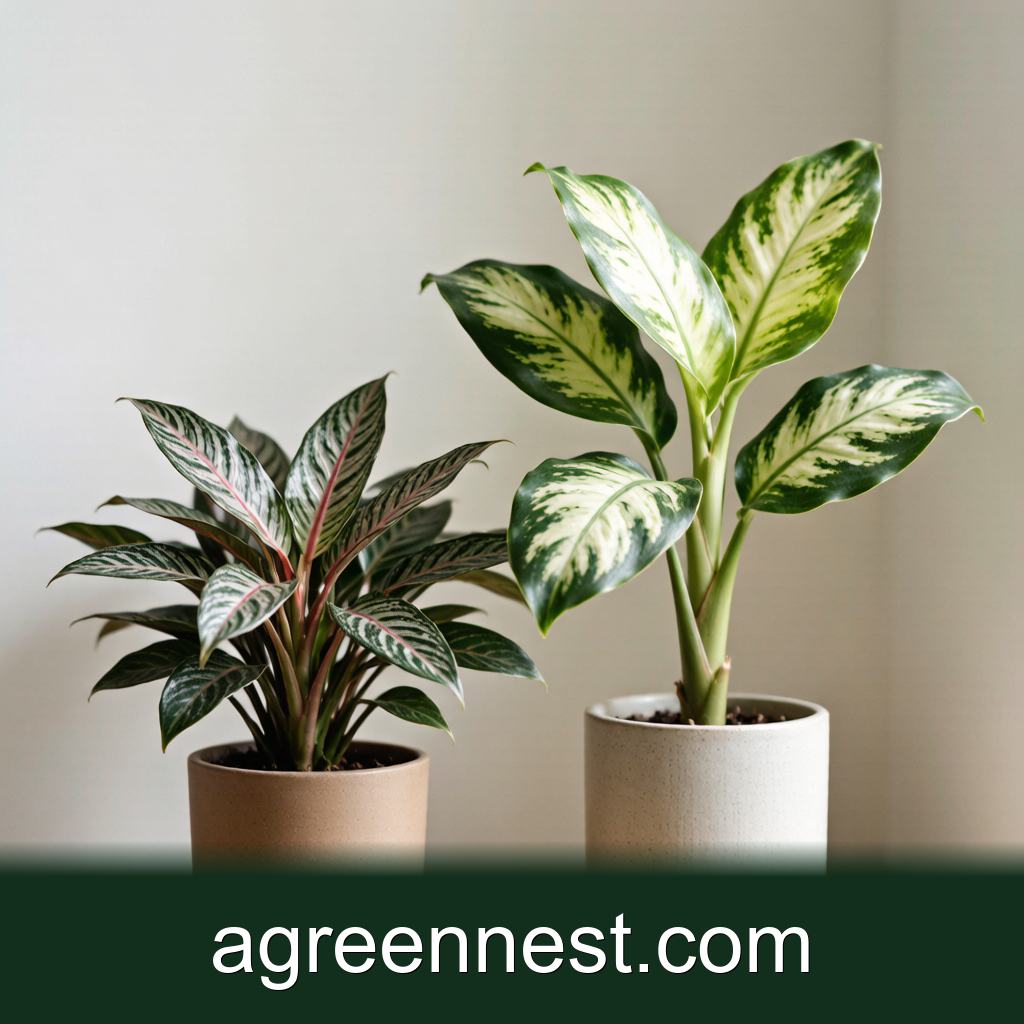
Do not overthink Aglaonema vs Dieffenbachia. It thrives in low to medium light and asks for little: water when the top layer of soil dries (10 days between waterings), and keep it away from harsh midday sun. A slightly lean soil and a stable, warm spot are all it needs to look good through the year.
Nurseries stack both on the low light shelf, and for years I could not tell my Aglaonema commutatum from the Dieffenbachia seguine beside it. One winter the Dieffenbachia outgrew its corner and started leaning toward the ceiling, while the Aglaonema sat politely on the side table and asked for nothing. They are cousins in the arum family, both happy in a dim room, and both easy to mix up by leaf alone. The difference matters most once you share the room with children, cats, or a ceiling that is not very high. I have since learned to read them in seconds, and you can too with a little practice.
How Do You Tell Aglaonema and Dieffenbachia Apart?
Look at leaf size first. Its slim, lance shaped leaves run 15 to 25 centimetres long and often carry silver, pink, or red veins along a darker midrib. Broad, oval leaves 30 to 50 centimetres long carry cream or yellow blotches scattered across green. A mature Dieffenbachia leaf is roughly twice the width of an Aglaonema leaf. The stems tell the rest of the story. This one clumps from the base and stays low and bushy. Dieffenbachia rises on a single cane like stem that sheds lower leaves as it climbs, leaving a bare trunk with a tuft on top. If you see a plant that looks like a small palm tree on one stem, it is Dieffenbachia. Touch the leaf and the Dieffenbachia feels thicker and more leathery than the softer Aglaonema.
Which One Stays Smaller in a Flat?
Aglaonema wins on size control. Most varieties top out at 30 to 60 centimetres and widen slowly, so they fit a shelf for years. By nature a climber, it reaches 60 to 150 centimetres indoors and sometimes brushes the ceiling in a bright enough spot. Our low light houseplant shortlist ranks Aglaonema higher where space is tight. If you want height without the bulk, Dieffenbachia fills a bare corner, but accept that you will prune or repot it every two to three years, because a 150 centimetre cane in a 20 centimetre pot gets top heavy and tips. A gentle twist of the pot each month keeps it from leaning toward the window as it reaches for light.
Which Tolerates Lower Light?
Both cope with 100 to 300 foot candles, the light you get two metres from a bright window or in a north facing room. Aglaonema is the tougher of the two in genuine gloom and keeps its colour at the lower end. Dieffenbachia keeps its blotches only with a bit more light, so in a dark corner the cream fades to plain green and the stems stretch. When the room is truly dim, a grow light for 10 to 12 hours a day keeps both looking sharp. Remember that low light slows growth, which means you water less often, not more, since a slow plant drinks little.
The low light myths piece explains why low light still means some light, not a cupboard.
How Often Should You Water Each One?
They drink alike but not identically. Water Aglaonema when the top 3 to 4 centimetres of soil is dry, about every 7 to 10 days in summer and every two to three weeks in winter. Dieffenbachia wants the top 2 to 3 centimetres to dry, slightly more often, every 5 to 7 days in the growth season, because its bigger leaves lose more water. Neither plant likes a wet base. Our low light watering mistakes guide covers the yellow leaf drop both show when the pot stays soggy. A moisture meter takes the guesswork out in winter when the dry down is slow. In spring, when growth resumes, expect to water about once a week as the roots wake up and the leaves push out new size.
Are Both Safe Around Pets?
No, and this is the biggest reason to choose. Both contain calcium oxalate crystals that sting the mouth, but Dieffenbachia is far worse. Chewing a Dieffenbachia leaf releases needles that swell the tongue and throat and can briefly rob a person of speech, which is why it is called dumb cane. Aglaonema causes mouth irritation and drooling but is less severe. Keep either plant where a pet or toddler cannot reach the leaves. If that is a worry, Aglaonema is the calmer choice, and our pet safe houseplant list points to species with no oxalate risk at all. Wash your hands after pruning, because the sap can also irritate skin.
Which Should You Buy?
Pick Aglaonema if you want a tidy, slow plant for a shelf, or if children and pets share the room. Pick Dieffenbachia if you have the floor space and want a bold, leafy statement that grows into a small tree. You can skip a watering now and then, and dim light is shrugged off as well, so height and toxicity decide, not care difficulty. For care detail on each, the Aglaonema care guide and the Dieffenbachia low light guide go deeper on soil, feeding, and pruning. Try one of each in small pots before committing to a large specimen, since the two thrive under nearly the same conditions.
Frequently Asked Questions
Q: My dieffenbachia leaves turned yellow at the edges but the aglaonema beside it is fine. Why?
A: Dieffenbachia has finer roots and a bigger leaf load, so it feels drought sooner and shows tip yellowing first. Check the top 2 to 3 centimetres of its soil; if it is dry, water, and the next leaves should hold their colour.
Q: Can I grow both in one wide pot?
A: You can, since they share light, water, and soil needs. Use a shallow, wide bowl with drainage and give the Dieffenbachia the back so its cane has room to rise. Keep the mix from sitting wet or the Aglaonema roots sour.
Q: Which one is safer if my toddler grabs a leaf?
A: Aglaonema is the lesser risk. Both will cause mouth pain and drooling, but Dieffenbachia can swell the tongue enough to affect speech for hours. Either way, move the pot out of reach and call a poison line if a child actually chews one.
Aglaonema and Dieffenbachia share the low light shelf and the same easy care, but leaf size, final height, and the bite of the sap set them apart. For most homes the compact, gentler Aglaonema is the safer everyday pick, while Dieffenbachia earns its spot as a floor specimen. Before you choose a corner, run your room's light through our free light calculator so you know which one your window can truly support.
Sources & further reading
GreenNest authors research and write every guide independently. The external links below are reputable references we recommend for deeper reading — they are not the sources we copied from.
- Cornell Garden-Based Learning — Cornell University
- Missouri Botanical Garden — Missouri Botanical Garden
- Aggie Horticulture (Texas A&M) — Texas A&M AgriLife
Recommended Tools for Low-Light Indoor Plants Care
Free, no-signup helpers matched to this guide.
Free Ebooks to Explore
Downloadable handbooks — no email required.
Share Your Plant Story
Grown something tricky, or found a trick that finally worked? Tell us in the comments, or see what other readers are sharing on our Community page. The best reader tips get folded back into our guides.
Join the Conversation
Have a tip or a question about Aglaonema vs Dieffenbachia: Spot the Difference? Share it below — comments are saved on our server.