 AGreenNest
Low-Light Indoor Plants
10 Best Low-Light Plants for a North Window
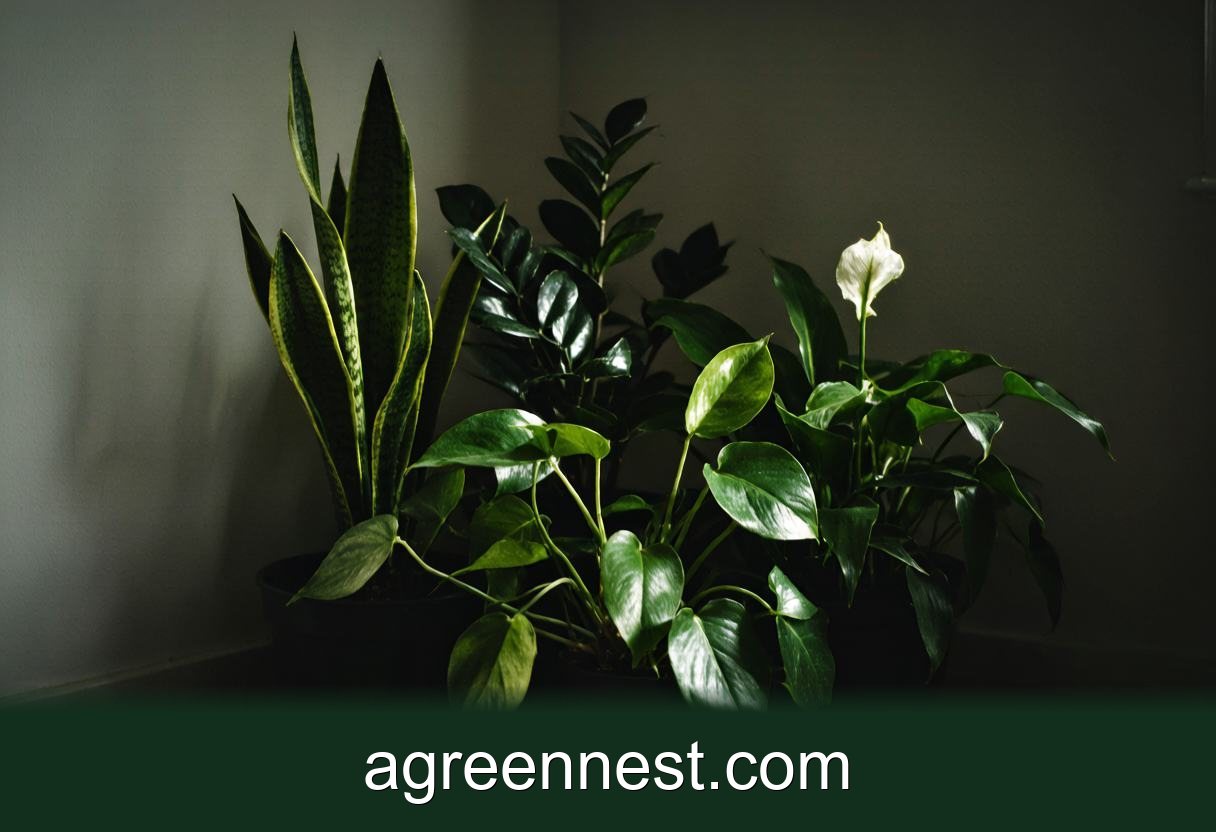
Do not overthink 10 Best Low-Light Plants for a North Window. It thrives in bright, indirect light and asks for little: water when the top layer of soil dries (when the top 2-3 cm of soil feels dry), and keep it away from harsh midday sun.
North Windows Are Not the Enemy
I used to think my north facing kitchen window was a plant graveyard. For two years the morning sun barely touched the sill, and every succulent I placed there leaned, faded, and gave up. Then a friend handed me a small snake plant and told me to stop treating the spot like a desert. She was right. A north window gives soft, even, indirect light for most of the day, and that quiet glow is exactly what a whole family of shade lovers want.
North light is cooler than south or west light, and it never delivers the harsh beams that scorch tender leaves. On a typical winter afternoon the room near my window sits around 58 to 64°F / 14 to 18°C, which suits these plants better than a hot, bright ledge. The trick is choosing species that evolved under a forest canopy rather than on an open hillside.
What Kind of Light Does a North Window Actually Give?
Most north windows receive somewhere between 50 and 250 foot candles of light through the day. That is a gentle range compared with the 1,000 plus foot candles a south window can throw at midday. Your plants will not bake, and they will not stretch desperately toward a blazing sun.
A north window also stays consistent. There is no shifting patch of hot light that moves across the floor and burns a leaf in July. Instead you get steady, diffuse brightness that reads as low to medium indirect light on every chart I have seen. If you can read a book by the window at 4 p.m. without turning on a lamp, you have enough light for the ten plants below. Keep them within 12 to 24 inches of the glass for the best results, but never let the pots touch a cold pane in winter.
How Should You Water Plants in Dim Rooms?
Low light slows a plant down, and a slow plant drinks less. I water my north window collection about once every 10 to 14 days in summer and once every 20 to 28 days in winter. The single best habit is to feel the soil with a finger before reaching for the watering can.
Overwatering is the real killer in dim rooms, not darkness. When roots sit in cold, wet soil for weeks, they rot, and a rotted root system looks a lot like a thirsty one at first glance. I use a simple mix of one part perlite to two parts peat free compost, and I always choose a pot with a drainage hole. A 1 teaspoon per gallon solution of balanced liquid fertilizer every four weeks keeps the leaves deep green from March through September.
The Ten Plants for Your North Window
Snake Plant (Sansevieria trifasciata). This is the plant that changed my mind about the window. Give it water only when the top 2 inches of soil feel dry, because it tolerates light as low as 25 foot candles. Keep it between 60 and 85°F / 15 and 29°C for steady growth. One quirk I appreciate is its stubbornness, since the plant survives a month of neglect while still looking sharp.
ZZ Plant (Zamioculcas zamiifolia). Fat underground rhizomes store water for this species, so it thrives on a forgetful schedule. A drink every 3 to 4 weeks is plenty, and the room should stay around 65 to 75°F / 18 and 24°C. Glossy leaves bounce the little light that arrives, which quietly brightens a dim corner.
Cast-Iron Plant (Aspidistra elatior). Victorians grew this in smoky parlors with almost no light, and it remains the most forgiving shade plant I own. Soak the soil every 2 to 3 weeks and hold the temperature near 55 to 70°F / 13 and 21°C. Pests mostly ignore those tough leaves, which is a welcome quirk for busy growers.
Chinese Evergreen (Aglaonema commutatum). Pink and silver veins bring color into a dark room, and that feels like a small miracle in January. Water whenever the top inch dries, then keep the plant at 70 to 80°F / 21 and 27°C. Slow growth is the quirk here, so a single specimen looks good for years without a repot.
Peace Lily (Spathiphyllum wallisii). Few shade plants bloom, yet this one sends up white spathes even in a dim corner. Wait until it starts to droop, about every 7 to 10 days, before adding water, and maintain 65 to 80°F / 18 and 27°C. That dramatic wilt looks fatal but revives within an hour of a drink, which is the plant's famous trick.
Pothos (Epipremnum aureum). Long, wandering vines soften the edge of a north window with little effort. Ten to 14 days between drinks suits it, along with 60 to 85°F / 15 and 29°C. Propagation is wonderfully easy, because a 4 inch cutting in a glass of water roots in about 14 days.
Heartleaf Philodendron (Philodendron hederaceum). This gentle viner is the pothos' calmer cousin and stays happy in the same dim conditions. Let the soil approach dryness every 10 to 14 days, then water and hold 65 to 80°F / 18 and 27°C. Heart shaped leaves grow larger when the plant is mildly root bound, which is a quirk many collectors enjoy.
Spider Plant (Chlorophytum comosum). Bright indirect light is its favorite, but a north window works if you place the pot closer to the glass. Seven to 12 days of drying between waterings is right, with 60 to 75°F / 15 and 24°C as the comfort zone. Baby plantlets dangle on long stems and root in a cup of water within 10 to 21 days, which is the fun part.
Peperomia (Peperomia obtusifolia). A narrow sill suits this compact, decorative plant where a bigger specimen would crowd the glass. Two to 3 weeks between drinks is enough, and 65 to 75°F / 18 and 24°C keeps it content. Thick, succulent like leaves store a little water, so the plant shrugs off the occasional missed watering.
Hoya (Hoya carnosa). Thick, waxy leaves earn this species the name wax plant, and good years bring clusters of fragrant star flowers. Fourteen to 21 days of rest between waterings is ideal, with 60 to 80°F / 15 and 27°C for steady health. Patience is the defining quirk, since a hoya may take 3 to 5 years to bloom, yet the wait is worth it.
Frequently Asked Questions
Q: Will these plants flower in a north window?
A: The peace lily and the hoya may bloom, but most of the ten are grown for their foliage rather than flowers.
Q: Can I keep a cactus on this sill?
A: No. Cacti and most succulents need far more sun than a north window provides, and they will stretch and pale within a month.
Q: How do I know the light is enough?
A: Use our light calculator by window direction, and watch for new growth. Steady, normal sized leaves mean the spot is working.
A north window is not a limitation, it is an invitation to a calmer kind of gardening. Pick three or four from this list, give them a pot with drainage, and let the soft light do the rest. Pair your choices with our watering calculator, and your dim corner will slowly turn into a green, living room.
Sources & further reading
GreenNest authors research and write every guide independently. The external links below are reputable references we recommend for deeper reading — they are not the sources we copied from.
- Aggie Horticulture (Texas A&M) — Texas A&M AgriLife
- Cornell Garden-Based Learning — Cornell University
- NC State Extension — Plant Toolbox — NC State Extension
Recommended Tools for Low-Light Indoor Plants Care
Free, no-signup helpers matched to this guide.
Free Ebooks to Explore
Downloadable handbooks — no email required.
Share Your Plant Story
Grown something tricky, or found a trick that finally worked? Tell us in the comments, or see what other readers are sharing on our Community page. The best reader tips get folded back into our guides.
Join the Conversation
Have a tip or a question about 10 Best Low-Light Plants for a North Window? Share it below — comments are saved on our server.