 AGreenNest
Plant Styling & Display
Plant Shelf Styling: Turn a Bookcase Into a Green Wall
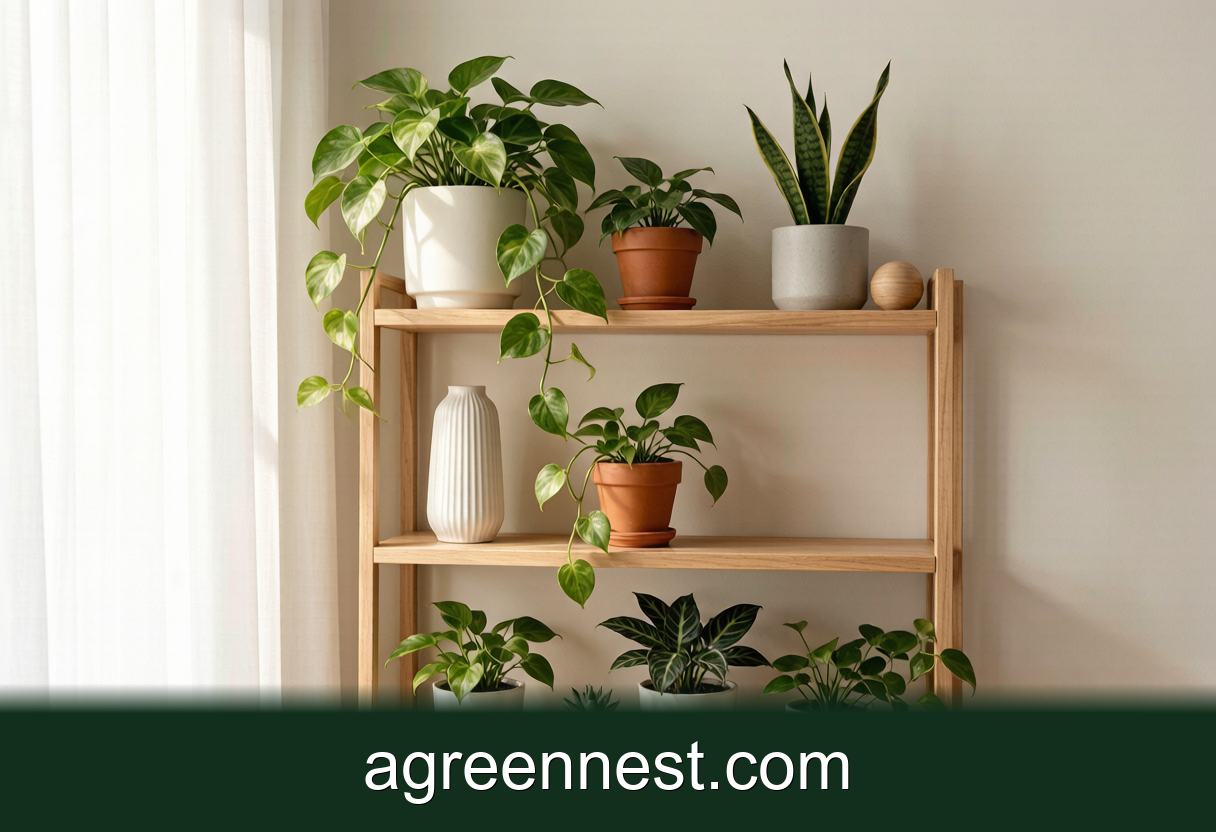
Styling Plant Shelf is about contrast and height. Group it with a trailing or broad-leaf neighbour for texture, and use a pot that echoes your room tones. Give it low to medium light, water when the topsoil dries (when the topsoil has dried), and turn the pot a quarter each week so it grows evenly toward the light.
A Snake Plant on the floor in a plastic pot looked like something I forgot to put away. The day I lifted it onto a shelf, it became decor. Good plant styling is not buying more plants. It is choosing where the ones you own should live. That shift saved me from a shelf of lonely pots, and it might do the same for you. Most beginners own enough plants already. They just never gave those plants a stage. My own shelf started with two pothos cuttings and a cactus I almost gave away.
The one principle that works
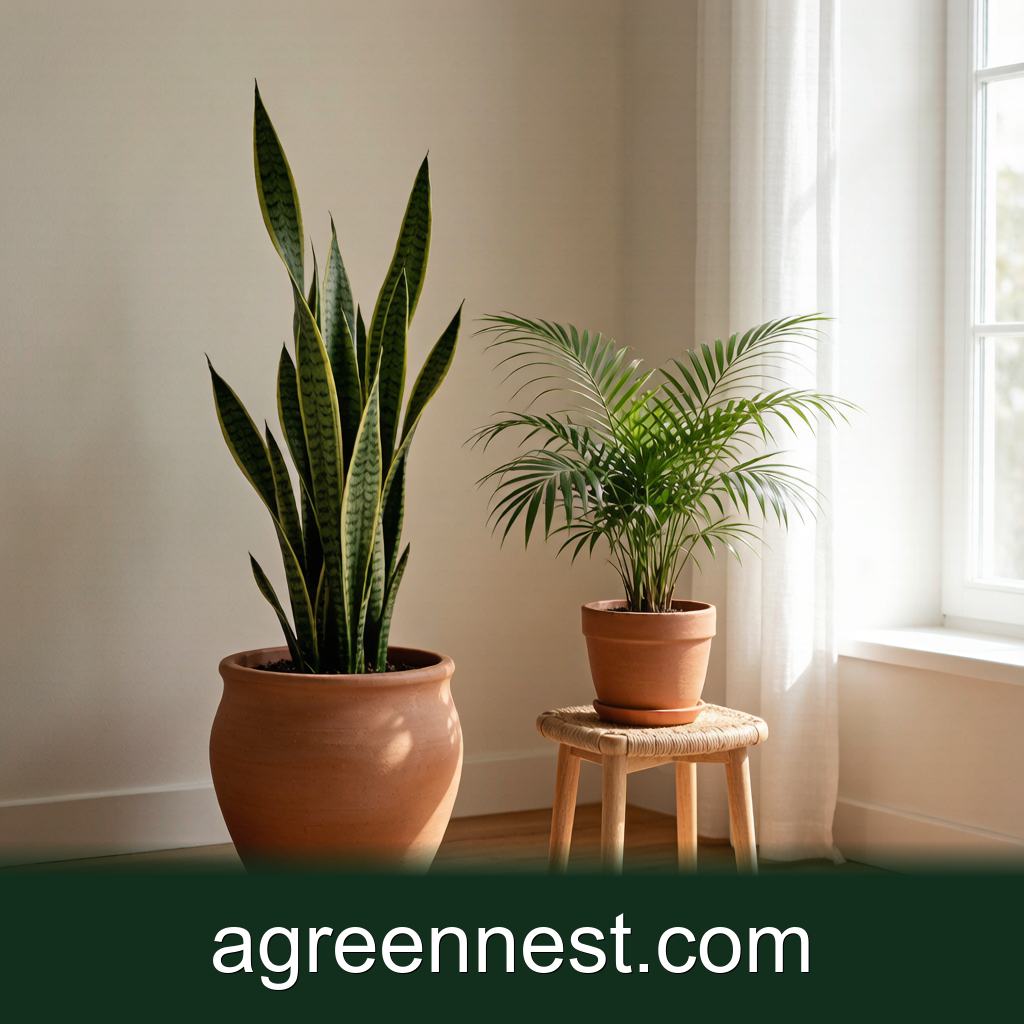
Eyes read a plant corner in two moves. First comes height. A tall plant anchors the back while trailing ones spill over the front. Second comes grouping in odd numbers. Three or five pots read as intentional. A lone plant reads as abandoned. Odd numbers feel right because the eye expects nature to cluster, not march in even rows. Put your tallest, most structural plant, a Dracaena marginata or a Ficus lyrata, at the back. Let a Epipremnum aureum trail off the front edge. Fill the middle with two smaller pots. Three plants, one shelf, you are done, and the corner finally looks designed.
Where should you put the shelf?
Style must serve the plant, not the room. A shelf by a bright window is where sun lovers go. A shelf across the room suits the low light types. I once placed a Sansevieria trifasciata in a dim hallway because it looked perfect there. Within a month the leaves leaned toward the distant light and the corner looked tired. Put the shelf on a sightline from your sofa, not in a forgotten hall. You will water and notice problems sooner when the plant is in view, and a shelf you walk past daily is a shelf you actually care for.
Grouping rules that look intentional
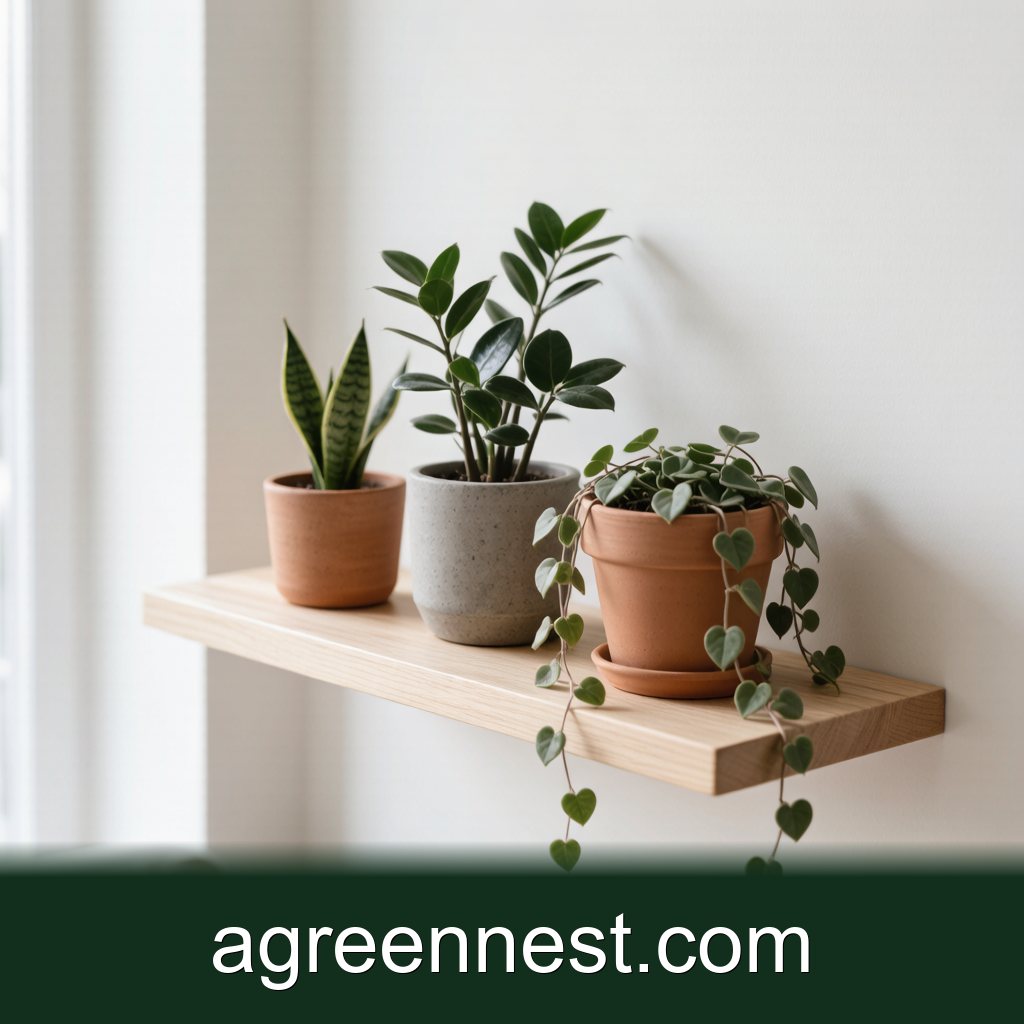
- Vary the pot, not the plant. Three terracotta pots of different sizes reads as a set.
- Echo a color from the room. A pot that picks up the curtain or rug ties the shelf together.
- Let one thing trail. A spiller breaks the horizontal line and holds the eye.
- Use odd numbers. Three or five, never four lined up like soldiers.
- Leave negative space. A bare 15 cm gap between groups reads as calm, not empty.
A single off-note pot, like a bright blue one among neutrals, can pull the whole shelf together if you place it at the center of the eye line. These rules sound simple, and they are, but most awkward shelves break at least two of them at once. Fix the grouping before you buy another plant.
Which pots and shelves lift the room?
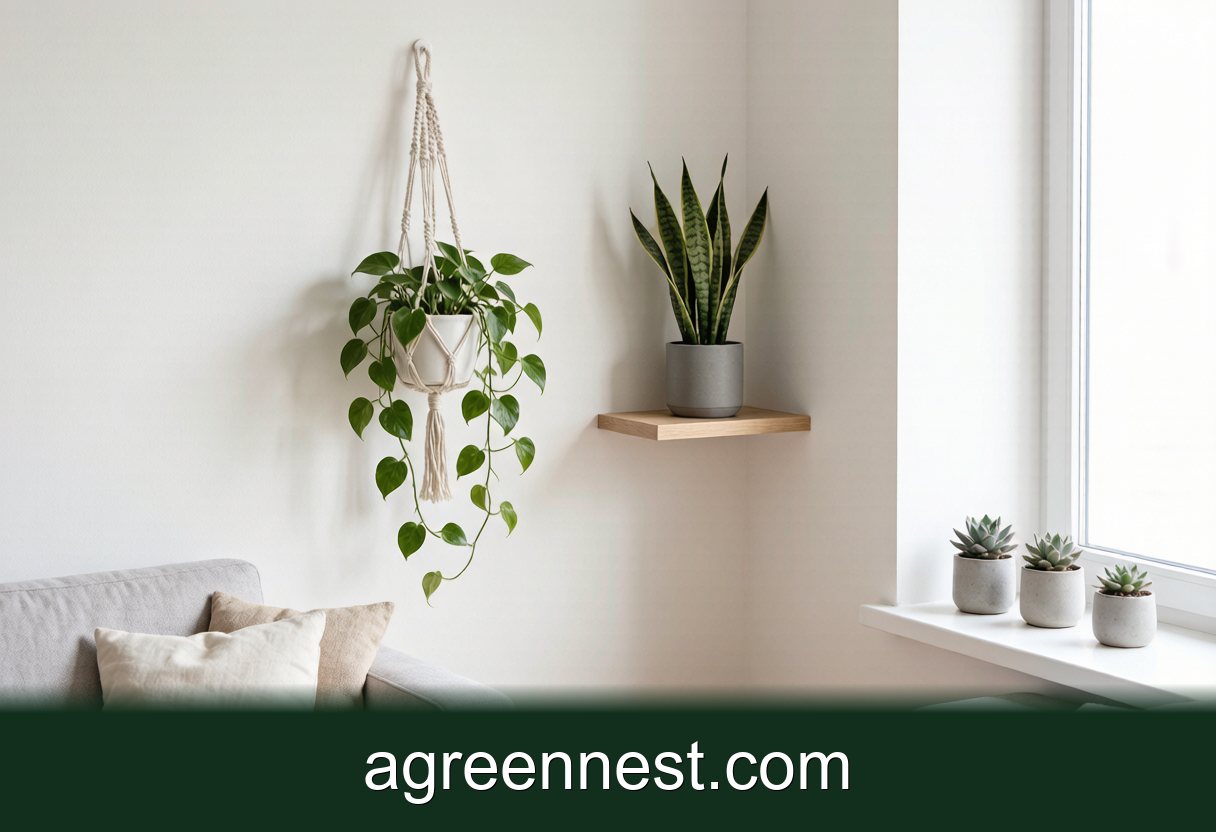
Terracotta reads warm and honest. Glossy ceramic reads modern. Mix one statement pot with several plain ones so the eye gets a rest. A floating shelf costs little and doubles your plant space without floor clutter. Two parallel shelves with a tall plant behind and a trailer in front read as a green wall for the price of a few brackets. Most shelves sit 30 to 45 cm above a desk or side table, which lifts the foliage to eye level where it earns attention. Keep the room between 60 and 75°F (15 and 24°C) so the plants stay steady while they decorate. A 60 cm wide shelf holds three pots without feeling crowded, while a 120 cm board invites you to add a fourth.
Keeping the look alive
A styled shelf slips when dead leaves sit or a plant outgrows its spot. A 2 minute weekly leaf wipe and a quarterly reshuffle keep it looking designed. When a plant gets too big, move it on and bring a smaller one up. The shelf is a rotation, not a permanent arrangement, and that rotation is what keeps it feeling fresh through the year. Turn each pot a quarter turn every week so growth stays even instead of leaning toward the window. Dust on leaves blocks light, so a quick wipe every 14 days keeps the plants photosynthesizing at full speed.
How do you style a shelf on a budget?
You do not need new pots. Paint three existing ones in two tones pulled from your rug, and the shelf looks planned for the cost of a 250 ml sample pot. Shop thrift stores for a 90 cm board and a pair of brackets, and you have a shelf for under 20 dollars. The point is arrangement, not spending, so start with what you own before buying anything else. A 5 minute sketch on paper shows you the layout before a single pot moves.
When should you reshuffle the shelf?
Every quarter, move one plant to a new spot and bring a smaller one up from the floor. A shelf frozen in place for a year starts to read as furniture rather than a garden. Spring is the easiest time, because growth picks up and the change looks natural. Watch for a plant that outgrows its pot, since a 12 cm pot usually needs upsizing after 12 to 18 months.
Frequently Asked Questions
My shelf gets almost no light. What can live there?
The low light list. Sansevieria trifasciata, Zamioculcas zamiifolia, cast iron plant, and Haworthia cooperi. Low light is fine. No light is not.
How do I stop pots dripping on the shelf?
Use a saucer or inner pot so the decorative pot never holds water. Wipe the shelf monthly.
Can I mix artificial plants into the shelf?
You can, but keep the real ones where you see new growth. The living part is what makes a shelf feel alive.
The fastest upgrade to a plant corner is not a new plant. It is lifting what you have 40 cm and grouping three. Start with one shelf by your most used window, follow the height rule, and resist buying more until the first shelf looks finished.
Recommended Tools for Plant Styling & Display Care
Free, no-signup helpers matched to this guide.
Free Ebooks to Explore
Downloadable handbooks — no email required.
Free Ebook
The AGreenNest Succulent Care Handbook
The complete, beginner-to-confident guide to growing fat, happy succulents — 10 chapters and a 20-plant directory.
Free Ebook
Haworthia & Haworthiopsis Care Handbook
A focused guide to the striped, forgiving Haworthia clan.
Sources & further reading
GreenNest authors research and write every guide independently. The external links below are reputable references we recommend for deeper reading — they are not the sources we copied from.
- Aggie Horticulture (Texas A&M) — Texas A&M AgriLife
- Clemson Home & Garden Information Center — Clemson Extension
- Royal Botanic Gardens, Kew — Kew Gardens
Share Your Plant Story
Grown something tricky, or found a trick that finally worked? Tell us in the comments, or see what other readers are sharing on our Community page. The best reader tips get folded back into our guides.
Join the Conversation
Have a tip or a question about Plant Shelf Styling: Turn a Bookcase Into a Green Wall? Share it below — comments are saved on our server.