 AGreenNest
Succulent Care
I Rescued a Rotting Succulent: Week by Week
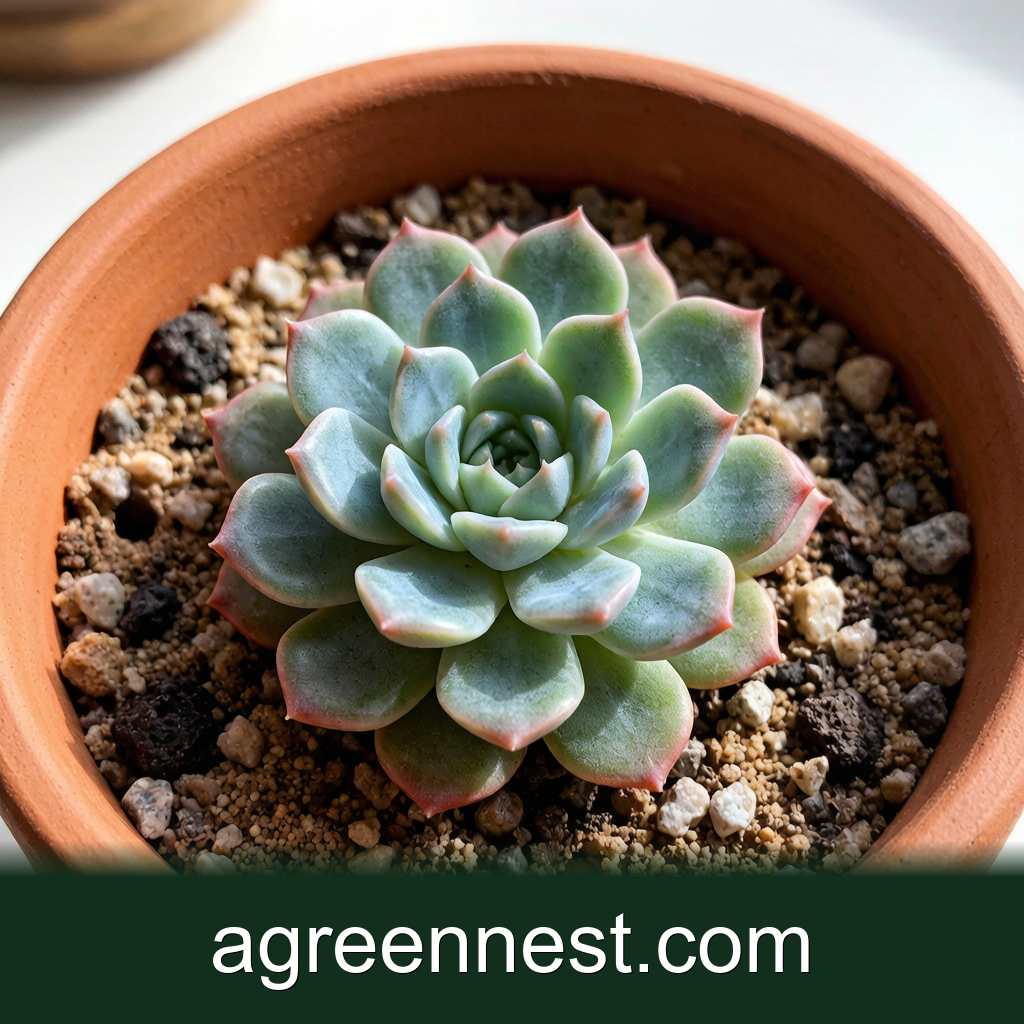
A rotting succulent is often salvageable while the crown stays firm: unpot it, cut away every soft brown bit to clean pale tissue, dust the wound, and let it callous a few days. Repot in a gritty, fast-draining mix in terracotta, then wait a full week before the first light watering.
I almost threw it out on a Tuesday. My windowsill Echeveria elegans had a base that felt like a peeled grape, and two lower leaves had gone from silvery blue to brown mush. Three weeks earlier I had watered it just in case while the soil was still damp, because a video told me succulents like a drink. They do not, and this one was rotting from the inside out. Here is the rescue, exactly as it happened, week by week.
How Do You Know It Is Rot and Not Thirst?
Before cutting anything, check the difference between too little water and too much. A thirsty succulent wrinkles but stays firm to the touch. This one was soft, translucent, and smelled faintly sour at the stem. That is rot, plain and simple.
Most people confuse the two at first. Wrinkled but hard means thirst, so put down the knife and pick up the watering can, because cutting a dry plant only harms it. Smell never lies in this test, and a clean, firm base means you are dealing with thirst, not decay.
Week 1: Stop the Water and Unpot
I slid the plant out of its pot with soil still wet eight days after watering. Two centimetres of lower stem were brown and squishy to the finger. All the soil came off, and the whole plant lay on a paper towel in bright indirect light.
No water, no mist, no just a little followed the unpotting. Rot needs dryness to stop spreading, and being wet and cold is what kills them, so the first move is always to get it dry. During that week nothing else happened, and that was the point. Helping with more water tempts you, so resist it completely.
Week 2: Cut Back to Clean Tissue
Once the surface had dried for two days, a clean knife took the stem above the brown. Slicing continued until the center was pale and firm, with no discolored streaks left. Six centimetres of rosette remained on a two centimetre clean stub.
Cinnamon dusted the cut, a mild home antifungal, and the bare stub rested on the towel for three more days so the wound calloused. Fresh cuts planted wet lose the second round, so patience here protects the effort you just made.
Week 3: Repot in Gritty Mix and Wait
Gritty mix of one part potting soil to two parts pumice took the calloused stub inside a terracotta pot with a drainage hole. Then came the hard part, which was nothing at all. No water for a full week let the wound seal underground instead of rotting.
After the wait, a weak feed of one teaspoon per litre of water each month in summer keeps a recovered plant steady without pushing soft growth. Warm rooms above 75°F, or 24°C, keep soil damp longer, so terracotta wicks that moisture away faster than glazed ceramic ever could.
Week 4: Roots Form and the First Drink
At day twenty eight the stub felt anchored during a gentle tug, the sign roots had formed. One thorough watering soaked the soil until it ran from the hole, and the saucer emptied soon after. New leaves at the center looked tighter and a shade more colored than the old stretched ones.
Life returned, and the brown base was gone for good. Rot reaching the crown means salvage is unlikely, though firm leaves still cut for propagation give you new plants.
What Signs Show the Rescue Worked?
By week five you can read your outcome clearly. Look for working signs: a center that pushes new leaves, a stub that stays firm, and a tug that meets real resistance. Watch for failing signs too: a loose stub, a yellowing crown, or a returning sour smell.
Two outcomes are common, and most rescues land in one camp by day thirty five. Failure means cutting still-firm leaves for propagation before composting the rest, because too much water plus too little light is the trap behind almost every case I see.
What Changed So It Never Happens Again?
I was the cause, not the plant, and that honesty matters here. Water now comes only when the top three to four centimetres of soil is dry to the finger, which in my bright window is every nine to twelve days in summer and every three weeks in winter.
Terracotta replaced the glazed pot, which wicks moisture out of the soil instead of holding it. Same plant, same window, zero rot since that Tuesday. Simple routines beat fancy products, and this habit now protects every succulent on my shelf, not just this one.
Frequently Asked Questions
How do I tell rot from a leaf that is just old?
Old leaves dry crisp and stay attached or fall clean. Rot is soft, translucent, and smells off at the base, and it climbs upward into the stem.
Can I save a succulent if the center rosette is already mushy?
Usually no. Once the crown is soft the rot owns the growing point. Cut any still-firm leaves for propagation before composting the rest.
Why wait a full week before the first water after repotting?
Calloused cuts need underground time. Water on a fresh wound rot-sets it again, which is the most common reason rescues fail in week two.
Will the brown lower leaves grow back?
Lost leaves never return, but the plant grows new ones from the center. Rescued rosettes look lopsided for a month, then fill in.
Is cinnamon actually useful or just folklore?
It is a mild antifungal and helps keep the cut clean while it callouses, but it is not a cure. Dry air and a clean cut do the real work.
Rotting succulents are not a lost cause if you catch them before the crown goes soft. Dry it, cut to clean tissue, callous, then gritty soil and patience. One simple habit prevents the whole mess: a steady watering routine, and reading it once will likely keep the knife in the drawer for good.
Recommended Tools for Succulent Care
Free, no-signup helpers matched to this guide.
Free Ebooks to Explore
Downloadable handbooks — no email required.
Free Ebook
The AGreenNest Succulent Care Handbook
The complete, beginner-to-confident guide to growing fat, happy succulents — 10 chapters and a 20-plant directory.
Free Ebook
Haworthia & Haworthiopsis Care Handbook
A focused guide to the striped, forgiving Haworthia clan.
Sources & further reading
GreenNest authors research and write every guide independently. The external links below are reputable references we recommend for deeper reading — they are not the sources we copied from.
- Aggie Horticulture (Texas A&M) — Texas A&M AgriLife
- Cornell Garden-Based Learning — Cornell University
- NC State Extension — Plant Toolbox — NC State Extension
Share Your Plant Story
Grown something tricky, or found a trick that finally worked? Tell us in the comments, or see what other readers are sharing on our Community page. The best reader tips get folded back into our guides.


Join the Conversation
Have a tip or a question about I Rescued a Rotting Succulent: Week by Week? Share it below — comments are saved on our server.