 AGreenNest
Succulent Care
Tiger Jaws: The Succulent That Bites Back
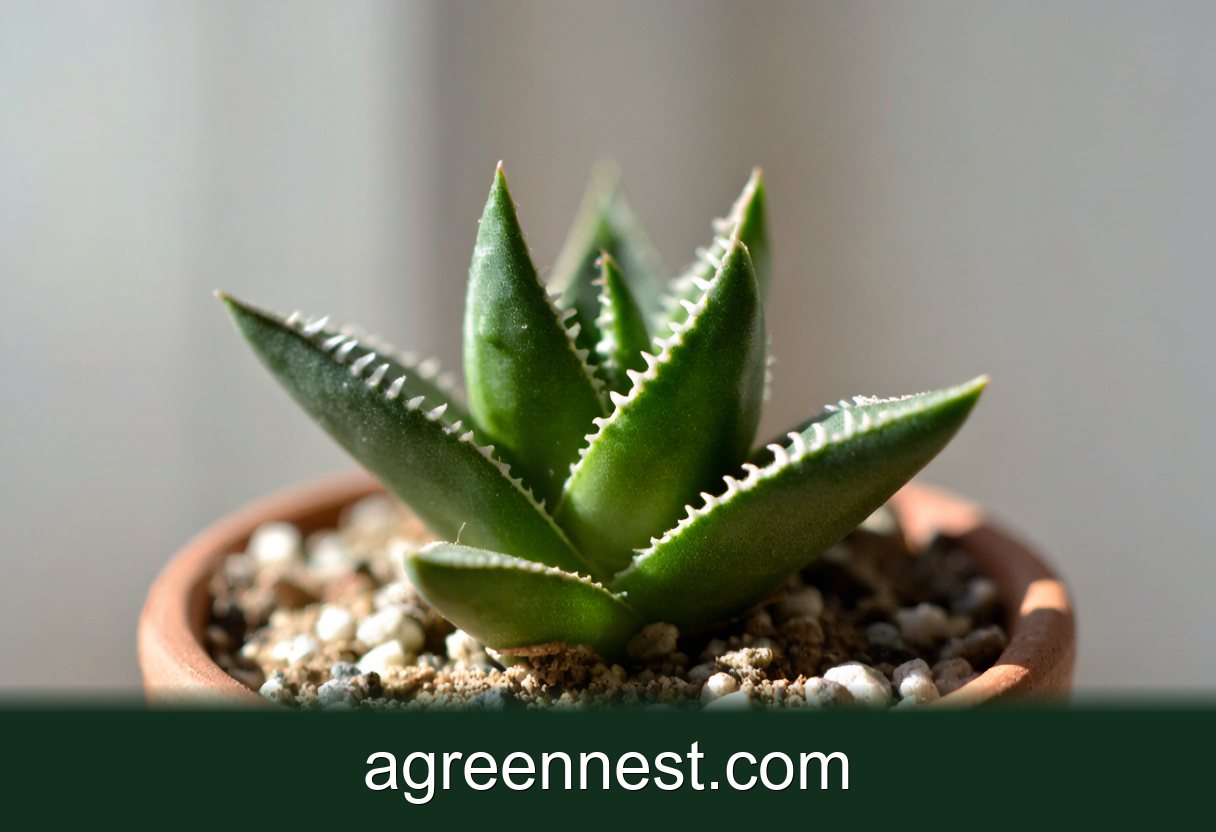
Tiger Jaws stores moisture in its leaves, so it tolerates some neglect. Give it a few hours of direct sun and water only when the potting mix has fully dried out (3 weeks between waterings). Plant it in a gritty, fast-draining mix and a terracotta pot to keep the roots healthy and rot-free.
The first time someone spots a tiger jaws on my shelf, they lean in and then pull back, because the leaves really do look like a set of little green jaws lined with soft white teeth. It is all bluff. Those "teeth" are harmless hair-like bristles, and the plant is one of the more forgiving small succulents you can keep. It just happens to look like it wants to eat the fly that lands on it.
Where tiger jaws comes from
Faucaria tigrina grows in the Eastern Cape of South Africa, on rocky, sun-baked ground that goes bone dry for long stretches and gets its rain in cooler months. That single fact explains the whole care routine: it stores water in those fat, triangular leaves to ride out drought, and it does most of its growing in autumn and winter rather than the peak of summer.
It belongs to the same broad group as the living stones and split rocks, the mesemb succulents built for arid, mineral soil. Unlike those pebble mimics, tiger jaws stays in a low rosette of paired leaves, usually 8 to 10cm across, and rewards you in autumn with a surprisingly large golden-yellow daisy flower that opens in the afternoon sun.
The three demands
Meet these three and the plant keeps its jaws plump and its teeth crisp for years.
Light. Tiger jaws wants bright light with two to four hours of direct sun a day. An east or south windowsill is ideal. In good light the leaves stay compact and flush faintly reddish at the tips; in a dim spot they stretch, the teeth splay apart, and the neat jaw shape falls open. If yours is stretching, it needs more sun, not more water. The succulent light and temperature guide covers how much is too much.
Water. Let the soil go completely dry, then water thoroughly until it runs from the drainage holes. In summer that is roughly every 2 to 3 weeks; in the cooler growing season it drinks a little more often. The safest way to judge it is by weight and feel, or a moisture meter reading of zero before you pour. When in doubt, wait; this plant handles thirst far better than a soaking. The general rules in how often to water succulents apply here with an extra lean toward drought.
Soil. Sharp drainage is non-negotiable. Use a gritty mix that is at least half mineral, pumice, coarse sand, or perlite, cut into a little potting soil. A standard peaty houseplant mix holds too much water and will rot the crown. Follow the gritty soil recipe or mix your own succulent soil rather than buying a bag labelled "cactus" that is mostly peat.
The one killer
Overwatering in winter. Tiger jaws is semi-dormant in the hottest part of summer and active in cooler months, but its roots still rot fast if they sit wet while the plant is resting or the room is cold. The classic loss goes like this: the leaves look a touch soft, the owner reads that as thirst, waters again, and within a week the center goes translucent and mushy. That softness was the first sign of rot, not drought.
If a leaf pair ever turns yellow, glassy, or squishy at the base, stop watering at once, move the plant somewhere bright and airy, and let it dry hard. Caught early, tiger jaws often pushes new growth from the surviving core. Planting it in a terracotta pot that wicks moisture away buys you a real margin of safety against this exact mistake.
How it fits with your other succulents
Because it stays small and slow, tiger jaws is a shelf plant, not a floor statement. It pairs well beside other mesembs like lithops in a shared gritty tray, since they want the same lean soil and hard drying. Keep it away from thirstier rosettes that get watered on a faster schedule, or the tiger jaws ends up drinking on someone else's timetable and rotting for it.
Come autumn, feed it once with a dilute, low-nitrogen succulent food to fuel the flower. The safe fertilizing guide explains why one weak feed beats a strong one, especially for a slow grower like this.
Frequently Asked Questions
Are the teeth on tiger jaws sharp or dangerous?
No. The "teeth" are soft, flexible bristles along the leaf edge, not spines. You can run a finger over them without harm. They evolved to catch dew and dappled shade, not to bite.
Why has my tiger jaws stopped looking like jaws?
The paired leaves splay open and lose the closed-jaw look when the plant is short on light. Move it to a brighter windowsill with a few hours of direct sun, and the new leaf pairs will grow in tight and toothed again.
When does tiger jaws flower, and why won't mine bloom?
It flowers in autumn, opening large yellow daisy-like blooms in the afternoon. Plants that never bloom are usually too shaded or too pampered with water; a cooler autumn, strong light, and a lean feed trigger flowering.
Can I propagate tiger jaws?
Yes, by division. Mature clumps form offsets you can separate at repotting and pot up in the same gritty mix. Leaf cuttings are unreliable for this species, so division is the dependable route, unlike the leaf propagation that works for echeverias.
Why did the center of my plant turn to mush?
That is crown rot from water sitting in the rosette or in cold, wet soil. Stop watering, improve airflow, and let it dry out completely. Prevent it by watering only when bone dry and never letting water pool in the center.
Tiger jaws is the plant that looks dangerous and behaves like a pushover, as long as you respect its two rules: hard drying between waters and grit under its roots. Give it sun, let it get thirsty, and keep it dry through the cold months, and it will flash those little teeth and a golden flower for years. If it is joining a wider collection, the complete succulent care guide lines up the watering and light habits that keep every plant on the shelf happy.
Recommended Tools for Succulent Care
Free, no-signup helpers matched to this guide.
Free Ebooks to Explore
Downloadable handbooks — no email required.
Free Ebook
The AGreenNest Succulent Care Handbook
The complete, beginner-to-confident guide to growing fat, happy succulents — 10 chapters and a 20-plant directory.
Free Ebook
Haworthia & Haworthiopsis Care Handbook
A focused guide to the striped, forgiving Haworthia clan.
Sources & further reading
GreenNest authors research and write every guide independently. The external links below are reputable references we recommend for deeper reading — they are not the sources we copied from.
- Clemson Home & Garden Information Center — Clemson Extension
- NC State Extension — Plant Toolbox — NC State Extension
- Royal Horticultural Society — Houseplant care — RHS
Share Your Plant Story
Grown something tricky, or found a trick that finally worked? Tell us in the comments, or see what other readers are sharing on our Community page. The best reader tips get folded back into our guides.



Join the Conversation
Have a tip or a question about Tiger Jaws: The Succulent That Bites Back? Share it below — comments are saved on our server.