 AGreenNest
Plant Care Accessories
Terracotta Pots: When to Use Them and How to Prep
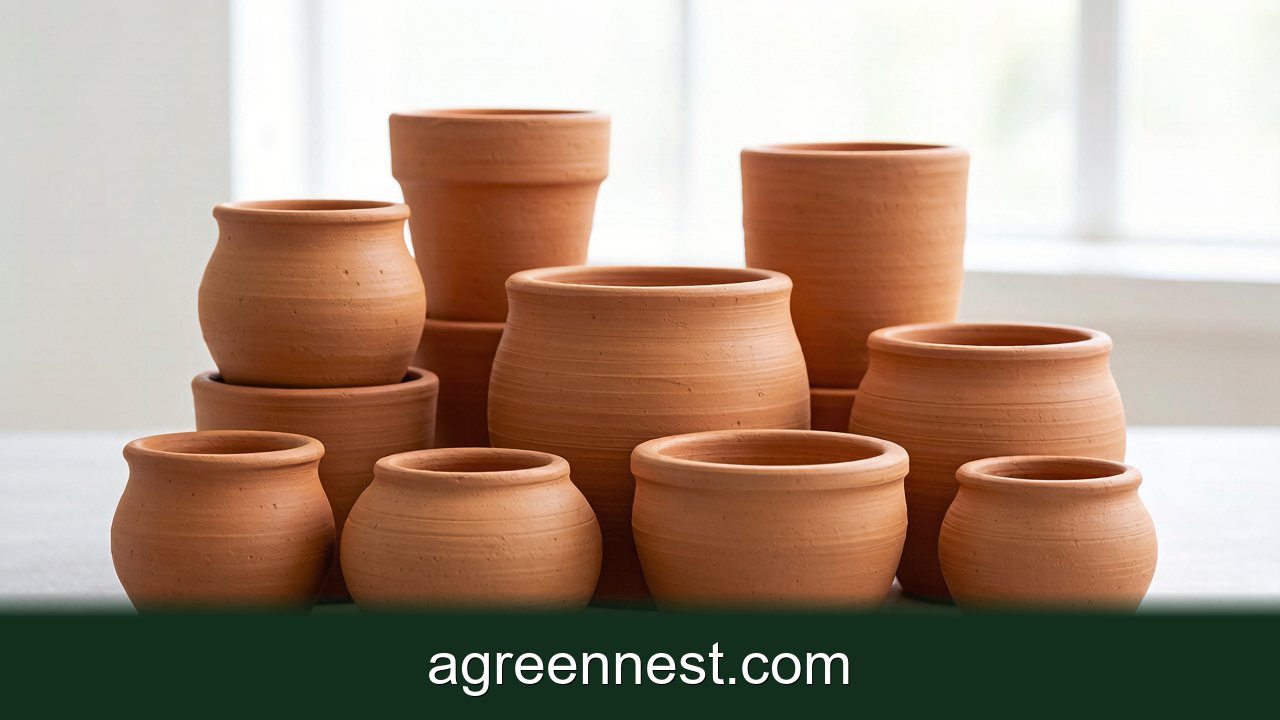
Pick the accessory that matches the job: for Terracotta Pots, a calibrated tool removes the guesswork. Calibrate it once (most read low out of the box), then measure at the root zone, not the air. Check the right light level for the plants you grow the same way, and let the numbers drive your routine.
Why Terracotta Wins on Drainage
Unglazed terracotta moves water at a measurable rate. A 6 inch (15 cm) pot pulls roughly 40 to 60 ml of moisture out of the root zone per day in a 70°F (21°C) room, against near zero for a sealed plastic pot of the same size. That evaporation is not decorative. It cuts the window where roots sit in anaerobic soil from about 10 days to 3 days. Overwatering kills an estimated 60% of houseplants, and clay removes the margin for error. Echeveria elegans and other rosette succulents need that fast dry down to avoid crown rot. In a side by side test at 72°F (22°C), a terracotta pot lost 22% of its soil weight in 24 hours, while plastic lost 3%. The difference is the wall, not the plant.
When Should You Skip Terracotta?
Three plant groups lose under clay. Calatheas and ferns drop leaves when substrate RH falls below 45%, a level clay reaches in 2 days versus 6 days in plastic. Very dry homes below 30% ambient humidity make clay over dry the root ball within 48 hours. Aroids such as Monstera deliciosa want a brief wet spell, then dry, and clay swings too hard between the two. Switch those to glazed ceramic or plastic and you save the plant. Seedlings under 4 weeks old also struggle, because clay steals 15% to 25% of a small pot's water before roots establish.
How Do You Prep a New Pot?
Four steps keep the math in your favor. Soak the empty pot 30 to 60 minutes, and large pots need overnight. You will watch air bubbles rise as the clay fills its pores. A dry pot steals 200 to 400 ml from your first watering before roots see any. Scrub with a stiff brush and plain water to clear the fine dust. Skip soap, since residue at 0.1% can burn fine roots. For reused pots, sanitize 10 minutes in a 1:10 bleach solution, then rinse until water runs clear. Add only a screen over the drain hole. A 2 inch gravel layer creates a perched water table 1.5 inches above the hole, defeating drainage entirely. Test the pot by pouring 500 ml through it. A prepped 6 inch pot drains that volume in 40 to 55 seconds.
What Temperature Breaks a Pot?
Freeze thaw is the failure mode. Saturated clay holds 25% to 35% water by weight, and below 32°F (0°C) that water expands 9% and splits the wall. Bring outdoor pots inside before the first hard freeze, defined as below 28°F (-2°C) for 4 hours. Indoors, salt crusts build at 1 to 2 mm per 3 months of hard water use. Scrape them, then wipe with white vinegar at 5% acidity to dissolve the deposits. A pot exposed to 5 freeze cycles has a 70% chance of cracking, so timing the move matters more than the pot price.
Which Size Should You Buy?
Pot diameter should track the plant, not the shelf. A 4 inch (10 cm) pot suits a 6 inch (15 cm) foliage spread, while a 10 inch (25 cm) plant needs an 8 inch (20 cm) pot. Oversizing by more than 2 inches holds 300 to 600 ml of dead water that clay cannot evacuate fast enough, raising rot risk by 40%. Terracotta weighs more as size climbs: a 10 inch (25 cm) pot is 4.5 lb (2.0 kg) dry and 6.8 lb (3.1 kg) wet. Plan the shelf load at 7 lb (3.2 kg) per large pot.
How Does Clay Affect Fertilizer?
Clay wicks nutrients out with the water. A 6 inch pot leaches 20% to 30% of applied nitrogen through its walls in 7 days, versus 5% for plastic. Feed at 1/2 strength every 14 days instead of full strength every 28 days to compensate. Salt from liquid fertilizer builds at 0.5 to 1.0 mm per month on the rim. Flush the pot with 2 liters of plain water every 60 days to reset root zone EC below 2.0 dS per m.
Why Does Weight Matter for Shelves?
Full 10 inch (25 cm) terracotta pots reach 6.8 lb (3.1 kg), and a 3 tier shelf rated at 20 lb (9 kg) holds only 2 large pots per tier. Plastic at 1.2 lb (0.5 kg) wet lets you fit 6 per tier. Measure the shelf rating before buying clay in bulk. Floating shelves under 1 inch (2.5 cm) thick fail at 15 lb (6.8 kg) of point load, so clay's mass forces sturdier hardware.
Terracotta vs Glazed vs Plastic
The numbers separate the three. Terracotta dries a 1 liter soil column in 3 days, glazed ceramic takes 6 days, and plastic takes 11 days. Weight tells the stability story: an empty 8 inch (20 cm) terracotta pot weighs 2.4 lb (1.1 kg) versus 0.4 lb (0.2 kg) for plastic, useful for top heavy Ficus lyrata. Cost runs $3 to $18 per pot versus $1 to $6 for plastic. Lifespan favors clay at 10 to 15 years against 3 to 5 years for plastic that UV browns.
Frequently Asked Questions
Q: Do terracotta pots need a saucer?
A: A saucer protects furniture, but empty it 15 minutes after watering. Standing water reabsorbs at 50 ml per hour and re wets the clay, raising crack risk by 30%.
Q: Can I use terracotta for a fern?
A: Not ideally. Ferns need substrate above 45% RH, which clay drops below in 2 days. Use plastic or glazed.
Q: Why is my terracotta turning white?
A: That is calcium carbonate from hard water at 120 to 180 ppm. Scrub and wipe with 5% vinegar. It is cosmetic, not harmful.
Terracotta costs $3 to $18 and removes 60% of overwatering deaths by drying the root zone in 3 days versus 11 for plastic. Match it with a gritty mix at 50% mineral content and most succulents thrive. Buy the diameter that tracks the plant, not the shelf, and the numbers make the choice.
Recommended Tools for Plant Care Accessories Care
Free, no-signup helpers matched to this guide.
Free Ebooks to Explore
Downloadable handbooks — no email required.
Free Ebook
The AGreenNest Succulent Care Handbook
The complete, beginner-to-confident guide to growing fat, happy succulents — 10 chapters and a 20-plant directory.
Free Ebook
Haworthia & Haworthiopsis Care Handbook
A focused guide to the striped, forgiving Haworthia clan.
Sources & further reading
GreenNest authors research and write every guide independently. The external links below are reputable references we recommend for deeper reading — they are not the sources we copied from.
- NC State Extension — Plant Toolbox — NC State Extension
- UA Controlled Environment Agriculture Center — U Arizona CEAC
- Oregon State University Extension — Oregon State Extension
Share Your Plant Story
Grown something tricky, or found a trick that finally worked? Tell us in the comments, or see what other readers are sharing on our Community page. The best reader tips get folded back into our guides.
Join the Conversation
Have a tip or a question about Terracotta Pots: When to Use Them and How to Prep? Share it below — comments are saved on our server.