 AGreenNest
Succulent Care
Split Rock Care Guide (Pleiospilos nelii)
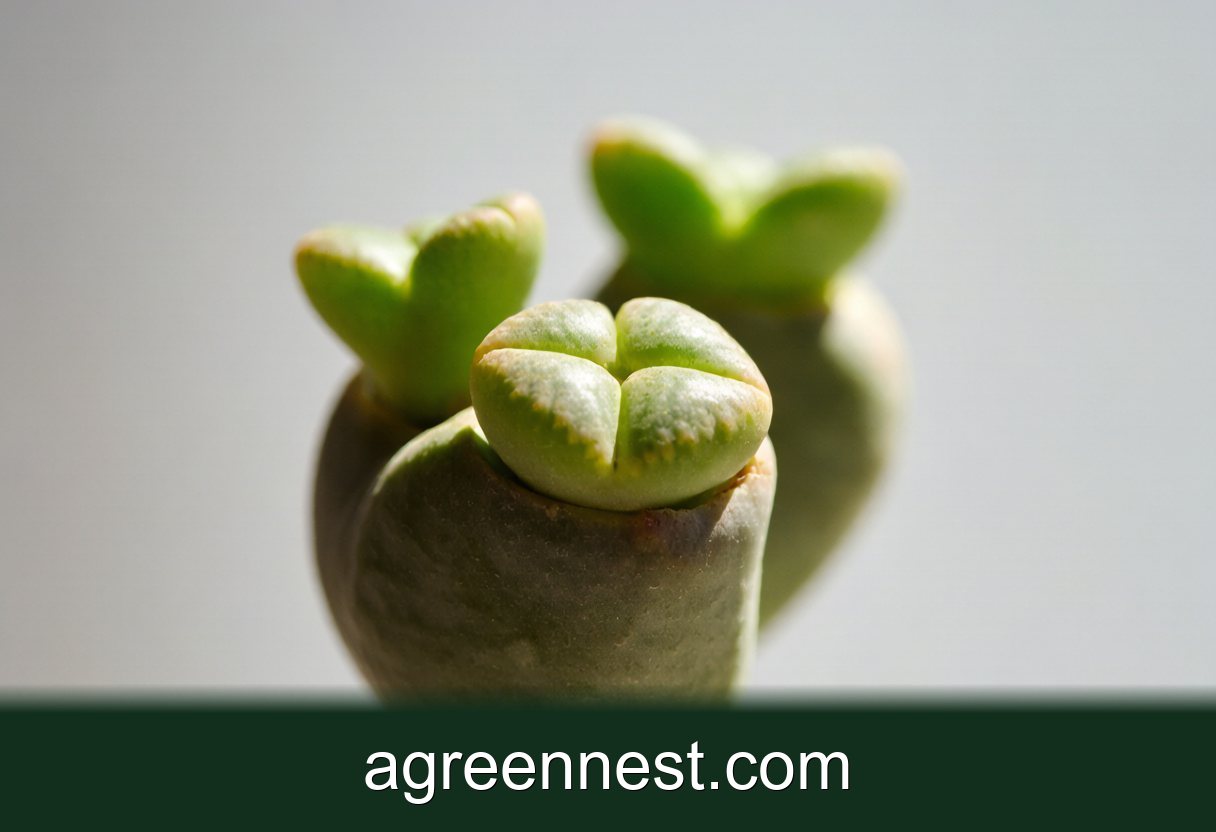
Split Rock Care Guide (Pleiospilos Nelii) stores moisture in its leaves, so it tolerates some neglect. Give it a few hours of direct sun and water only when the potting mix has fully dried out (35 days between waterings). Plant it in a gritty, fast-draining mix and a terracotta pot to keep the roots healthy and rot-free.
The first Pleiospilos nelii I owned looked less like a plant and more like two grey-green pebbles glued together. My neighbour laughed when I confessed I forgot to water it for two months. To my surprise the little split rock shrugged off the neglect and even split open to reveal a fresh pair of leaves. That stubborn drought tolerance is exactly what makes this succulent so forgiving.
Why Is Split Rock So Easy to Overwater?
Split rock stores almost all its water inside those fat, fused leaves. Unlike most houseplants, it drinks almost nothing through the soil during its long rest. Owners trained on thirstier plants therefore flood it out of kindness, and the soft body rots from the base. A dry, shrivelled look in summer is normal, not a cry for water.
My early mistake was treating it like a regular succulent on a weekly schedule. Within a season the body turned translucent and mushy at the seam. I salvaged it only by yanking it from wet soil and letting the roots air-dry for five full days. Less, as it turns out, is dramatically more with this species than with almost any other.
What Light Does Split Rock Need?
Full, direct sun for most of the day keeps a split rock compact and beautifully marked. A south or west windowsill is ideal, and a few hours of hot midday light actually intensifies the speckled camouflage. Without enough sun the body stretches and loses its tidy paired shape. Grow lights on a twelve hour timer work when natural sun is scarce.
Place it right against the glass in winter to catch every weak ray. Turning the pot a little each week prevents one side from flattening. Pale greening between the spots means it is basking happily, while bleaching warns of brief scorching. Brightness, not water, is the true fuel for this desert native from the eastern Cape.
How Often Should I Water a Split Rock?
Wait until the gritty mix is bone dry, then wait a few days more for safety. In the growing season this usually means a deep soak every 35 days. Dormant winter months often need none at all, or a single sip every 45 to 60 days. A reliable sign to water is a slight wrinkling or narrowing of the leaf pair.
Lifting the pot is the simplest honest test around. I once watered on a hunch in January and watched the base soften within a fortnight. Now I trust the weight and the wrinkle over any calendar. Rainwater or distilled water avoids the minerals that can stain the smooth skin and leave pale scars.
The Right Soil and Pot
A gritty, free-draining succulent mix is absolutely non-negotiable for this plant. Combine two parts coarse pumice to one part cactus soil for a blend that sheds water instantly. A terracotta pot breathes and wicks moisture from the root zone faster than plastic ever could. Always choose a pot with a wide drainage hole and shallow depth.
Top-dress with a centimetre of clean gravel so the body never touches damp soil. Repot only every three to four years, in early spring, and handle the roots with care. Many rot tragedies begin with rich, moisture-holding compost meant for other plants. Bare mineral grit is the safest cradle you can give it through every season.
Temperature and Seasonal Dormancy
Split rock tolerates a wide range, roughly 45 to 85°F, or 7 to 29°C, across the year. It slows right down in cool, dim winters and asks for near-total dryness then. A warm, bright summer wakes it into a single new leaf pair per year. Night chills below 40°F, or 4°C, can damage the soft centre.
Keeping it dry when temperatures drop is the golden rule of survival. I leave mine on a sunny shelf from November through February with zero water. The plant simply waits, then surges when the light returns in spring. This rhythm mimics the South African winters it evolved to endure without a single drop.
Common Problems and Fixes
A mushy, translucent base is almost always rot from overwatering. Unpot immediately, trim soft tissue, and let the healthy part callus for a week. Splitting or cracking at the seam often means a sudden oversoak after long dryness. Leaning, stretched bodies beg for stronger direct sun nearby.
Mealybugs occasionally hide in the central fissure and need a swab of alcohol. Brown, papery patches on old leaves are simply natural ageing and need no panic. Catching rot early offers the only real chance of saving a flooded specimen. A dry, airy spot after any watering lets the roots firm up before the next soak.
Frequently Asked Questions
Q: Is split rock safe around pets?
A: Yes, Pleiospilos nelii is generally regarded as non-toxic to cats and dogs, so it is a safe oddity for playful homes.
Q: Can I grow split rock from seed?
A: Certainly. Sow fresh seed on the gritty surface, keep it barely damp, and warm around 70°F, or 21°C, until tiny green pairs appear.
Q: Why did my split rock split open and look empty?
A: That is the natural formation of a new leaf pair. Hold off watering and let the old pair shrink as the new one swells.
Split rock proves that the most unusual plants are often the easiest to keep alive. Respect its thirst for sun, its hatred of wet feet, and its long winter nap, and it will outlast far fussier neighbours. Try our free watering calculator to set a cautious schedule, then pair it with the light calculator to find the sunniest window you own.
Sources & further reading
GreenNest authors research and write every guide independently. The external links below are reputable references we recommend for deeper reading — they are not the sources we copied from.
- NC State Extension — Plant Toolbox — NC State Extension
- Clemson Home & Garden Information Center — Clemson Extension
- Royal Horticultural Society — Houseplant care — RHS
Recommended Tools for Succulent Care
Free, no-signup helpers matched to this guide.
Free Ebooks to Explore
Downloadable handbooks — no email required.
Free Ebook
The AGreenNest Succulent Care Handbook
The complete, beginner-to-confident guide to growing fat, happy succulents — 10 chapters and a 20-plant directory.
Free Ebook
Haworthia & Haworthiopsis Care Handbook
A focused guide to the striped, forgiving Haworthia clan.
Share Your Plant Story
Grown something tricky, or found a trick that finally worked? Tell us in the comments, or see what other readers are sharing on our Community page. The best reader tips get folded back into our guides.
Join the Conversation
Have a tip or a question about Split Rock Care Guide (Pleiospilos nelii)? Share it below — comments are saved on our server.