 AGreenNest
Succulent Care
Lithops Care: 2 Species for Beginners
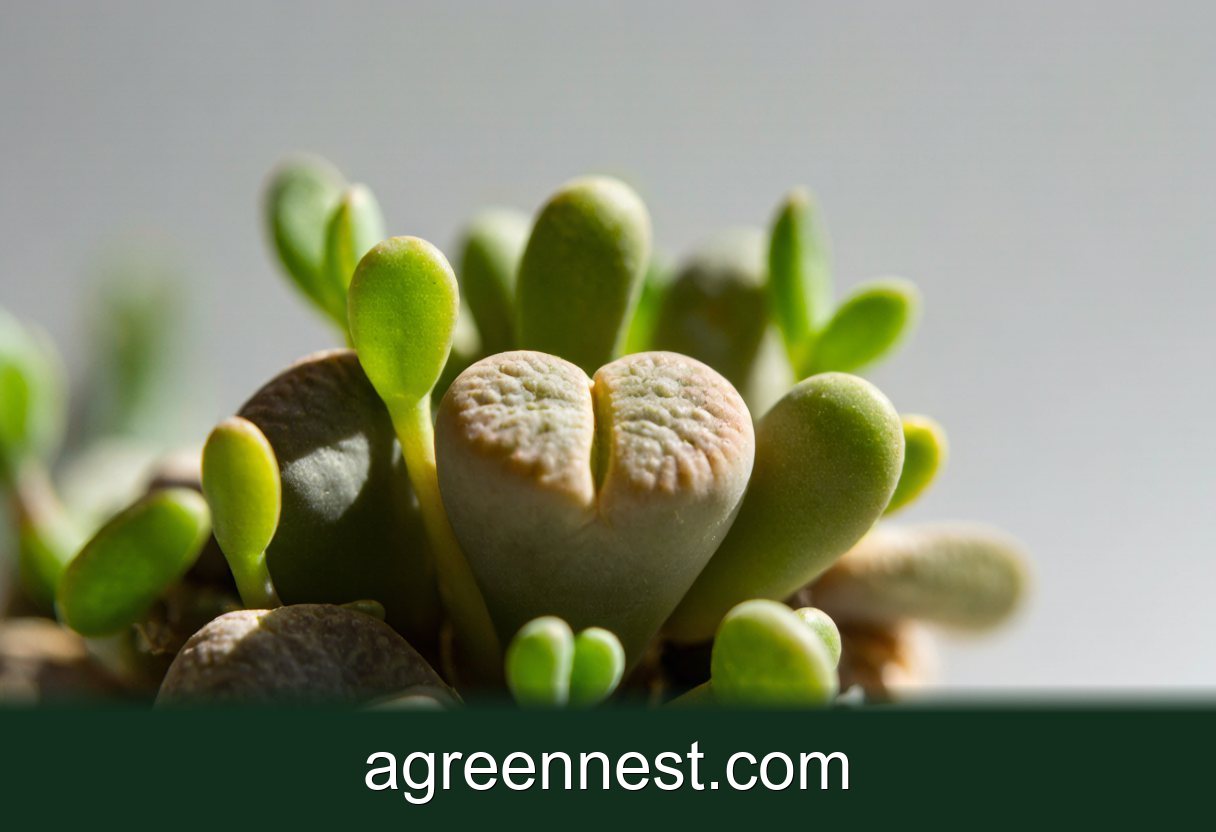
The secret to a happy Lithops is restraint. Place it in a few hours of direct sun, then wait until the soil is bone dry before watering (every 2-3 weeks in summer, less in winter). Use a lean, sandy soil and a porous pot so excess moisture escapes fast and rot never gets started.
Why I Keep Coming Back to Lithops
My windowsill looked bare until a single Lithops aucampiae arrived in a mail order box. That grey green pebble grinned at me for three full months without a drop of water, and this quiet stubbornness is why I keep returning. Beginners often expect fuss, yet these South African natives ask for almost nothing. Such plants reward neglect handsomely, a paradox that still delights me each autumn. Friends who visit always ask what the strange stones are, and the answer makes a good story. Few hobbies cost so little money and teach so much patience at the same time. Morning sun through my kitchen window is what keeps the colour honest on the bodies.
What Makes a Lithops Different From Other Succulents?
A Lithops is really two fat leaves fused into one stone shaped body. Split down the middle, the cleft hides a new pair waiting underground while the windowed top admits light to inner tissue. Survival here follows a trick: the plant shrinks into its old shell instead of growing taller. Colours across the genus run from pale biscuit to deep chestnut, and every clone mimics the gravel of its homeland. Dry spells simply wrinkle the outer pair as it feeds the next. Wild plants in the Karoo survive on fewer than 12 cm of rain a year, which tells you how little they truly need to thrive. Botanists count more than 35 species, though only a handful reach local garden centres.
Lithops aucampiae: The Classic Living Stone
Lithops aucampiae remains the one I suggest to nervous first timers. Its body reaches about 2 to 3 cm across and blushes copper red under strong light. Plant it in a mix of three parts coarse pumice to one part loam near a south window. Fourteen months passed before a seed started cluster opened its first yellow bloom at noon. Winters there leave it untouched for ten weeks at a time. Mature clumps can hold six or seven bodies in a single 7 cm pot once they finally fill out. Seed grown plants cost less than a coffee and teach patience from the very start.
Lithops lesliei: The Low and Slow One
Lithops lesliei spreads wider and stays flatter than its cousin. Grey freckles across the leaf faces break up its outline on a bright shelf. Set the plant in a shallow 7 cm terracotta pot so roots avoid cold, deep soil. Tough constitution hides behind that plain look and shrugs off a missed watering. Slow pace defines this species, and growers rarely regret it. Older specimens develop a faint sheen that collectors prize above the plain green form found in most nurseries. Repotting every third spring keeps the shallow roots from binding or souring.
How Much Light Do These Plants Really Need?
Give both species at least five hours of direct sun each day. A bright south or west sill keeps bodies tight and colours rich. During the short northern winter, add a grow lamp for twelve hours if the room drops below 16°C (61°F). A stretched, pale body leaning toward the glass signals too little light. Light alone explains most of the problems people report. East facing glass works in summer, but the weak winter sun there is rarely enough on its own to keep good colour. South facing panes behind a net curtain give the even bath of light these plants crave.
When Should You Water a Lithops?
Wait until the soil has been bone dry for several days before watering. Summer usually means every 2 to 3 weeks, while winter stretches to 8 to 10 weeks. Plump old skin still feeds the new pair, so let the old leaves look shrivelled first. Two dry months once cost me a seedling after one generous soak. Mushy corpses in spring teach harder than any book. A small syringe delivers just 5 to 10 ml to the edge of the pot without ever wetting the crown. Spring growth is the only season a little extra water helps the new pair swell safely.
Which Pot and Soil Mix Works Best?
Pick a porous pot with a drainage hole and a gritty, lean medium. Two parts horticultural sand to one part cactus soil drains in under a minute. Fine gravel on top keeps splashes from rotting the crown. Six centimetres of pot holds one mature plant without crowding. Damp soil touching the soft centre is where rot begins. Glazed ceramic looks pretty but traps moisture, so unglazed terracotta remains the safer daily choice for these plants. Labels on the base stop you mixing up the two species at repotting time.
How Do You Repot a Lithops Safely?
Lift the plant only in late spring when the old skin has gone papery. Knock away the old grit and trim any black, soft roots with a clean blade. Settle it into fresh mix at the same depth, then wait one week before the first light watering. Fresh wounds callus faster in open air than in cold, wet soil. Two seasons of patience usually rebuild a full, confident clump you can be proud of at last. Crowded pots actually flower better, so do not rush to split a happy clump.
Frequently Asked Questions
Q: Can these two species share a single pot?
A: Yes, as long as both sit in the same gritty mix and get equal sun, which they do.
Q: Why did my plant split and look like two stones?
A: That is the new pair emerging, and it is healthy. Hold off watering until the old skin is papery.
Q: How cold is too cold for Lithops?
A: Below 7°C (45°F) for more than a night risks scarring, so move them indoors before frost.
Collecting a genus slowly teaches one plant family better than any shelf of mixed pots. Pair your favourites with the light calculator to place them well, and let restraint be your rule. A happy Lithops is the one you almost forgot to water.
Sources & further reading
GreenNest authors research and write every guide independently. The external links below are reputable references we recommend for deeper reading — they are not the sources we copied from.
- NC State Extension — Plant Toolbox — NC State Extension
- Aggie Horticulture (Texas A&M) — Texas A&M AgriLife
- Royal Botanic Gardens, Kew — Kew Gardens
Recommended Tools for Succulent Care
Free, no-signup helpers matched to this guide.
Free Ebooks to Explore
Downloadable handbooks — no email required.
Free Ebook
The AGreenNest Succulent Care Handbook
The complete, beginner-to-confident guide to growing fat, happy succulents — 10 chapters and a 20-plant directory.
Share Your Plant Story
Grown something tricky, or found a trick that finally worked? Tell us in the comments, or see what other readers are sharing on our Community page. The best reader tips get folded back into our guides.
Join the Conversation
Have a tip or a question about Lithops Care: 2 Species for Beginners? Share it below — comments are saved on our server.