 AGreenNest
Succulent Care
Living Stones Care Guide (Lithops aucampiae)
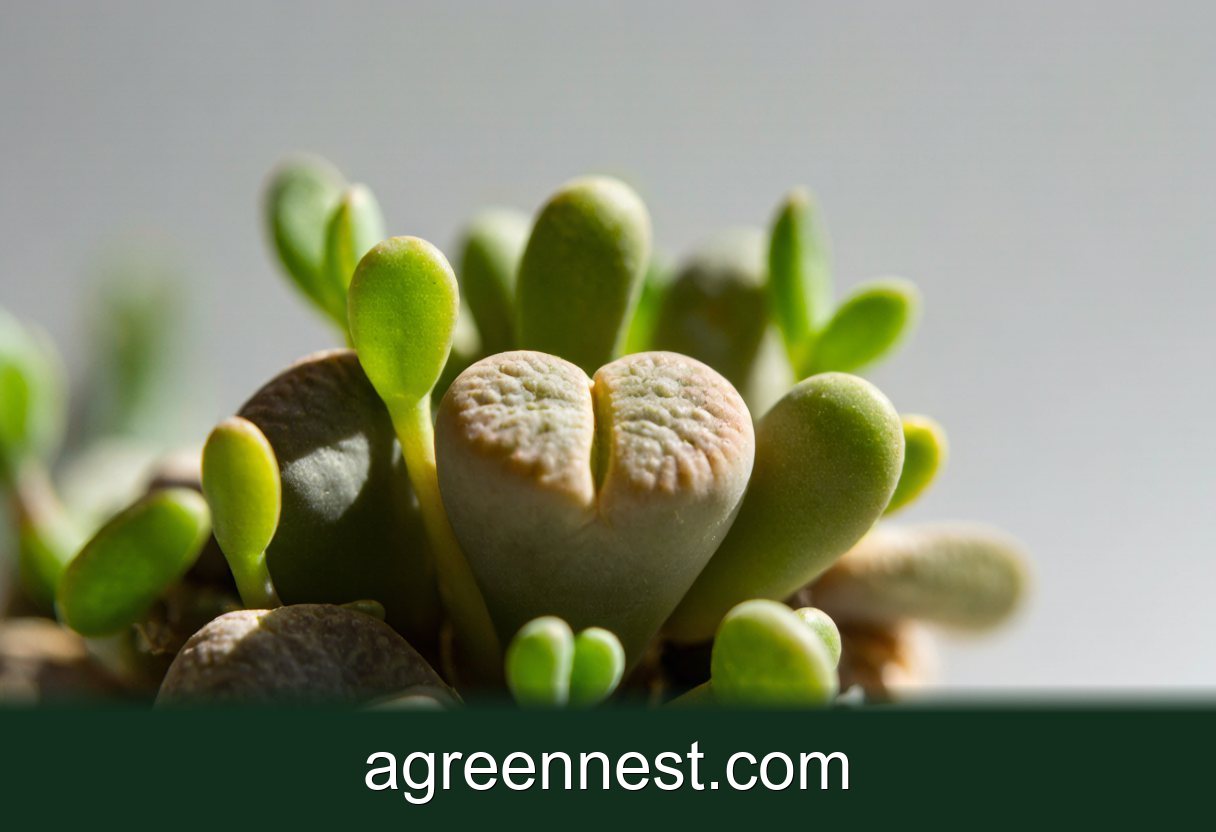
Living Stones Care Guide (Lithops Aucampiae) stores moisture in its leaves, so it tolerates some neglect. Give it a few hours of direct sun and water only when the potting mix has fully dried out (30 days between waterings). Plant it in a gritty, fast-draining mix and a terracotta pot to keep the roots healthy and rot-free.
The first time I saw a Lithops aucampiae in a shop, I genuinely thought the pot was full of polished grey pebbles. Then one of the pebbles split open and a smaller, brighter pebble pushed out. I was hooked. Living stones are among the strangest and most rewarding succulents you can grow, and they suit a busy person because they want less water than almost anything else on a windowsill.
These little plants are masters of disguise. In their home range across South Africa and Namibia, they hide among actual stones, and the mottled tops blend so well that grazing animals walk right past. Bringing that quiet trick into your home is half the fun.
My own colony has survived two house moves and a long stretch of neglect, and it is still thriving. Here is the care routine that keeps lithops happy without fuss.
Living Stones at a Glance
| Care factor | What Living Stones wants |
|---|---|
| Light | full, direct sun for most of the day |
| Water | a deep drink only when the old leaf pair has shrunk, about every 30 days in growth |
| Temperature | comfortable from 50 to 85°F (10 to 29°C) |
| Humidity | dry air is perfectly fine |
| Soil | a gritty, free-draining succulent mix |
| Difficulty | best once you have a little experience |
| Pet safe | yes, it is generally regarded as pet-safe |
Why Do Lithops Look Like Pebbles?
The camouflage is no accident. Lithops species grow as a pair of fat leaves fused into a single body, with a small window of translucent tissue on top that lets light reach the inner cells. From a distance, that windowed, speckled top looks exactly like the quartz and shale around it, which helps the plant avoid being eaten in the wild.
That shape also conserves water. The rounded body holds moisture deep inside, and the small surface area loses little to evaporation. A Lithops aucampiae can sit through weeks of dry heat with no visible change, which is why it tolerates a forgetful owner better than almost any other succulent.
Colour varies by species and locality. Some are grey green, others tan, pink, or brown, and the patterns on the top are like fingerprints. No two colonies look quite the same.
How Often Should You Water Living Stones?
This is the question every beginner gets wrong. Lithops store water in their leaves, so they need far less than a typical houseplant. In the active growing season, from autumn through spring in the northern hemisphere, I water about every 30 days, and only when the old outer pair has clearly shrunk and wrinkled.
The key is to watch the plant, not the calendar. When the body looks plump and the old leaves are still full, skip the water. When the old pair thins and the new pair shows through the fissure, a single deep soak is welcome. I use roughly 50 millilitres of water for a 7 centimetre pot, just enough to dampen the lower soil.
Late spring and summer bring dormancy. The plant rests through the hottest months, and watering then is the fastest route to rot. I stop completely from about May to August, then resume as the autumn growth begins. When in doubt, wait another week.
Soil, Pots, and the Dormancy Trick
Living stones need a gritty, fast draining mix, or the roots rot within days. I blend four parts coarse sand or pumice with one part cactus soil, a ratio of about 80 percent mineral to 20 percent organic. That sharp, open medium lets water pass straight through.
A terracotta pot is the safest choice. Clay breathes and dries the root zone quickly, which is exactly what Lithops wants. I use a shallow pot, no more than 7 centimetres deep, because the roots are short and a deep wet column invites trouble. Always tip out the saucer.
The dormancy trick is simple to remember. Water in the cool seasons, rest in the hot one, and never water a plant that is mid split. Following that single rule prevents most losses.
What Temperature Keeps Them Happy?
These succulents like warmth without extremes. They grow best between 50 and 85°F (10 and 29°C), and they enjoy a cooler, drier rest in summer. A bright windowsill that stays above 50°F (10°C) year round suits them well.
Light is the other half of the equation. Give them full, direct sun for at least five or six hours a day, and the bodies stay compact and beautifully marked. Too little light makes them elongate and lose their stone like shape. If your sill is dim, a grow light on a fourteen hour timer keeps them in form.
How to Propagate Lithops
Seed is the honest method, and it is easier than it sounds. Sow fresh seed on the surface of damp gritty mix in early autumn, cover with a clear lid, and keep it bright but not scorching. Tiny pebbles appear within three to four weeks, though they take two to three years to reach adult size.
Division works only if a clump has formed multiple heads, which some Lithops do with age. Split carefully at repotting and let cuts dry a day before planting. Most home growers, myself included, find seed more reliable than splitting.
Common Problems and Easy Fixes
Leaning or stretched growth means the plant wants more light. Move it brighter or add a grow light.
A mushy, yellow base almost always means overwatering. Let it dry out completely and check the roots for black, soft tissue.
Brown, crispy patches usually point to sunburn from sudden full sun, or to salt build up. Harden the plant off gradually and flush the soil with distilled water.
Frequently Asked Questions
Q: Is Living Stones safe for pets?
A: Yes, it is generally regarded as pet safe, though I keep pots where paws cannot knock them over.
Q: What light is best?
A: Full, direct sun for at least five or six hours a day keeps the bodies compact.
Q: How do I make more of it?
A: Sow fresh seed in early autumn on gritty mix, or split an established multi headed clump.
Living stones reward a little attention with one of the most unusual sights in gardening, a pot of pebbles that quietly multiplies. For a personalised schedule, try our free watering calculator and pair it with the light calculator to pick the perfect sunny spot.
Sources & further reading
GreenNest authors research and write every guide independently. The external links below are reputable references we recommend for deeper reading — they are not the sources we copied from.
- Royal Horticultural Society — Houseplant care — RHS
- Clemson Home & Garden Information Center — Clemson Extension
- UF/IFAS Gardening Solutions — UF/IFAS
Recommended Tools for Succulent Care
Free, no-signup helpers matched to this guide.
Free Ebooks to Explore
Downloadable handbooks — no email required.
Free Ebook
The AGreenNest Succulent Care Handbook
The complete, beginner-to-confident guide to growing fat, happy succulents — 10 chapters and a 20-plant directory.
Share Your Plant Story
Grown something tricky, or found a trick that finally worked? Tell us in the comments, or see what other readers are sharing on our Community page. The best reader tips get folded back into our guides.
Join the Conversation
Have a tip or a question about Living Stones Care Guide (Lithops aucampiae)? Share it below — comments are saved on our server.