 AGreenNest
Succulent Care
Succulent Light and Temperature Needs Explained
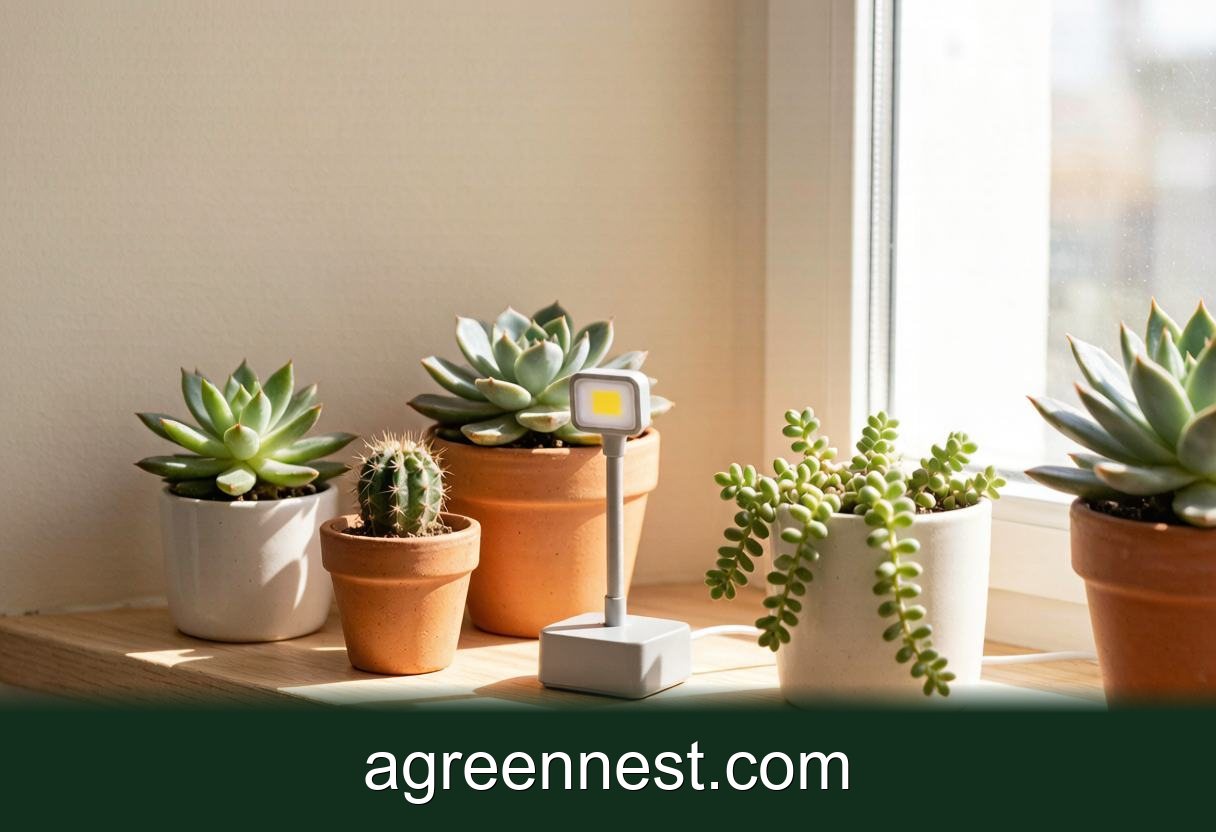
If you are new to Succulent Light and Temperature Needs Explained, keep it simple: bright, indirect light, and water sparsely. These plants hate wet feet, so always let the soil dry completely between drinks (every 2-3 weeks in summer, less in winter). A shallow terracotta pot with gritty soil is the safest setup, and a bright windowsill does the rest.
Light and temperature are the two dials that decide whether your succulents stay compact, plump, and colorful or stretch into sad, pale shadows. I learned this the hard way with an Echeveria elegans that leaned across my shelf like it was reaching for the door. After a decade of keeping these plants, I have come to trust light more than any fertilizer or fancy pot. Get these two factors right and almost everything else in succulent care falls into place.
How Much Light Do Succulents Need?
Most succulents want at least six hours of bright light each day. The word bright here means direct sun or very strong indirect light, not the dim glow of a far corner. A plant that receives only two or three hours of weak light will slowly decline and lose its tight shape.
Species vary more than beginners expect. Shade-tolerant kinds such as Haworthia cooperi and Gasteria manage with less and make excellent desk companions. Sun worshippers like Lithops and Graptopetalum demand a full south window or steady outdoor sun to look their best.
In my experience the simplest test is your own shadow. Stand where the plant sits at noon and look down. If your shadow is crisp and short, the light is probably strong enough for most rosette types. A long, fuzzy shadow means you should move the pot or add a lamp.
What Window Is Best for Succulents?
Where you place the pot changes everything, and the compass direction of the glass matters most. A south-facing window gives the strongest, all-day light and suits sun lovers best. An east window offers gentle morning sun that most species handle without complaint.
A west window delivers intense afternoon rays, which are fine but can scorch thin leaves in summer. A north window is the weakest option, and only tough types like Sansevieria trifasciata and Haworthia truly thrive there. Place sun lovers within twelve inches of the glass for the strongest rays.
Rotate the container a quarter turn every week so each side gets even exposure. This small habit keeps the plant growing straight instead of leaning toward the glass like a sunflower on a tilt.
Using Grow Lights When Sunlight Is Scarce
Not everyone has a sunny window, and winter cuts natural light to a fraction of summer levels. A full-spectrum LED grow light solves both problems with little fuss. Position the panel roughly six to twelve inches above the plants and run it twelve to fourteen hours a day.
Grow lights are especially handy for keeping Echeveria colorful through the dark months. Choose a panel rated around twenty to forty watts for a small shelf, then use a simple timer so the schedule stays consistent without you remembering it. I keep mine on a timer that turns on at seven in the morning and off at nine at night.
Two winters ago my kitchen shelf went from cheerful pinks to muddy green by January. One thirty-watt bar light turned the whole tray back to vivid color within three weeks. The investment paid for itself in saved plants.
Reading the Signs of Light Trouble
Stretching is the classic cry for help. If your succulent grows a long, bare stem with widely spaced leaves, it is starving for light, a condition called etiolation. You can behead the plant by cutting the healthy top rosette, letting the wound callus for three days, and replanting it.
The bare stem often sprouts new pups at the base, giving you two plants where there was one sad one. Too much sudden sun also burns. Pale, brown, or white patches mean the plant cooked faster than it could adapt.
Acclimate gradually by starting in shade and adding one hour of direct sun each day across two weeks. Replant the calloused top in a gritty mix of one part potting soil to two parts pumice for fast drainage.
What Temperature Keeps Succulents Happy?
Most soft succulents are happiest between 65°F and 80°F, which is 18°C to 27°C. They handle normal home temperatures well, but dramatic swings from a drafty vent or a hot radiator stress them badly. A steady room temperature beats a warm day followed by a cold night every single time.
Heat is the lesser enemy. Above 90°F, or 32°C, with strong sun, some thin-leaved types like Sedum morganianum can wilt in the afternoon. Provide light shade during heat waves and improve airflow with a small fan to keep leaves cool.
Cold is the real danger for tender kinds. Soft types such as Echeveria elegans and Aloe vera suffer below 40°F, or 4°C, and die at freezing. Hardy types like Sempervivum tectorum survive down to minus 20°F, which is minus 29°C, outdoors once established. Know your species before leaving pots outside in autumn.
Seasonal Light and Temperature Strategy
Spring brings rising light, so begin normal watering and a light feeding of one quarter strength, roughly one teaspoon per litre of water, every four weeks. Summer offers maximum sun, and you should shield sensitive leaves from harsh midday rays if they show scorch.
Fall light drops, so reduce water as growth slows and the plant prepares to rest. Winter is the lowest light and coolest period, so use grow lights and water sparingly to avoid cold, wet roots.
A cool, bright winter with nights around 50°F to 55°F, or 10°C to 13°C, actually benefits many succulents. That gentle chill triggers the stunning stress colors collectors chase all year.
Fixing Etiolated Plants Step by Step
First, identify the light gap, which is usually a north window or a crowded shelf. Second, move the plant to a south or east window, or set up a grow light on a timer. Third, rotate the pot weekly for even exposure on all sides.
Fourth, behead badly stretched stems to restart compact growth from the top rosette. Fifth, watch the new growth, because tight rosettes confirm you succeeded. Loose, pale leaves mean the light is still too weak and the cycle will repeat.
Using a Light Meter to Stop Guessing
Guessing light levels leads to repeated mistakes, so measure instead. A simple handheld meter or a free phone app gives a real reading in foot-candles or lux. Most succulents want ten thousand to fifteen thousand lux for several hours daily.
Below five thousand lux they will slowly stretch and fade no matter how carefully you water. Measure at plant height rather than at the ceiling, and check at midday when the sun is strongest. Track the numbers through the seasons so you know exactly when to add a lamp. Concrete readings remove the mystery and make light care repeatable for anyone.
Frequently Asked Questions
How much light do succulents need per day?
Most need at least six hours of bright, direct, or strong indirect light daily, while low-light types like Haworthia manage with far less.
What window is best for succulents?
A south-facing window gives the strongest all-day light and suits sun lovers, while east windows work for most other rosette types.
Can succulents grow under grow lights?
Yes. Use a full-spectrum LED six to twelve inches above the plants for twelve to fourteen hours daily to replace weak natural light.
What temperature is too cold for succulents?
Soft succulents suffer below 40°F, or 4°C, and die at freezing, while only hardy types like Sempervivum survive hard frost outdoors.
How do I fix a stretched, etiolated succulent?
Move it to brighter light or add a grow light, and behead badly stretched stems to regrow a tight, compact rosette from the top.
Light and temperature are the levers that turn a struggling plant into a showpiece. Find your brightest spot with our free light calculator, and learn year-round timing in our succulent ebook. Start with one change this week, watch the new growth, and let the results guide the rest of your care.
Sources & further reading
GreenNest authors research and write every guide independently. The external links below are reputable references we recommend for deeper reading — they are not the sources we copied from.
- Missouri Botanical Garden — Missouri Botanical Garden
- Clemson Home & Garden Information Center — Clemson Extension
- Cornell Garden-Based Learning — Cornell University
Recommended Tools for Succulent Care
Free, no-signup helpers matched to this guide.
Free Ebooks to Explore
Downloadable handbooks — no email required.
Free Ebook
The AGreenNest Succulent Care Handbook
The complete, beginner-to-confident guide to growing fat, happy succulents — 10 chapters and a 20-plant directory.
Free Ebook
Haworthia & Haworthiopsis Care Handbook
A focused guide to the striped, forgiving Haworthia clan.
Share Your Plant Story
Grown something tricky, or found a trick that finally worked? Tell us in the comments, or see what other readers are sharing on our Community page. The best reader tips get folded back into our guides.
Join the Conversation
Have a tip or a question about Succulent Light and Temperature Needs Explained? Share it below — comments are saved on our server.