 AGreenNest
Succulent Care
Fertilizing Succulents the Safe Way
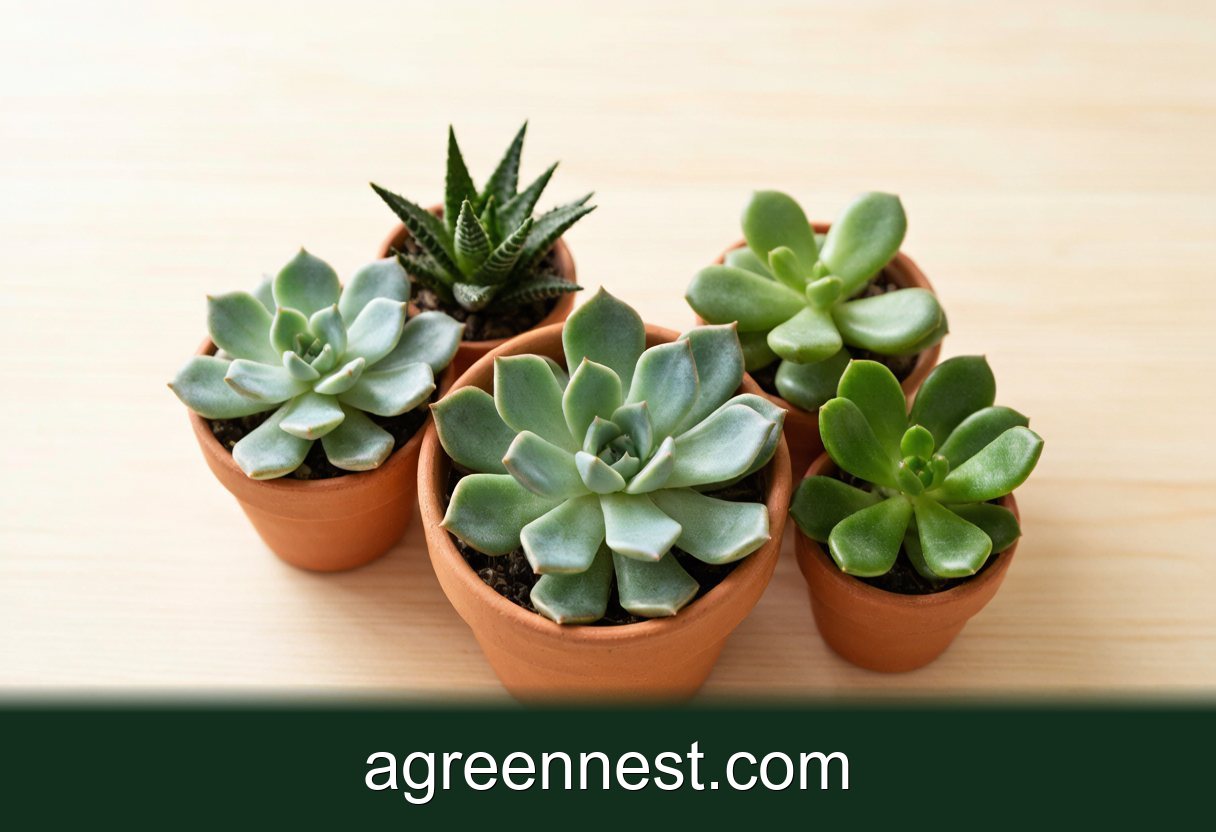
The secret to a happy Fertilizing Succulents the Safe Way is restraint. Place it in bright, indirect light (a south or east windowsill is ideal), then wait until the soil is bone dry before watering (every 2-3 weeks in summer, less in winter).
Why Do Succulents Need So Little?
I still remember the first time I nearly killed a prized Echeveria elegans by loving it to death. A friend had handed me a bottle of all purpose plant food, and I assumed more must be better. Within three weeks the rosette had gone soft and pale, the kind of stretched, sad growth that no amount of bright light could undo. That little accident taught me the single most useful thing about feeding succulents. They are light feeders by nature, and restraint is the whole game.
Most succulents evolved in rocky, low nutrient soils where survival meant storing water and asking little from the ground. Their roots are built to sip, not gorge. Give them a rich, frequent diet and you push them into fast, weak, watery growth that collapses at the first dry spell. The goal is never to make a succulent grow bigger. It is to keep it compact, colourful, and quietly content.
Gardeners often worry they are starving a plant that simply does not want dinner. I hear it every spring from friends who see no new growth and reach for the feed bottle. The truth is that a mature succulent may add only a single leaf or two in a whole season, and that slow pace is healthy, not hungry.
What Happens When You Overfeed?
Soft, translucent leaves are the first warning sign I look for. The plant begins to stretch toward the light because the new growth is too tender to hold its shape. Colours fade from deep red rims to washed out green. Roots can actually scorch when salts build up in dry soil, a condition growers call fertiliser burn.
A tell I trust is the leaf base. When overfed, the oldest leaves yellow from the bottom up and feel almost jelly like, a sign the plant is dumping stored water it cannot use. Three things tend to go wrong together after an overfeed. The stem weakens and leans. The leaves split or bruise easily. Pests such as mealybugs show up because the soft tissue is an easy target.
I have found that flushing the pot with plain water for a minute or two, then letting it dry completely, reverses most of the damage if you catch it early.
How Should You Feed Them?
Use a dedicated cactus or succulent fertiliser, or any balanced houseplant formula cut to quarter strength. My own rule is one quarter teaspoon of a 10-10-10 liquid feed per gallon of water, mixed well and applied only to already damp soil. Feeding dry roots is like pouring salt on a cut, so I always water first and wait ten minutes.
Liquid feeds give you far more control than slow release granules, which can dump a burst of salts during a hot spell. I prefer mixing a fresh dilute batch each time rather than guessing at a pre measured stick. Spring and summer are the only seasons that matter. I feed once every four weeks from March through August, then stop.
Time of day matters as well. I feed in the early morning so any excess moisture evaporates before cool night air settles, which lowers the chance of rot at the crown. Evening feeding in a stuffy room invites fungus, a risk no one needs for the sake of convenience. Autumn and winter are a rest period, and a resting plant has no use for food. Newly repotted plants get a one month holiday too, because fresh potting mix already carries a light charge of nutrients.
Which Signs Tell You It Is Working?
A healthy fed succulent stays tight and slow. The growth you see in spring should be firm, a little fatter than last year, with colour intensity holding steady. Haworthia cooperi will reward you with plump little windows on its leaves. Crassula ovata keeps its paddle shape without stretching. Aloe vera and other soft succulents show the same restraint, staying glossy rather than greedy. None of these plants will double in size, and that is exactly the point.
Temperature matters more than people expect. Most succulents feed best when nights stay above 55°F (13°C) and days sit between 70°F and 85°F (21°C and 29°C). Below that range the roots simply stop taking anything up, so feeding in a cold room is wasted effort and a burn risk. A plant that asks for nothing is a plant in balance, and balance is the quiet aim of every feed.
What About Special Cases?
Trailing types such as Sedum morganianum appreciate the same quarter strength mix but benefit from a second, lighter feed in midsummer. Tiny alpine species want even less, sometimes a single spring dose and nothing more. I keep a small notebook by the window where I log each plant's last feed, because memory is a poor gardener.
Seedlings and cuttings are the one group that breaks the rule. A tiny Echeveria pup in its first month wants a faint weekly sip at one eighth strength, because it has almost no stored reserves. I bump that up only after the roots fill the pot. Patience here pays off in a plant that never learns to expect a heavy meal.
After a few seasons you develop a feel for it. The plant tells you what it needs through its shape, its colour, and its pace. Trust the signs over the schedule, and your succulents will reward you with calm, unhurried beauty.
Frequently Asked Questions
Q: Can I use regular houseplant food on succulents?
A: Yes, as long as you dilute it to quarter strength. Full strength mixes are the fastest route to burned roots and limp, stretched growth.
Q: My succulent turned pale and soft after feeding. What went wrong?
A: That is almost always overfeeding. Flush the soil with plain water, hold off on any more feed for a month, and let it dry out fully between waterings.
Q: Do brand new plants need fertiliser right away?
A: No. Wait at least four weeks after repotting, and remember that fresh soil already contains a light nutrient charge.
Underfeeding rarely harms a succulent, while overfeeding sends them downhill fast. I keep a simple log in the care schedule tool so I never lose track of who ate last. Quiet restraint, bright indirect light, and a little patience will take you further than any bottle of miracle food ever could.
Sources & further reading
GreenNest authors research and write every guide independently. The external links below are reputable references we recommend for deeper reading — they are not the sources we copied from.
- NC State Extension — Plant Toolbox — NC State Extension
- Missouri Botanical Garden — Missouri Botanical Garden
- UF/IFAS Gardening Solutions — UF/IFAS
Recommended Tools for Succulent Care
Free, no-signup helpers matched to this guide.
Free Ebooks to Explore
Downloadable handbooks — no email required.
Free Ebook
The AGreenNest Succulent Care Handbook
The complete, beginner-to-confident guide to growing fat, happy succulents — 10 chapters and a 20-plant directory.
Free Ebook
Haworthia & Haworthiopsis Care Handbook
A focused guide to the striped, forgiving Haworthia clan.
Share Your Plant Story
Grown something tricky, or found a trick that finally worked? Tell us in the comments, or see what other readers are sharing on our Community page. The best reader tips get folded back into our guides.
Join the Conversation
Have a tip or a question about Fertilizing Succulents the Safe Way? Share it below — comments are saved on our server.