 AGreenNest
Succulent Care
How Often to Water Succulents: A Simple Schedule
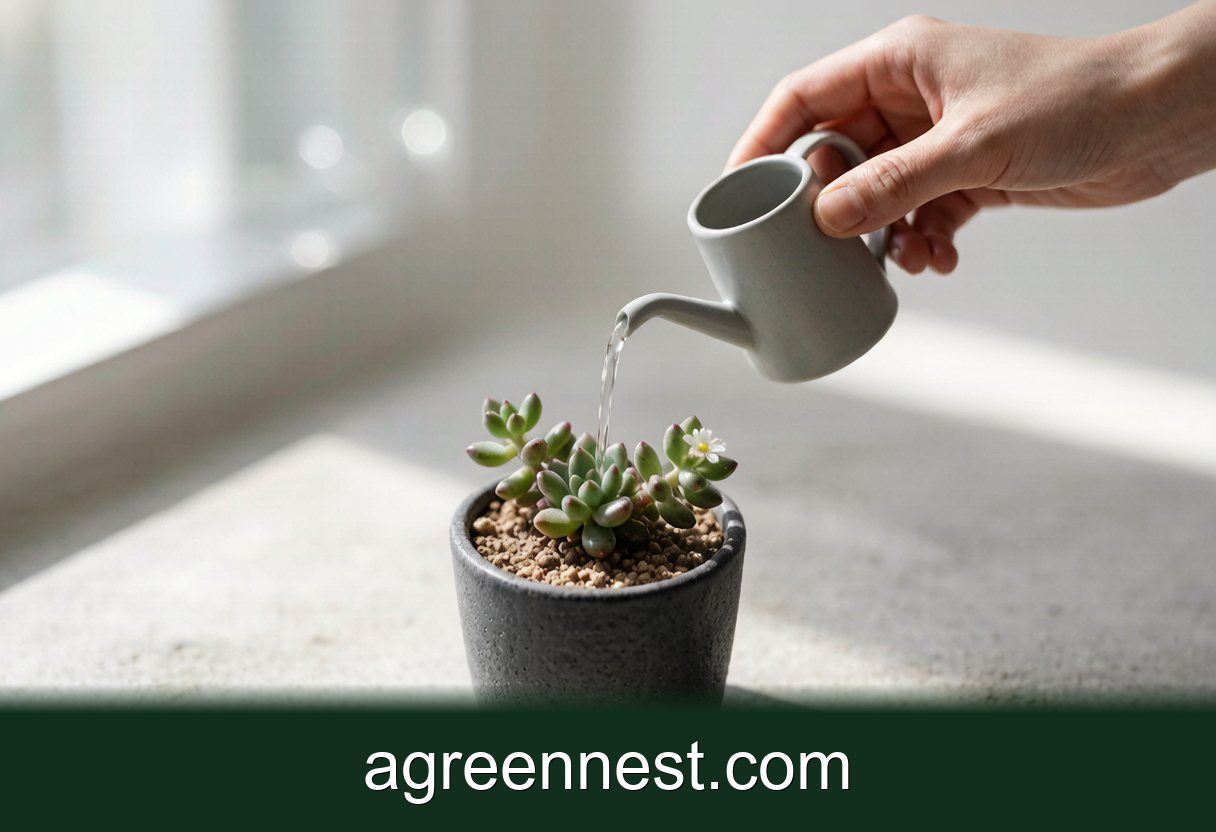
The secret to a happy How Often to Water Succulents is restraint. Place it in a few hours of direct sun, then wait until the soil is bone dry before watering (10 days between waterings). Use a lean, sandy soil and a porous pot so excess moisture escapes fast and rot never gets started.
The number one question every new succulent owner asks is also the number one cause of dead plants: how often should I water? The short answer is "when the soil is dry," but the timing behind that rule is what keeps succulents alive.
Forget the Calendar, Learn the Rule
Succulents store water in their leaves and stems, so they hate a fixed weekly schedule. Instead, follow the dry-soil rule: only water when the top 2 to 3 inches of soil are completely dry. Stick your finger in, or better yet, use a tool to check. In summer this might be every 7 to 10 days; in winter it could be every 3 to 4 weeks. The plant, not the calendar, sets the pace.
How do I read the dry-soil rule?
Learn to read the plant instead of guessing at a date. Common thirst signals include wrinkled, soft lower leaves and a pot that feels surprisingly light when lifted. A well watered leaf is plump and snaps back when gently squeezed. An underwatered one stays dented. Catch the wrinkle early and a single deep soak revives most plants within a day.
Signs Your Succulent Is Thirsty
Watch the lower leaves first, because they show thirst before the rest of the plant complains. The pot feeling light is the most reliable clue in a small container. Leaves that lose their firm squeeze-back and feel bendy are asking for a drink. These three signs beat any timer you could set.
The Pot-Size Effect
Pot size changes everything about the schedule. A tiny 2 inch pot dries in 3 to 4 days under grow lights, while a large 6 inch terracotta pot may stay moist for three weeks. Small pots need more frequent checks; big pots need patience. Shallow growers like Haworthia and Lithops dry faster than deep-rooted Aloe or Jade. Match your watering rhythm to the pot and the species, not a generic rule.
Why does pot size change the schedule?
Small pots hold little soil, so heat and light pull the moisture out within days, and the roots dry fast. Large pots keep a reservoir near the bottom that the plant sips slowly, so the surface can look dry while the base stays wet. That is why a 6 inch pot can go three weeks while a 2 inch pot needs a check every few days. Always probe deeper than the top inch before you decide.
Seasonal Changes
Spring and summer are the active growth months, when most succulents drink. With strong light and warm temperatures of 70 to 85°F (21 to 29°C), they need water every 7 to 14 days. Growth is fast, and the soil dries quickly.
Spring and Summer
This is the drinking season. Bright light and warm air speed evaporation, so check the soil weekly and water when it is dry. Fast growth rewards a deep soak.
Fall and Winter
Light drops and temperatures fall, so the plant slows down. Cut water to once every 3 to 4 weeks, or even less for Sempervivum kept cool. Overwatering in winter is the fastest route to rot.
Overwintering Tips
Keep plants above 40°F (4°C) and near the brightest window you have. Water just enough to keep leaves from shriveling, often a single light soaking per month is plenty.
A Simple Starter Schedule
Use this as a flexible guide, then adjust by feel:
- Small pot, hot room: check every 3 to 4 days, water when dry.
- Standard pot, bright window: every 10 to 14 days in summer.
- Large pot, cool winter: every 3 to 4 weeks, barely moist.
Always water deeply until runoff appears, then empty the saucer. Shallow sprinkling trains roots to stay near the surface and weakens the plant.
What does overwatering look like?
Mushy, yellow, translucent leaves that drop easily are classic overwatering. If you spot them, stop all watering, move the plant to bright air, and let the soil dry completely. Severe cases need root surgery: trim black roots and replant in dry gritty mix.
Species Quick Reference
- Echeveria: every 7 to 14 days summer, 3 to 4 weeks winter.
- Haworthia: every 10 to 14 days; very drought tolerant.
- Aloe: every 14 to 21 days; hates wet soil.
- Jade (Crassula): every 14 to 21 days; let dry fully.
- Sedum: every 7 to 14 days; forgiving and tough.
Deep Soak vs. Light Sprinkle
How you water matters as much as when. Always soak the pot until water exits the drainage hole, then stop. This pushes roots downward to seek moisture, building a strong, deep system. A light sprinkle only wets the top inch, so roots stay shallow and the plant dries out faster. After soaking, tip out the saucer after 10 minutes. Trapped water wicks back up and defeats the dry-soil rule. Bottom watering, setting the pot in a tray of water for 10 to 15 minutes, is a great alternative that encourages even root growth without wetting the leaves.
Watering While You Are Away
Travel worries many new owners, but mature succulents handle absence easily. A well-established Jade or Aloe can go a month dry without harm. Before a trip, give a deep soak and move the plant out of direct sun so the soil dries slower. For longer trips, a self-watering spike or a shallow tray of wet pebbles adds humidity without soaking roots. Never ask a friend to water weekly unless you trust their restraint, because most succulent deaths on vacation come from a helpful over-waterer.
Frequently Asked Questions
Q: How often should I water succulents?
A: Water only when the soil is fully dry, typically every 7 to 14 days in summer and every 3 to 4 weeks in winter, depending on light and pot size.
Q: Should I water succulents on a fixed schedule?
A: No. Use the dry-soil rule and check the pot's weight and leaf firmness rather than watering on set calendar dates.
Q: How can I tell if my succulent needs water?
A: Look for wrinkled, soft lower leaves and a lightweight pot; these thirst signs mean it is time for a deep soak.
Q: Do succulents need less water in winter?
A: Yes. During winter dormancy most need water only every 3 to 4 weeks, since growth slows and soil stays moist far longer.
Q: Can a moisture meter help with watering?
A: Absolutely. A moisture meter takes the guesswork out of the dry-soil rule and prevents both over- and underwatering.
Q: What happens if I overwater my succulent?
A: Leaves turn mushy and translucent and may drop; stop watering, dry the soil, and trim any black roots to save the plant.
Watering is the skill that turns a struggling succulent into a thriving one. Try our free light calculator to understand how your light levels affect drying time, and explore our succulent ebook for printable care charts. For knowing exactly when the root zone is dry, our soil moisture meter guide turns the guess into a number.
Sources & further reading
GreenNest authors research and write every guide independently. The external links below are reputable references we recommend for deeper reading — they are not the sources we copied from.
- NC State Extension — Plant Toolbox — NC State Extension
- UF/IFAS Gardening Solutions — UF/IFAS
- Royal Botanic Gardens, Kew — Kew Gardens
Recommended Tools for Succulent Care
Free, no-signup helpers matched to this guide.
Free Ebooks to Explore
Downloadable handbooks — no email required.
Free Ebook
The AGreenNest Succulent Care Handbook
The complete, beginner-to-confident guide to growing fat, happy succulents — 10 chapters and a 20-plant directory.
Free Ebook
Haworthia & Haworthiopsis Care Handbook
A focused guide to the striped, forgiving Haworthia clan.
Share Your Plant Story
Grown something tricky, or found a trick that finally worked? Tell us in the comments, or see what other readers are sharing on our Community page. The best reader tips get folded back into our guides.
Join the Conversation
Have a tip or a question about How Often to Water Succulents: A Simple Schedule? Share it below — comments are saved on our server.