 AGreenNest
Succulent Care
Your First Month With a Succulent: 4 Moves
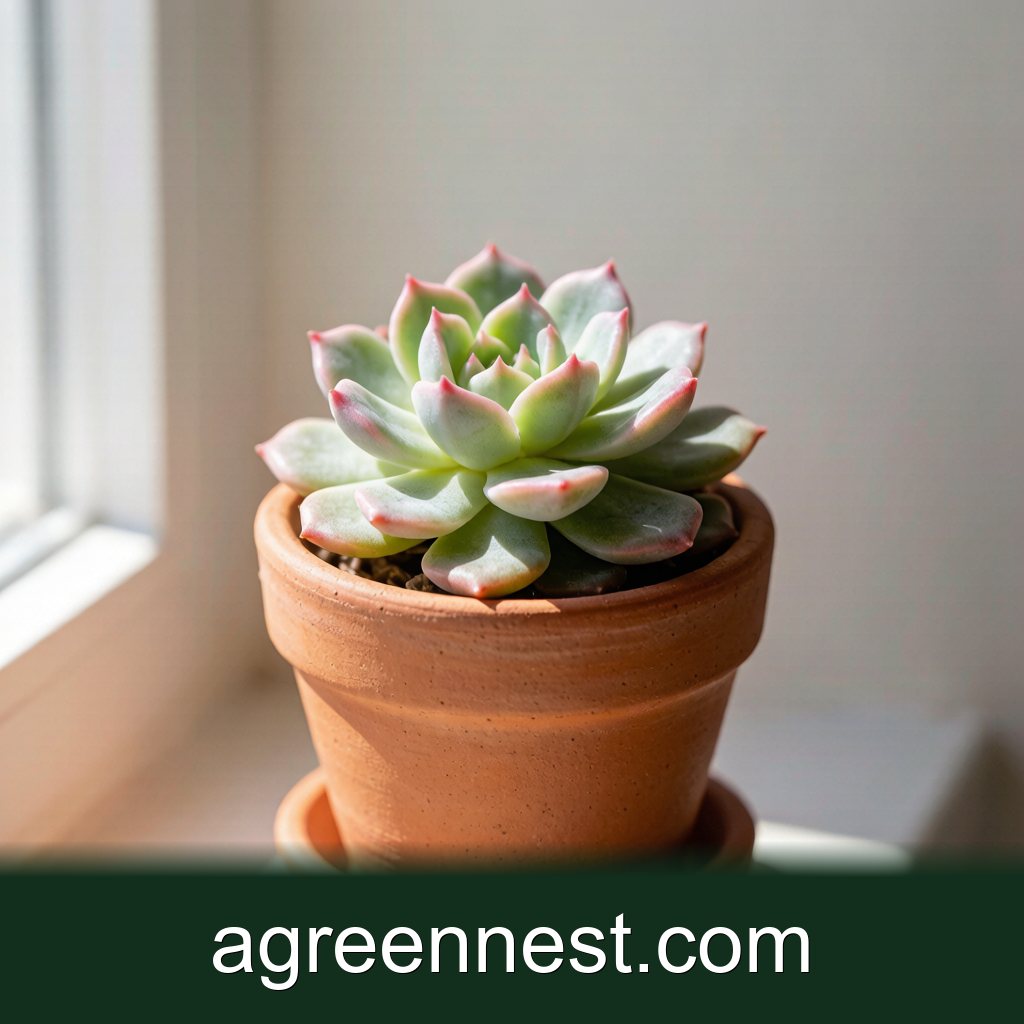
Your First Month with a Succulent stores moisture in its leaves, so it tolerates some neglect. Give it a few hours of direct sun and water only when the potting mix has fully dried out (10 days between waterings). Plant it in a gritty, fast-draining mix and a terracotta pot to keep the roots healthy and rot-free.
My first Echeveria nearly went into the bin during week three. It arrived plump and pink from the shop, then turned pale and leaned toward the window. I thought I was killing it. That plant was simply doing what a sun lover does in a dim room. Moving it two feet solved the problem, not a deeper watering can. Your first month with a succulent is mostly about reading four simple signals, and almost nothing else matters yet.
Move 1: Find the brightest spot you have
Most succulent deaths start with too little light, not too much water. Rosette types like Echeveria elegans or Graptopetalum want 4 to 6 hours of direct sun, while a Haworthia or Sansevieria will tolerate a north window. Put the plant in your brightest window on day one and leave it there. Do not shuffle it around the room chasing a nicer look. Light is the difference between a tight, colored rosette and a stretched, pale one.
If your home is genuinely dark, read choosing and using grow lights before you buy the plant a sun substitute. A $25 light on a timer beats a sunny windowsill you do not have.
Move 2: Check the soil, do not water on a date
Forget the "once a week" rule. In the first month, touch the soil every few days with your finger pushed 2 to 3cm down. Water only when that depth is dry, and wait a few more days if it is still damp. A bright, warm room might mean a drink every 7 to 10 days in summer. Cooler homes or winter stretch that gap to every 3 weeks. The plant and the pot decide, not the calendar.
When you do water, soak the soil until it runs from the drainage hole, then empty the saucer. Misting a succulent like a fern is a mistake. Our how often to water succulents guide gives the full rhythm, but the finger test is all you need in month one. A moisture meter helps if you distrust your finger, though it is optional.
Move 3: Do not repot and do not feed
Two things new owners rush into, both wrong in the first month. First, do not repot the day you get home. Fresh soil plus moved roots is a shock the plant does not need while it is adjusting to new light and air. Wait until it has settled and you see active growth, usually after a month or two, then follow the repotting succulents steps. Use a gritty mix, never dense peat.
Second, skip fertilizer. A shop plant has enough stored food for weeks, and young roots burn fast when fed too soon. The safe succulent fertilizing method is for established plants in active growth, not a newcomer in its first month. Holding off now prevents more problems than any dose would solve.
Move 4: Watch one bottom leaf
Pick one older leaf at the base and check it every few days. A leaf that wrinkles but stays firm is the plant using its stored water, a healthy sign it is nearly time to drink. A leaf that goes translucent, soft, and smells off at the base is rot from too much water, and it needs action today. Learning that one contrast early saves the plant later, because the two look similar until you have felt both.
If the plant stretches and pales, that is the light move again, not a water problem. The succulent stretching guide shows the recovery, and it starts with more sun, not less water.
How often should I really water in the first month?
A new owner usually asks this first, and the honest answer is less than you think. Let the top 3cm of mix dry fully between drinks, which lands near every 10 to 14 days in a warm room. Cooler homes stretch that to every 3 weeks, and a slower pace is fine. Watch the one bottom leaf from Move 4 rather than the calendar. When it wrinkles, water the whole pot deeply and walk away.
What can I safely ignore this month?
You will see advice to spray, to rotate daily, to "wake" the plant, or to add pebbles on top for luck. None of it matters in month one. Bright light, soil that dries between waterings, no repot, no feed, and one watched leaf make up the whole job. Everything else is decoration for your own anxiety, and the plant will not notice its absence.
Frequently Asked Questions
Q: My succulent arrived pale and stretched from the shop. Did I do something wrong?
A: No. Shop light is often weak, and the plant leaned for sun before it reached you. Move it to bright light and it will grow compact new leaves at the center, though the old stretched ones stay as they are.
Q: The bottom leaf shriveled and fell off. Is the plant dying?
A: Probably not. The oldest base leaf drying up as the plant grows is normal. Worry only if new growth at the top is also softening or going yellow.
Q: Can I keep it on my desk away from any window?
A: Only with a grow light a few centimetres above it for 12 to 14 hours a day. On a desk with no light and no lamp, a sun plant will decline within a month.
Q: Should I mist the leaves to keep it happy?
A: No. Misting invites rot in the crown and does nothing useful for a water-storing plant. Water the soil, not the leaves.
Q: When do I actually repot it?
A: When roots fill the pot or the soil has gone stale after about two years, and only once it is growing steadily. In the first month, leave it be.
The first month with a succulent is boring on purpose. Bright light, a finger in the soil, no repot, no feed, and one leaf you actually watch. Do those four things and the plant will tell you the rest. When you are ready for the deeper habits, the complete succulent care manual is the next page to read.
Recommended Tools for Succulent Care
Free, no-signup helpers matched to this guide.
Free Ebooks to Explore
Downloadable handbooks — no email required.
Free Ebook
The AGreenNest Succulent Care Handbook
The complete, beginner-to-confident guide to growing fat, happy succulents — 10 chapters and a 20-plant directory.
Free Ebook
Haworthia & Haworthiopsis Care Handbook
A focused guide to the striped, forgiving Haworthia clan.
Sources & further reading
GreenNest authors research and write every guide independently. The external links below are reputable references we recommend for deeper reading — they are not the sources we copied from.
- Clemson Home & Garden Information Center — Clemson Extension
- Aggie Horticulture (Texas A&M) — Texas A&M AgriLife
- Royal Botanic Gardens, Kew — Kew Gardens
Share Your Plant Story
Grown something tricky, or found a trick that finally worked? Tell us in the comments, or see what other readers are sharing on our Community page. The best reader tips get folded back into our guides.
Join the Conversation
Have a tip or a question about Your First Month With a Succulent: 4 Moves? Share it below — comments are saved on our server.