 AGreenNest
Succulent Care
Aloe Vera Indoor Care: Grow a Healing Houseplant
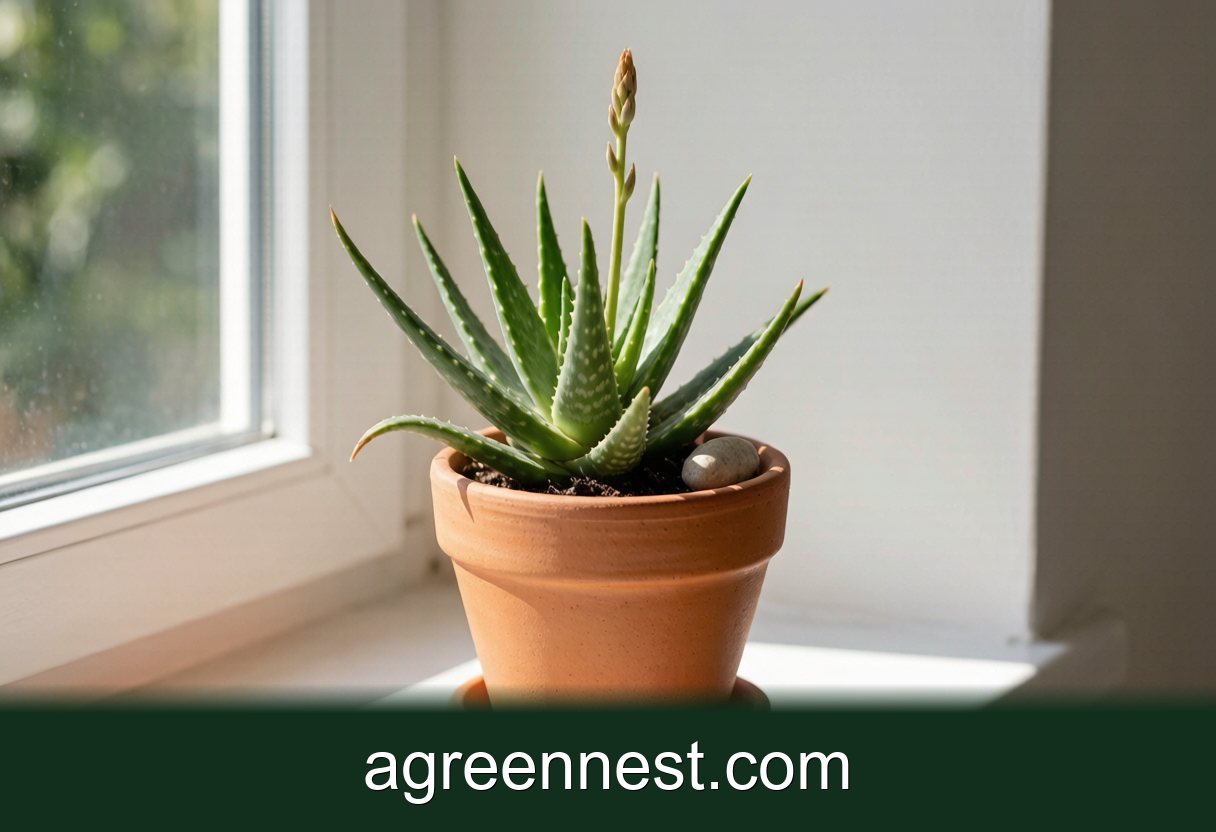
The secret to a happy Aloe Vera is restraint. Place it in bright, indirect light, then wait until the soil is bone dry before watering (3 weeks between waterings). Use a lean, sandy soil and a porous pot so excess moisture escapes fast and rot never gets started.
When I first brought home an aloe, it sat on my kitchen sill and quietly became the plant I recommend to every nervous beginner. Aloe vera indoor care asks for so little that it feels almost like cheating, yet the payoff is a sculptural green friend and a leaf full of soothing gel.
Why I Grow Aloe on Every Windowsill
Aloe vera (Aloe barbadensis) is a stemless succulent with spiky, gel-filled leaves that people have used for skin care for thousands of years. Beyond the famous burn gel, it is nearly indestructible, forgives missed waterings, and looks lovely on a shelf. A mature plant reaches 1 to 2 feet tall and spreads by producing pups, so one purchase slowly becomes a small collection. Close cousins like Aloe arborescens share the same easygoing habits on a sunny sill.
How Much Light Does Aloe Really Want?
Aloe wants bright indirect light for at least 6 hours a day. A south or west window filtered through a sheer curtain is perfect, and the leaves stay upright and plump there. Direct afternoon sun can scorch the leaves, while too little light makes the plant lean and lose its form.
If your home is dim, a grow light 12 inches above the plant for 10 to 12 hours keeps it compact and green. I rotate the pot weekly so all sides grow evenly, and that small habit prevents the lopsided look.
A simple lux reading helps when you are unsure. Aloe is content in 8,000 to 12,000 lux, which a phone light meter app estimates in seconds. Below 5,000 lux the leaves thin out and lean, so treat that number as your floor rather than a guess. Average home humidity near 40 percent also suits it, and a brief mist in deep winter keeps the leaf tips from crisping.
What Temperature Keeps It Happy?
Aloe prefers daytime warmth around 70°F (21°C) and tolerates nights near 55°F (13°C). Keep it above 50°F (10°C) in winter, because cold roots invite rot. A spot away from drafty windows does the trick through January, and the plant shrugs off normal indoor dryness without fuss.
Watering: Deep and Rarely
The golden rule of aloe vera indoor care is deep, infrequent watering. Soak the soil until water runs from the drainage hole, then wait until the top 2 inches are completely dry before the next drink. In summer this is roughly every 2 to 3 weeks; in winter, every 3 to 4 weeks. Aloe stores water in its leaves, so it would rather be a little dry than a little wet. Overwatering is the only real way to kill it.
Signs of thirst are easy to read. The leaves look slightly concave, the pot feels light, and the tips may brown just a touch. Trust the dry topsoil over the calendar, because a day or two of extra wait never hurts an aloe.
Soil and the Right Pot
Aloe needs sharply draining soil to avoid rot. Use a cactus mix amended with extra perlite, or blend 50 percent potting soil with 50 percent sand and perlite. Heavy, moisture-holding soil is a death sentence for this plant, so lean gritty every time.
Terracotta pots are my favorite because their porous walls pull excess water from the soil and help prevent soggy roots. Always use a pot with a drainage hole, and choose one only slightly larger than the root ball so the soil dries evenly from top to bottom.
How Do I Harvest the Gel Safely?
The clear gel inside aloe leaves is a classic remedy for minor burns and skin irritation. Snap a lower leaf, split it open, and apply the gel directly to the skin for cooling relief. I keep one older leaf reserved for this so the plant keeps its shape, and the rest of the rosette stays untouched.
Aloe also earns its place through air-cleaning studies showing it filters common indoor pollutants. While no plant replaces ventilation, a few aloes quietly improve a room's feel, which is a small bonus on top of the gel.
When Should I Repot and Divide?
Aloe grows pups, those small offshoots at the base of the mother plant. Once a pup is 3 to 4 inches tall with its own roots, you can separate it for a free new plant. Repot mature aloe every 2 to 3 years in spring, lift it gently, shake off old soil, and wait 5 to 7 days before watering so damaged roots heal.
Should I Fertilize My Aloe?
Aloe is a light feeder. During spring and summer, I feed a diluted cactus fertilizer at one quarter strength, roughly 1 gram per liter of water, once every 4 to 6 weeks. Skip fertilizer entirely in the cool months from November through February, because the plant is resting and extra salts only stress the roots. Too much food produces floppy, weak leaves rather than the firm rosette you want.
What Troubles Tell Me Something Is Wrong?
Mushy yellow leaves mean overwatering rot, so unpot, trim soft parts, and replant in dry gritty soil. Brown tips usually mean too much sun or dry air, and the tips will not recover but new growth will be healthy. A leaning pale plant simply needs more light, and a grow light for 10 to 12 hours daily solves it.
Frequently Asked Questions
Q: How often should I water aloe vera indoors?
A: Water deeply every 2 to 3 weeks in summer and every 3 to 4 weeks in winter, only after the top 2 inches of soil are dry.
Q: Can I use aloe vera gel from my plant on burns?
A: Yes, the gel from a snapped leaf soothes minor burns and skin irritation, but avoid deep or open wounds.
Q: Is aloe vera safe around pets?
A: No, aloe vera (Aloe barbadensis) is mildly toxic to cats and dogs if ingested, so keep it out of reach of pets.
Aloe vera indoor care is among the easiest plant projects you can start, and the reward is both decorative and practical. Use our free light calculator to place it in the brightest safe spot, and read our succulent ebook for propagation and repotting timelines.
Sources & further reading
GreenNest authors research and write every guide independently. The external links below are reputable references we recommend for deeper reading — they are not the sources we copied from.
- UF/IFAS Gardening Solutions — UF/IFAS
- Royal Botanic Gardens, Kew — Kew Gardens
- Cornell Garden-Based Learning — Cornell University
Recommended Tools for Succulent Care
Free, no-signup helpers matched to this guide.
Free Ebooks to Explore
Downloadable handbooks — no email required.
Free Ebook
The AGreenNest Succulent Care Handbook
The complete, beginner-to-confident guide to growing fat, happy succulents — 10 chapters and a 20-plant directory.
Share Your Plant Story
Grown something tricky, or found a trick that finally worked? Tell us in the comments, or see what other readers are sharing on our Community page. The best reader tips get folded back into our guides.
Join the Conversation
Have a tip or a question about Aloe Vera Indoor Care: Grow a Healing Houseplant? Share it below — comments are saved on our server.