 AGreenNest
Plant Care Accessories
Choosing and Using Grow Lights for Indoor Plants
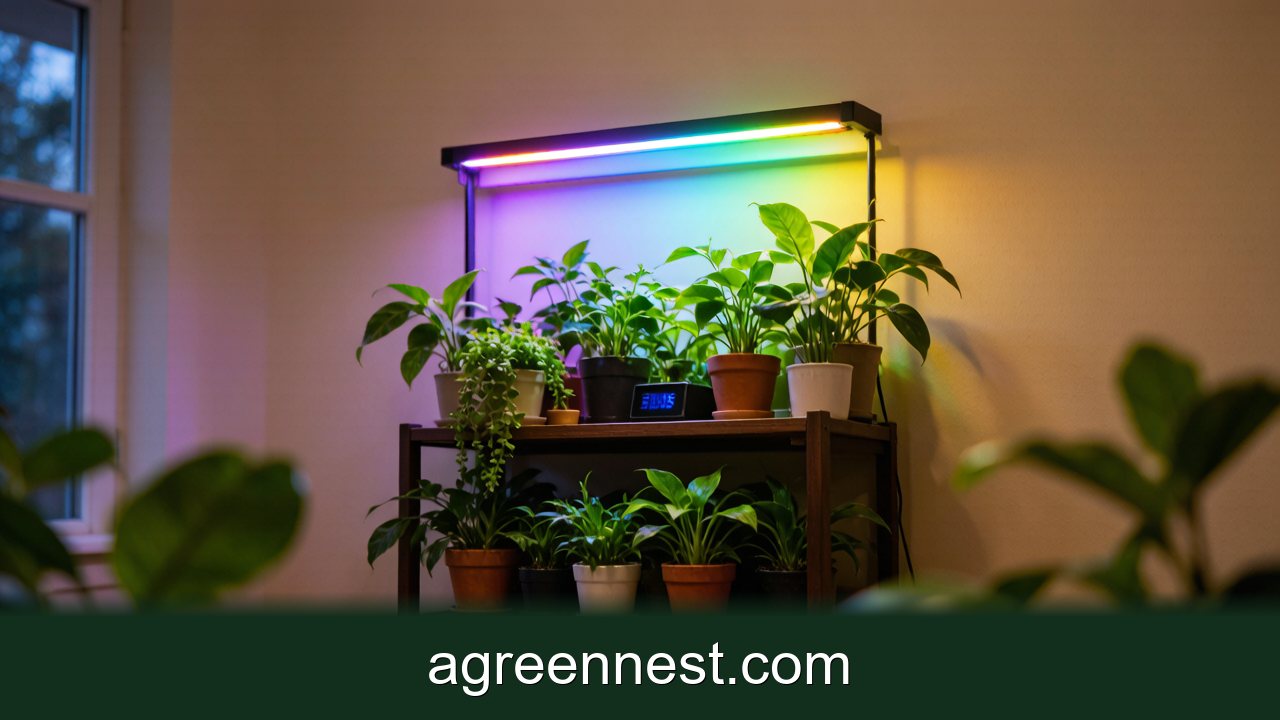
The right accessory turns Choosing and Using Grow Lights for Indoor Plants from guesswork into routine. Measure what the plant actually needs, and pair it with a light check so a few hours of direct sun is a real value, not a hope. Spend once, read often, and let the data guide watering and feeding.
Grow lights are the great equalizer for plant parents without a sunny window. With the right fixture you can grow succulents, herbs, and even flowering plants in a basement. The catch is that the wrong bulb keeps plants alive but leggy, so matching the numbers to the plant matters more than the price tag.
What Specs Actually Matter
Three numbers decide whether a fixture works: Kelvin, PPFD, and watts. Most buyers fixate on watts, yet watts only tell you the running cost, not the light your plant receives. A full-spectrum LED bar rated at 40W can outperform a 60W fluorescent tube because the spectrum is shaped for photosynthesis rather than for human eyes.
Kelvin measures color temperature, and most plants grow well between 3000K and 6500K. Around 4000K looks natural and balances foliage growth, while 6500K cool white keeps compact succulents tight. Avoid warm-only bulbs under 2700K for green growth, because they push plants to stretch toward the nearest window.
PPFD, measured in micromoles per square meter per second, is the real intensity number. A bright window gives roughly 200 to 400 PPFD, while direct sun reaches 800 to 2000. Most leafy houseplants want 100 to 300 PPFD, and succulents want the higher end near 300. Many home LEDs print PPFD at a set height, so you can set distance from that chart instead of guessing.
How Far Should I Hang the Light?
Distance controls intensity, and a few inches change everything. Too close and you scorch the leaf tips; too far and the plant stretches toward the glow.
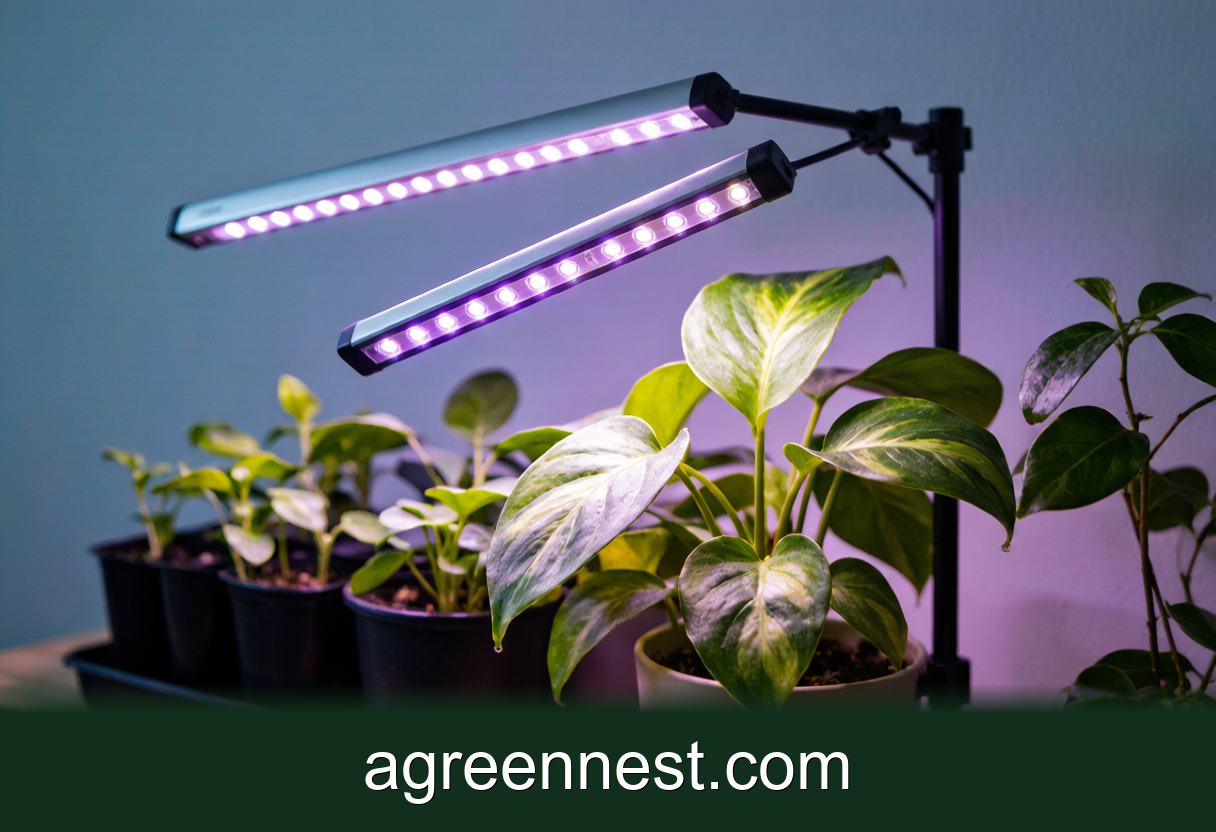
- Leafy houseplants such as Epipremnum aureum do best 12 to 24 inches (30 to 60 cm) below the panel.
- Succulents and cacti, including Echeveria elegans, sit 6 to 12 inches (15 to 30 cm) under the board because they crave intensity.
- Seedlings start high at 18 to 24 inches and drop as they toughen.
Our grow light distance tool turns plant type and fixture into a specific hang height, which removes the guesswork from the shelf. A ruler and that number beat a week of trial and error.
How Many Hours Per Day?
Photoperiod matters as much as intensity. Plants use the dark period to respire, so a timer that gives a consistent cycle beats a light left glowing all night.
- Low-light foliage like pothos and philodendron needs 10 to 12 hours.
- Succulents and cacti need 12 to 14 hours and still want a dark night.
- Flowering plants such as african violets and orchids need 12 to 14 hours, sometimes a touch more.
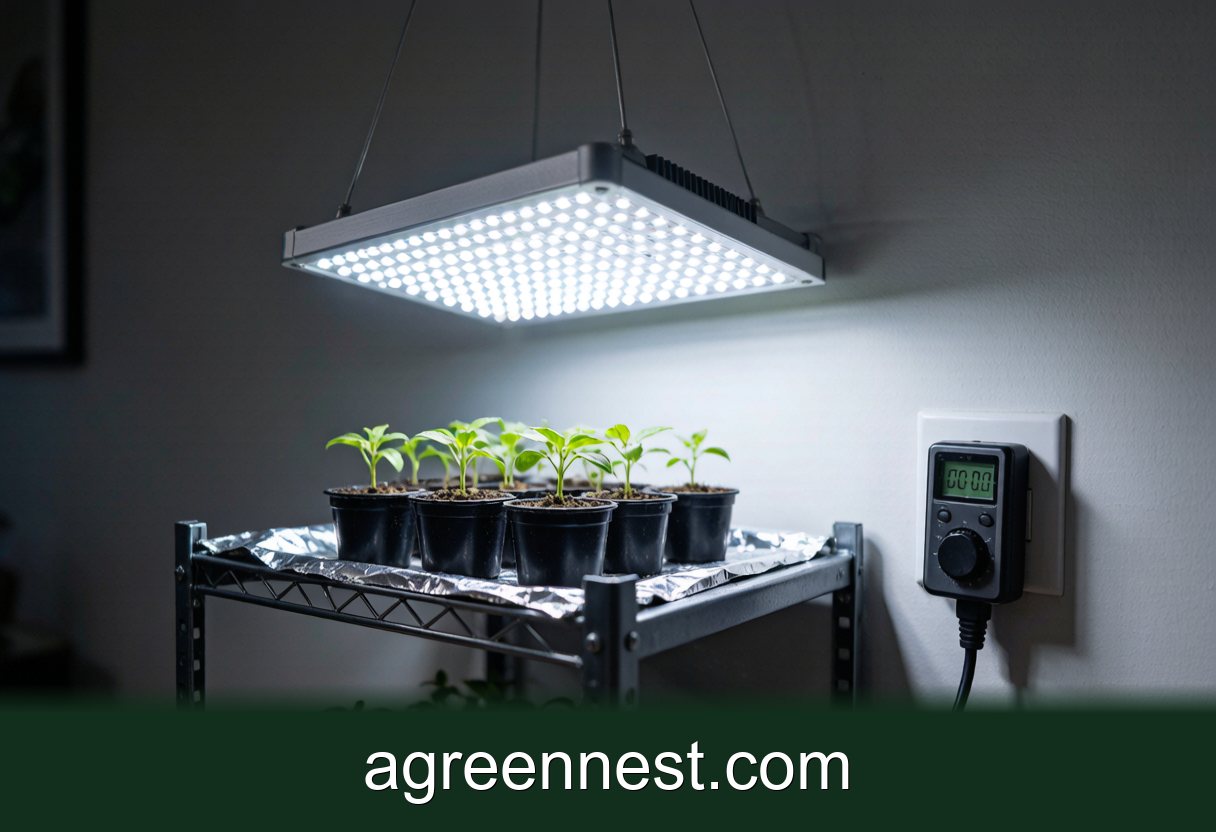
A simple outlet timer keeps the schedule honest for about 10 dollars, and that single purchase prevents the pale, leaning growth that comes from uneven light. Set it once and forget it for the season.
LED vs Fluorescent vs HID
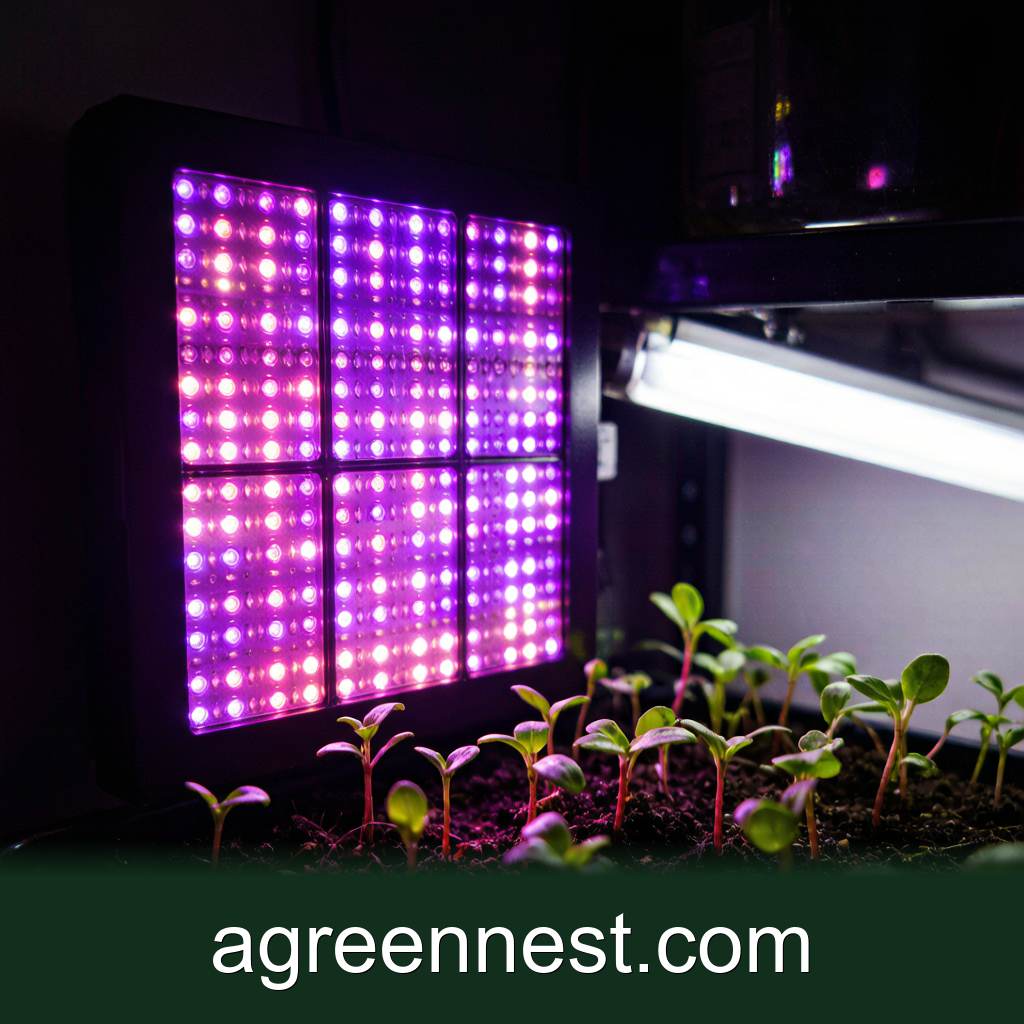
For home growers it comes down to LED versus fluorescent (T5 or T8) versus HID. LEDs are the most efficient, run cool, last for 50,000 hours, and now cost little more than fluorescents. Fluorescent tubes are cheap to start but run hot, fade after 10,000 hours, and waste more power on a single shelf of low-light plants. HID lamps, the HPS and MH types, are powerful but hot and outdated for a home, so most people should skip them.
A good full-spectrum LED panel is the sweet spot for nearly every indoor setup. It keeps the leaf zone near 70°F (21°C), while an HID fixture can push the same spot past 90°F (32°C) and cook the foliage.
Which Mistakes Cost People Their Plants?
Assuming a desk lamp works is the first error. A regular bulb puts out almost no usable plant light, because it is built to look bright to human eyes rather than to feed chlorophyll. You need a fixture rated for photosynthesis, not just one that lights the room.
Burning with closeness is the second error. When leaf tips bleach white or edges crisp, the light is too close or too intense, so raise it or dim it by 20 to 30 percent. Winter is the third trap, because daylight shrinks and a plant that was fine by a window may suddenly struggle. A grow light on a timer quietly fixes that seasonal dip without you touching the plant.
How Do I Read the Plant's Signals?
Watch the plant instead of the calendar. Stretching stems, widely spaced leaves, and leaning toward the window all signal more light is needed, and a PPFD meter or the distance tool gives you a hard number rather than a guess. Bleached leaf tips mean the panel is too close or too intense, so raise it by 2 to 3 inches and recheck after a week. Yellow lower leaves with wet soil point to overwatering, not the light, so confirm soil moisture before you move the fixture.
What Does a Starter Setup Cost?
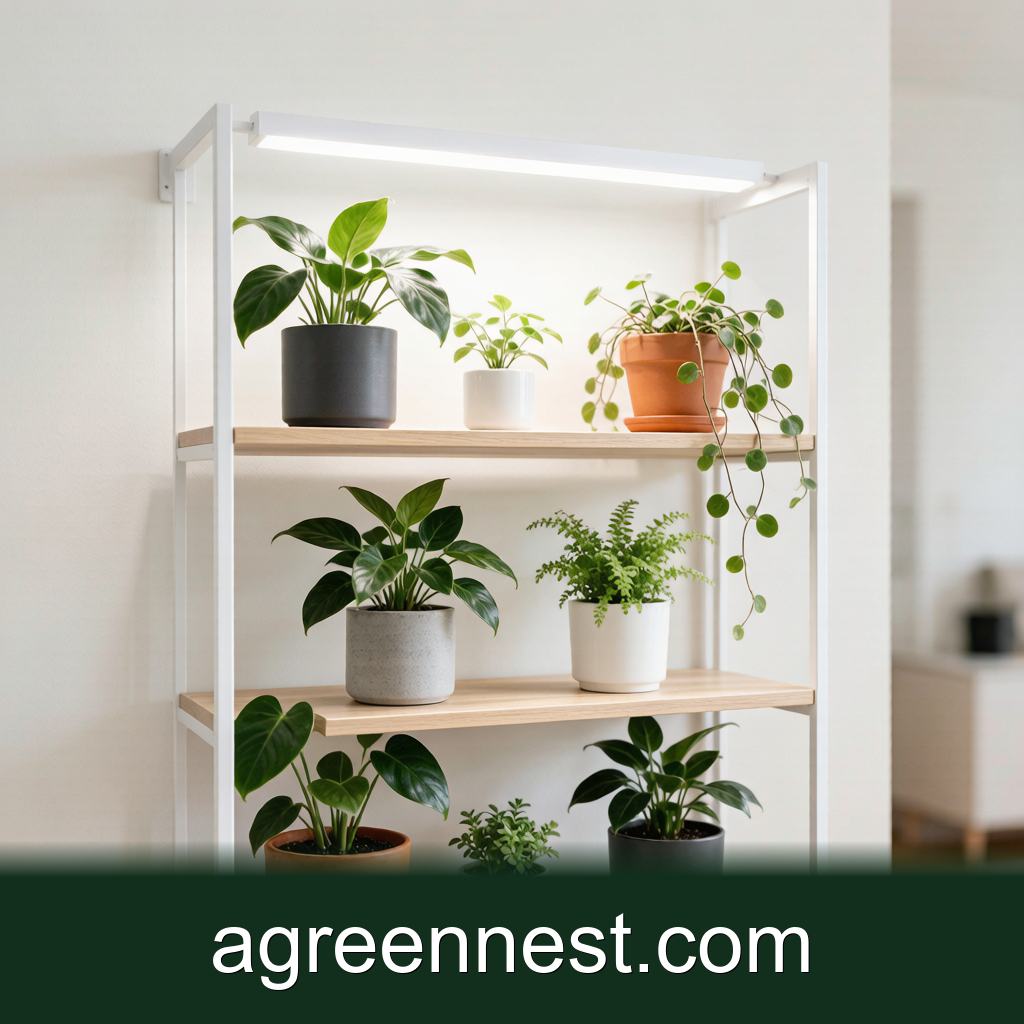
One full-spectrum LED panel on a shelf, an outlet timer, and a small fan for airflow will keep a dozen plants happy. The panel runs 30 to 60 dollars, the timer is under 15 dollars, and the fan is another 10 dollars, so the whole rig lands near 60 to 85 dollars. That is enough before you buy elaborate rigs. If you are new to the topic, our grow lights for beginners guide walks through picking a first fixture.
Frequently Asked Questions
Q: Can I use a regular LED bulb from the hardware store?
A: Only if it is labeled full-spectrum or plant-growth. Most household bulbs lack the red and blue output plants use, so growth stays weak and leggy even under long hours.
Q: Do grow lights cost a lot to run?
A: A modern LED panel draws 20 to 60W. Running one 12 hours a day costs only a few dollars a month, roughly 2 to 6 dollars depending on your electricity rate of 12 to 18 cents per kWh.
Q: Should the light be on at night?
A: No. Plants need a dark period to respire, so use a timer for a consistent on and off cycle of roughly 12 hours on and 12 off.
A grow light is the most powerful accessory you can add to a dim home, and the barrier to entry has never been lower. Match the spectrum, set the distance with our free grow-light tool, and run it on a timer. From there, explore all of our accessories guides to round out your plant-care toolkit.
Recommended Tools for Plant Care Accessories Care
Free, no-signup helpers matched to this guide.
Free Ebooks to Explore
Downloadable handbooks — no email required.
Free Ebook
The AGreenNest Succulent Care Handbook
The complete, beginner-to-confident guide to growing fat, happy succulents — 10 chapters and a 20-plant directory.
Free Ebook
Haworthia & Haworthiopsis Care Handbook
A focused guide to the striped, forgiving Haworthia clan.
Sources & further reading
GreenNest authors research and write every guide independently. The external links below are reputable references we recommend for deeper reading — they are not the sources we copied from.
- UF/IFAS Gardening Solutions — UF/IFAS
- Michigan State University — Gardening — Michigan State University
- University of Minnesota Extension — U Minnesota Extension
Share Your Plant Story
Grown something tricky, or found a trick that finally worked? Tell us in the comments, or see what other readers are sharing on our Community page. The best reader tips get folded back into our guides.
Join the Conversation
Have a tip or a question about Choosing and Using Grow Lights for Indoor Plants? Share it below — comments are saved on our server.