 AGreenNest
Plant Styling & Display
Style a Cozy Reading-Nook Plant Corner
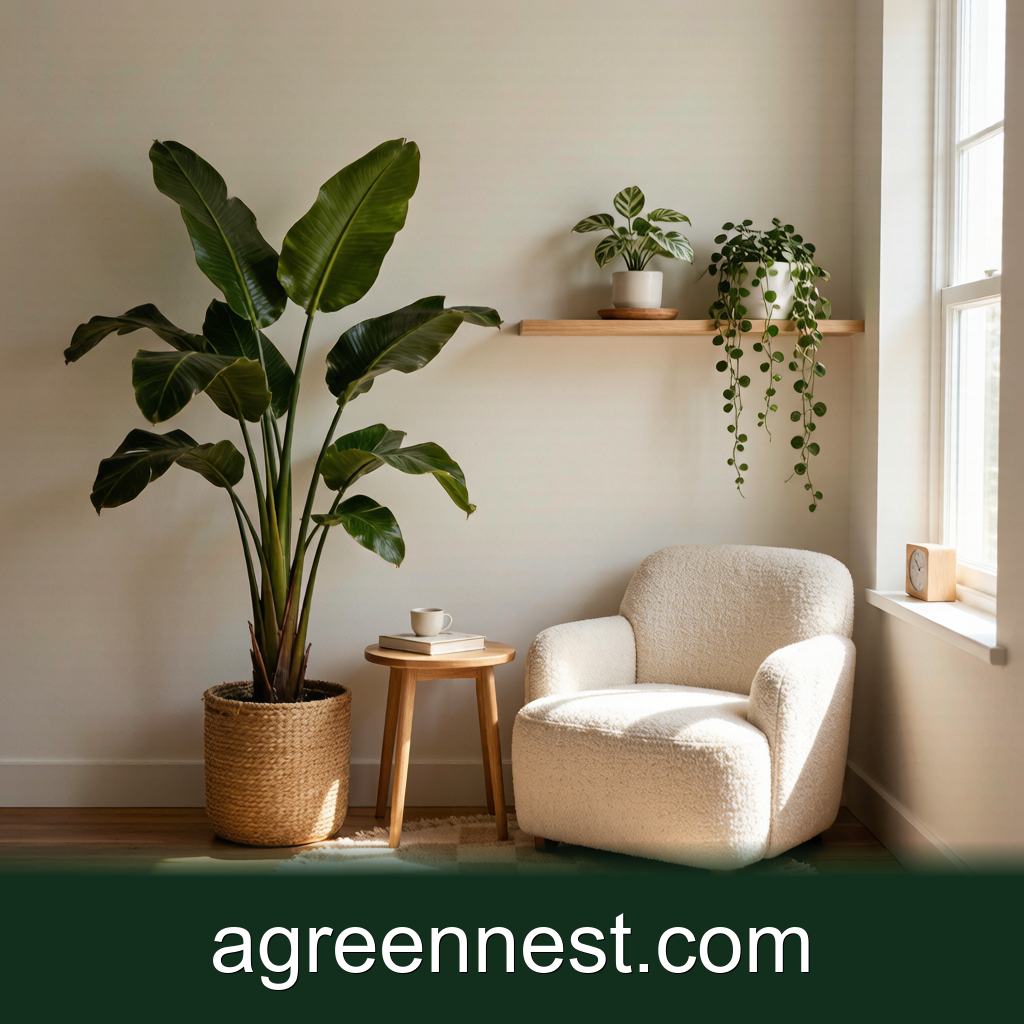
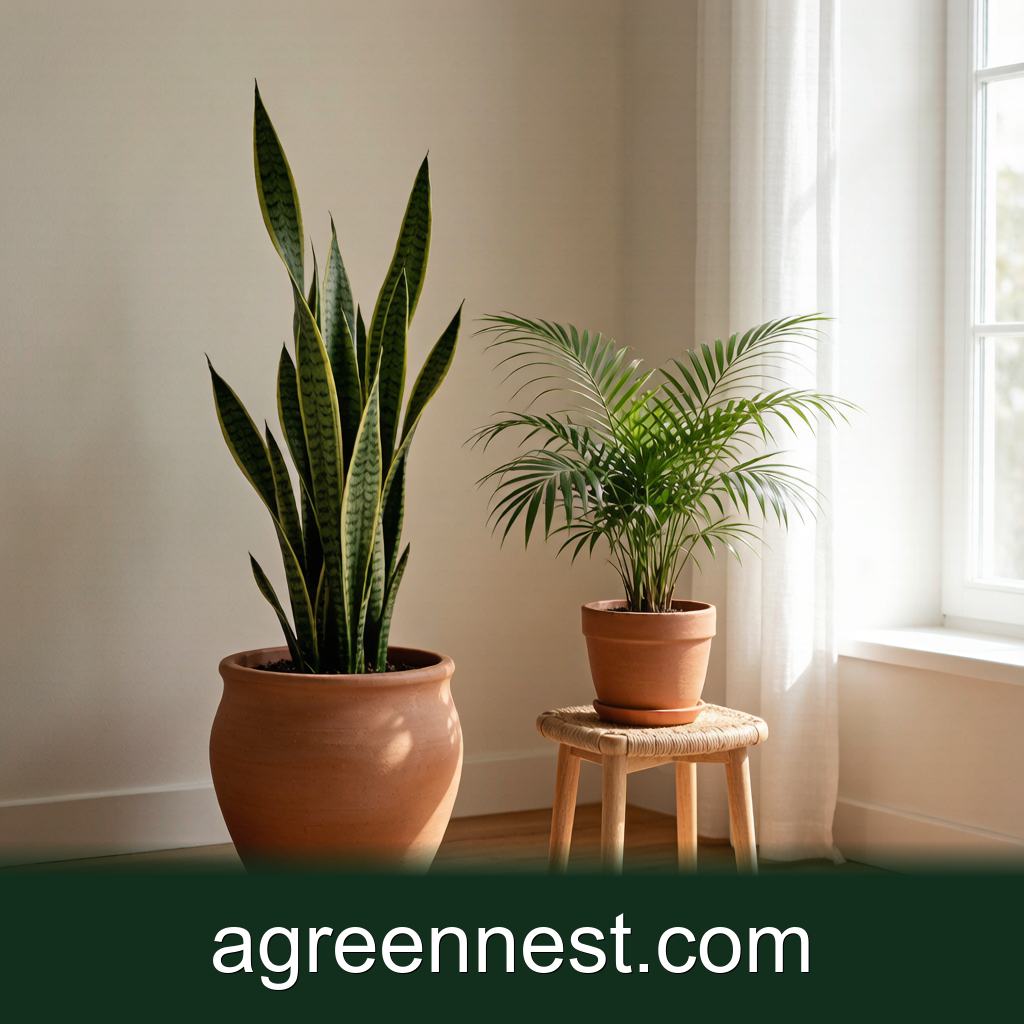
For a calm shelf with Style a Cozy Reading-Nook Plant Corner, pair it with one taller focal plant and a small trailing piece. Keep care easy: a few hours of direct sun, water when the topsoil is dry (when the topsoil has dried). Rotate the pot weekly and wipe the leaves so the arrangement stays crisp and photogenic.
My reading chair sits under a north-facing window, so the corner beside it never gets direct sun. That turned out to be the perfect spot for a small plant cluster, and I spent one long winter working out which plants and pots actually made the nook feel calm instead of cluttered. Before that winter I had killed two ferns by overwatering and one cactus by forgetting it for a month, so I was ready for a setup that forgave my habits. Friends who visit now stop at the nook before they sit anywhere else, which tells me the corner earned its place.
Start With Three Heights, Not Five
A reading corner reads as intentional when the plants form a clear vertical line. I settled on three levels: a floor plant at roughly 120cm, a shelf plant around 30cm, and a hanging trailer that drops about 60cm. Three is enough to create rhythm without crowding a small chair and side table. If your nook is roomy, you can add a fourth at a different height, but keep an odd count so the eye has a clear anchor rather than a balanced, lifeless row. Tall, medium, and low is the classic trio because it copies how plants stack in a forest understory. Shop the heights by pot base width too, since a 25cm floor pot needs about 20cm of clear floor space around it.
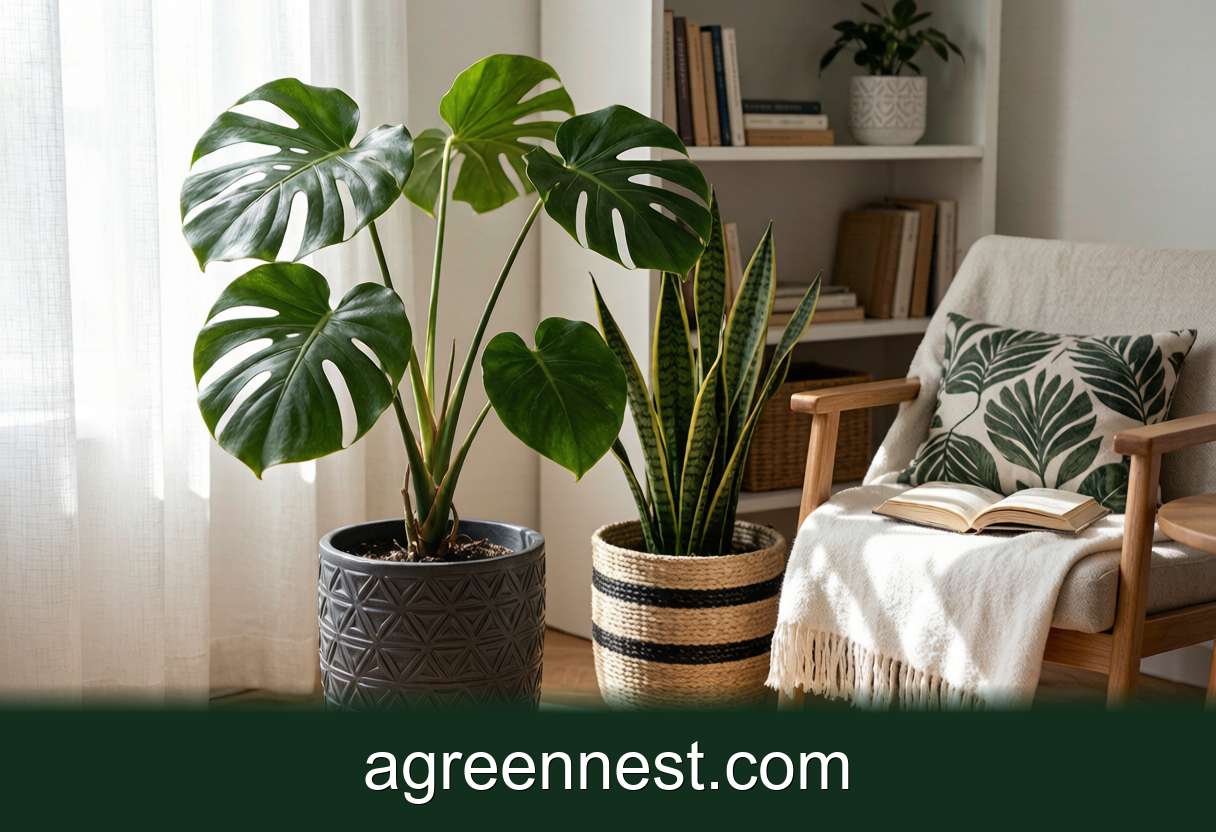
Look for a floor plant that handles low light with an upright shape. Sansevieria trifasciata fits this exactly: its sword leaves reach straight up and hold a strong shape even in dim corners. I keep mine in a 25cm black nursery-style pot on a short wooden stool, which lifts the base to about chair-arm height. For the watering rhythm that keeps those leaves firm, our snake plant care guide covers the schedule I follow.
What Plant Should Sit on the Shelf?
On the narrow wall shelf above the chair I wanted something with patterned leaves rather than plain green. A Calathea orbifolia sits in a 12cm cream pot and fills the 30cm space with broad, striped foliage. Calatheas are picky about water, so I use filtered water and never let the soil dry fully. They like the same indirect light the nook already has, which is why this corner works for them. Mine came from a market stall still in a plastic sleeve, and I repotted it the same weekend into the cream pot. Weekly I wipe the leaves with a damp cloth so the stripes stay readable from the chair. Our low-light houseplants list for 2026 lists several Calathea types if you want a different pattern.
The 60cm Trailing Hanger
Above the shelf, a macrame hanger holds a trailing plant that falls about 60cm toward the chair back. Epipremnum aureum (golden pothos) is my pick because it shrugs off low light and the variegated leaves catch what little sun comes through. This 15cm terracotta pot keeps the hanging weight manageable and the clay tone ties the cluster together. Pothos is the kind of plant you can train to trail or pinch back for bushiness, and our golden pothos low-care guide explains the pruning I use to keep the length at 60cm. Two years in, the original cutting has filled the hanger and I have given away three offshoots to neighbors. Cuttings root in a glass of water within three weeks, which is how I started the second hanger by the window.
If you want more hanging options, our trailing plants for shelves rounds up species that behave well in a small hanger.
Why Keep the Pots to Three Colors?
Color cohesion is what makes a cluster look styled rather than random. I used only terracotta, cream, and black across all three pots. Black anchors the bottom, cream adds lightness at eye level, and terracotta warms the whole group. Terracotta also breathes, which suits pothos and snake plant because the soil dries a little faster and root rot is less likely. Matching the saucers to the pots, same color and same finish, removes the visual noise that mixed plastics create. Guests read the group as one decision rather than a pile of impulse buys, and that is the whole point.
Add a Rug and a Stool
Standing alone, the floor plant looked bare, so I slid a 90cm by 60cm jute rug under the chair and stool. That rug frames the plant feet and quiets the floor echo in a small room. Besides lifting the snake plant to the right height, the stool also holds my tea mug when I read. Pick a stool about 40cm tall so the 25cm pot sits near 65cm, then the plant's leaf tips reach the 120cm line I was after. One is enough for a chair-side nook, though a second stool in the same wood would work if you later add a second floor plant. Wool would do the same job, but jute costs less and survives the occasional spilled tea. Measure the stool before you buy, because a 50cm model pushes the rim past comfortable reading height.
How Often Do These Plants Need Water?
North light means I water less than the labels suggest. Snake plant gets a full soak only when the top 5cm of soil is bone dry, about every three weeks in winter. Terracotta dries the pothos faster, roughly every ten days between soaks. Calathea sits between those two schedules. Grouping them by similar thirst, the two clay pots together and the cream glazed pot separate, keeps my watering rounds short. Winter air in my flat drops to about 18°C and the soil then holds moisture far longer than in summer. Summer pushes the pothos to a six day cycle, so I check the terracotta by weight rather than by date. For a deeper read on the ZZ plant, another 120cm-capable low-light floor option, see our ZZ plant care guide. If you want to build the shelf itself, our plant shelf styling piece has the bracket and spacing details I copied.
Frequently Asked Questions
Q: Which floor plant reaches 120cm in low light?
A: Sansevieria trifasciata and Zamioculcas zamiifolia both reach around 120cm under north light. Snake plant holds a tighter vertical shape, while the ZZ spreads wider at the base.
Q: Can I use a 60cm trailer that is not pothos?
A: Yes, Epipremnum aureum is the easiest trailing choice. Philodendron hederaceum trails just as well and tolerates the same dim corner. Both appear in our trailing plants guide.
Q: Why stick to three pot colors?
A: Three tones, here terracotta, cream, and black, read as a set. More than that and the eye treats each pot as a separate object, which breaks the styled look.
A reading-nook plant corner does not need a greenhouse worth of light, just three heights, three pot colors, and a rug to ground them. Start with the snake plant on a stool and build out from there. For more shade-tolerant options, browse the low-light plant list.
Recommended Tools for Plant Styling & Display Care
Free, no-signup helpers matched to this guide.
Free Ebooks to Explore
Downloadable handbooks — no email required.
Free Ebook
The AGreenNest Succulent Care Handbook
The complete, beginner-to-confident guide to growing fat, happy succulents — 10 chapters and a 20-plant directory.
Sources & further reading
GreenNest authors research and write every guide independently. The external links below are reputable references we recommend for deeper reading — they are not the sources we copied from.
- NC State Extension — Plant Toolbox — NC State Extension
- Aggie Horticulture (Texas A&M) — Texas A&M AgriLife
- Royal Botanic Gardens, Kew — Kew Gardens
Share Your Plant Story
Grown something tricky, or found a trick that finally worked? Tell us in the comments, or see what other readers are sharing on our Community page. The best reader tips get folded back into our guides.
Join the Conversation
Have a tip or a question about Style a Cozy Reading-Nook Plant Corner? Share it below — comments are saved on our server.