 AGreenNest
Succulent Care
Why Is My Succulent Stretching and Pale?
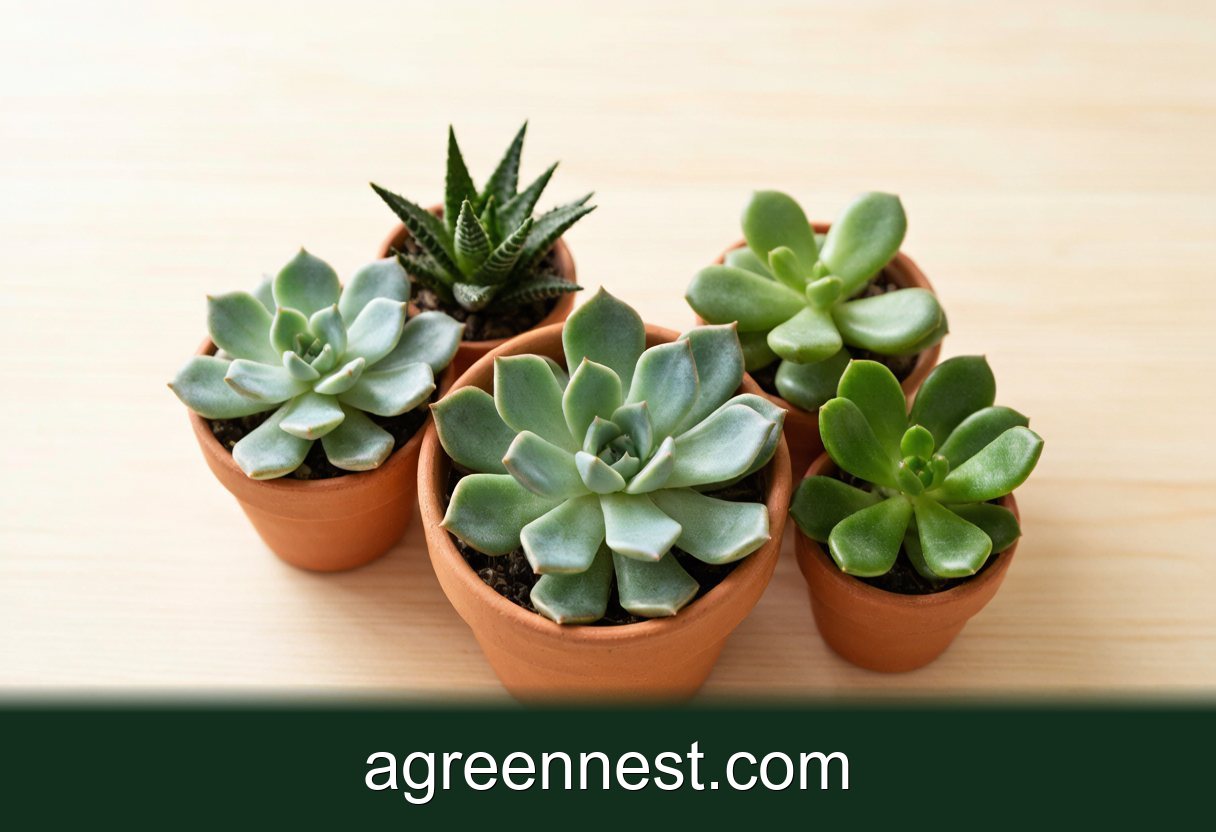
If you are new to Why Is My Succulent Stretching and Pale?, keep it simple: bright, indirect light (a south or east windowsill is ideal), and water sparsely. These plants hate wet feet, so always let the soil dry completely between drinks (every 2-3 weeks in summer, less in winter).
What Is Etiolation, Really?
Etiolation is the word for the strange changes that happen when a succulent reaches for light it cannot find. Stems grow long and thin. Leaves space themselves far apart. A plump, tight rosette you bought turns into a loose, leggy thing with faded color. In my own apartment a young Echeveria elegans once stretched a full three inches toward a dim north window before I understood what I was seeing.
The plant is not sick in the usual sense. It is responding to a shortage of bright light by chasing whatever it can sense. Pale green leaves are the plant spending less energy on the pigments that give succulents their glow. Better still, this is one of the most fixable problems in the whole hobby, and the plant will recover its looks with a little patience. Do not blame yourself. Every grower I know has a leaning plant in their past, and the fix is gentle. Your succulent is built to survive a missed week of sun, and with the steps below it will look like new by next season.
Some species stretch faster than others. Rosette forms such as Echeveria elegans and Graptopetalum are quick to lean, while compact types like Haworthia cooperi hold their shape longer in low light. Knowing your plant helps you act early, often within the first two weeks of trouble. Color loss is the earliest clue. Watch for leaves fading from deep green or red to a washed out lime, usually the first sign before any leaning begins.
Why Does Stretching Happen?
Light is food. Succulents store it through their leaves, and when the light is weak they grow faster in search of more, which produces the stretched look. Plants happy in a south or west window stay compact, while the same plant on a shadowed shelf leans toward the nearest glow within two to three weeks. I learned the hard way that rotating a pot just once a month is not enough for a sun lover.
Distance matters as much as brightness. Windows blocked by a curtain or a tree outside drop light by half, and your Crassula ovata will notice within a fortnight. Rarely is the answer more water or more food. Almost always, the real need is simply more light. South facing windows give the strongest light in the northern hemisphere, often two to three times what a north window provides.
Winter makes the problem worse. Daylight in December drops to around nine hours in many regions, and a plant that looked fine in summer can lean by an inch or more by February. Moving it closer to the glass or adding a lamp in the dark months prevents most winter stretching.
How Do I Fix a Stretched Succulent?
First, move the plant to your brightest spot, ideally a south or west sill that gets four to six hours of direct sun. If your home is dark, add a grow light on a timer for twelve to fourteen hours a day. New growth that emerges after the move will be tight and colorful, which is the proof you did it right.
Choose a light with a color temperature near 6500 Kelvin for a natural look, and hang it six to twelve inches above the plant. Run it on a timer so the schedule stays steady, because uneven days confuse the plant and slow recovery. Most stretched succulents show tighter new growth within three to four weeks of steady light.
Second, consider beheading. With clean scissors, cut the top two to three inches of the stem, let the cut end dry for two to three days, then set it on dry soil where it will root in about two to four weeks. That bare stem below can sprout new heads if you leave it in bright light. This sounds drastic, yet it is the fastest route back to a pretty plant, and Sedum morganianum and many echeverias respond beautifully. Once the new top roots, treat it as a fresh plant in a shallow pot with a gritty mix. Keep it bright from day one so the new rosette stays tight, and resist the urge to water for the first five to seven days while the roots settle.
Can I Prevent It From Coming Back?
Yes, and prevention is easier than repair. Match each plant to the brightest window you actually have, not the one you wish you had. Rotate the pot a quarter turn every week so all sides reach the sun evenly. Use the light calculator to place sun lovers where they will thrive.
Group your thirstiest light lovers together near the glass, and keep shade tolerant types like Haworthia cooperi a little farther back. Simple weekly turns and a brighter perch stop almost every case before it starts. Reading the plant each week takes only a moment. One quick look at leaf spacing tells you whether the current spot is enough, and small fixes now save a big beheading later.
Weak light means the plant uses less moisture, so watering on the same summer schedule can leave soil wet for three weeks and rot the roots. Cut back to every ten to fourteen days in a dim spot, and let the top two inches dry between drinks.
Frequently Asked Questions
Q: Will the stretched part recover on its own?
A: No. Trim and re root the healthy top, since the elongated stem will not tighten back up.
Q: Can too much sun be bad?
A: Yes, a sudden move to hot sun scorches leaves. Acclimate the plant over seven to ten days.
Q: Are pale leaves always a light problem?
A: Usually, but over fertilizing can also wash out color, so feed only in spring and summer.
Stretching is a cry for sun, not water. Give your succulent bright light, a weekly turn, and the occasional brave haircut, and it will tighten right up. Brighter windowsills and steady turns are all most succulents ask for, and your patience will show in every compact new leaf.
Sources & further reading
GreenNest authors research and write every guide independently. The external links below are reputable references we recommend for deeper reading — they are not the sources we copied from.
- NC State Extension — Plant Toolbox — NC State Extension
- Aggie Horticulture (Texas A&M) — Texas A&M AgriLife
- Cornell Garden-Based Learning — Cornell University
Recommended Tools for Succulent Care
Free, no-signup helpers matched to this guide.
Free Ebooks to Explore
Downloadable handbooks — no email required.
Free Ebook
The AGreenNest Succulent Care Handbook
The complete, beginner-to-confident guide to growing fat, happy succulents — 10 chapters and a 20-plant directory.
Free Ebook
Haworthia & Haworthiopsis Care Handbook
A focused guide to the striped, forgiving Haworthia clan.
Share Your Plant Story
Grown something tricky, or found a trick that finally worked? Tell us in the comments, or see what other readers are sharing on our Community page. The best reader tips get folded back into our guides.
Join the Conversation
Have a tip or a question about Why Is My Succulent Stretching and Pale?? Share it below — comments are saved on our server.