 AGreenNest
Low-Light Indoor Plants
Fertilizing Houseplants: The Basics
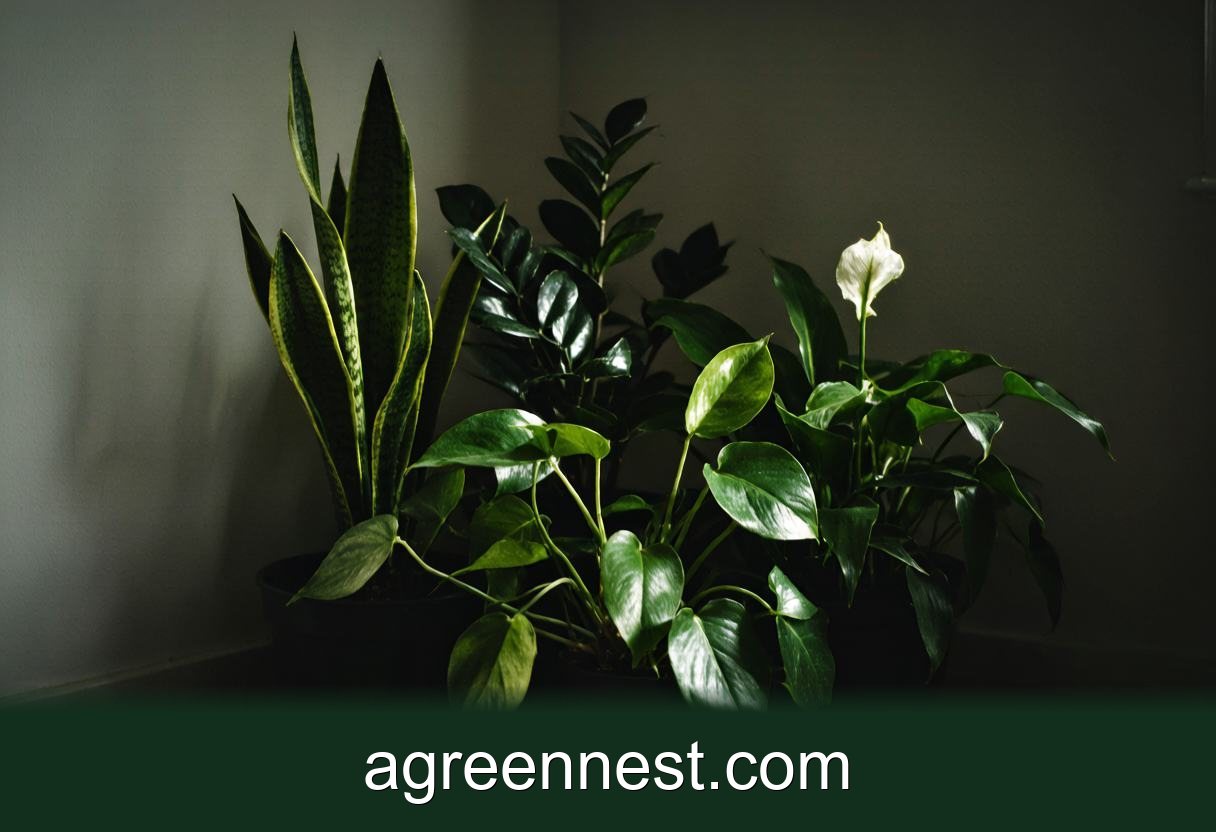
Fertilizing Houseplants is built for dim rooms. It tolerates low to medium light and actually suffers in hot direct sun. Water when the top 2-3 cm of soil feels dry (4 weeks between waterings), and keep humidity modest. A north or east window, or a few feet back from a bright one, is the sweet spot.
Feed in the Growing Season
My first pothos taught me patience. I had just moved into a small apartment with a single north-facing window, and I wanted that Epipremnum aureum to climb the whole bookshelf by summer. So I fed it every week. Within a month the leaf tips turned crispy brown, and I learned the hard way that more food is not more love.
Most houseplants follow a simple calendar. They grow actively from March through early October, then they slow down as the light fades. During those eight active months, a regular light feed keeps them green and pushing out new leaves. In the four quiet winter months, feeding does more harm than good because the roots are not working hard enough to use the nutrients.
In my home the feeding window opens around the third week of March, when daylight passes 11 hours, and closes by the final week of September. A compact Chlorophytum comosum with about 12 leaves needs far less than a tall Monstera deliciosa in a 10 litre pot, yet both follow the same on and off rhythm. Your plants will tell you when it is time to begin: new pale leaves and longer stems are the clearest signal.
What and How
The shelf at the garden centre can feel overwhelming. I keep it simple with a balanced liquid fertiliser that shows three equal numbers on the bottle, such as 10-10-10 or 20-20-20. Those numbers are nitrogen, phosphorus, and potassium, the three nutrients plants need most, and a balanced blend suits the leafy types we grow in dim rooms.
Here is the routine I follow with every plant in my care:
- Mix the liquid at half the label strength. A weak feed given often is safer than a strong one given rarely.
- Apply it every 2–4 weeks during the growing season, so roughly 12 to 16 times across the year.
- Water the soil first, then pour the feed. Wet roots absorb nutrients without scorching.
- Skip the feed entirely if the plant looks stressed, dropped leaves, or just came home from the shop.
My Monstera deliciosa gets the same mix as the small Spathiphyllum wallisii on the bathroom shelf, only the volume changes. A 1 litre pot needs about 200 ml of solution, while a 5 litre pot needs closer to 1 litre. For a 10 litre specimen I use around 2.5 litres and pour slowly so none spills over the rim. Synthetic liquid feeds act within days, while a granular organic option releases over 6 to 8 weeks and smells faintly of earth.
How Do I Know If I'm Overfeeding?
Brown leaf tips are the classic cry for help. When salts build up in the soil, the roots stop drinking, and the edges of the leaves dry out first. I once rescued a Ficus elastica by flushing the pot with 3 litres of plain water and pausing all feeding for six weeks. The new leaves came in green and flat.
A second sign is a white crust on the soil surface or around the pot rim. That crust is dried fertiliser salt. Scrape it off, then leach the soil by running water through it for a full minute. Most plants recover within a month if you catch the problem early.
Yellowing of older lower leaves can also point to overfeeding, though it sometimes means the opposite, so I look at the whole plant. Slow growth is not usually a sign of too much food. It more often means too little light or cold roots, so check those before reaching for the bottle. A simple log of dates and dilutions removes the guesswork and keeps me honest about what I actually did.
Can I Use Kitchen Scraps Instead?
Many readers ask me about coffee grounds and banana peels. The idea is lovely, but the results are messy. Coffee grounds are acidic and can drop the soil pH below 5.5, which locks out nutrients for a Sansevieria trifasciata that prefers near-neutral ground. Banana peel water ferments fast in a warm flat and can smell unpleasant within 48 hours.
If you want to compost, do it in a proper bin outdoors and add the finished material to the top 2 cm of soil in spring. For indoor feeding, a measured liquid fertiliser is cleaner and far more predictable. I keep a small notebook where I write the date and the dilution, and after two years the pattern is clear: steady and gentle wins.
Eggshells are another favourite tip, yet they release calcium so slowly that a Spathiphyllum wallisii sees almost no benefit in a single season. Save them for the outdoor heap. The indoor feed should be something you can measure to the millilitre, because repeatable results come from repeatable doses, not from whatever was in the kitchen that morning.
Frequently Asked Questions
Q: What if I forget to feed?
A: Plants survive just fine. They grow a little slower, but underfeeding is far safer than overfeeding, so do not panic if a month slips by.
Q: Are slow-release sticks okay?
A: Yes, they are convenient. Place them away from the stem and follow the pack, because the nutrients can concentrate near the roots if you add too many.
Q: My leaf tips are brown, did I feed too much?
A: Possibly. Flush the soil with plain water and pause feeding for four weeks, then resume at half strength.
A light, regular feed beats a heavy one every time. My plants have taught me that consistency matters more than strength, and that the growing season is a gentle rhythm rather than a race. Log your routine with the care schedule tool and let the plant tell you when it is happy.
Sources & further reading
GreenNest authors research and write every guide independently. The external links below are reputable references we recommend for deeper reading — they are not the sources we copied from.
- Royal Horticultural Society — Houseplant care — RHS
- Cornell Garden-Based Learning — Cornell University
- UF/IFAS Gardening Solutions — UF/IFAS
Recommended Tools for Low-Light Indoor Plants Care
Free, no-signup helpers matched to this guide.
Free Ebooks to Explore
Downloadable handbooks — no email required.
Share Your Plant Story
Grown something tricky, or found a trick that finally worked? Tell us in the comments, or see what other readers are sharing on our Community page. The best reader tips get folded back into our guides.
Join the Conversation
Have a tip or a question about Fertilizing Houseplants: The Basics? Share it below — comments are saved on our server.