 AGreenNest
Low-Light Indoor Plants
Spider Plant Care: Low-Light Friendly & Pet-Safe
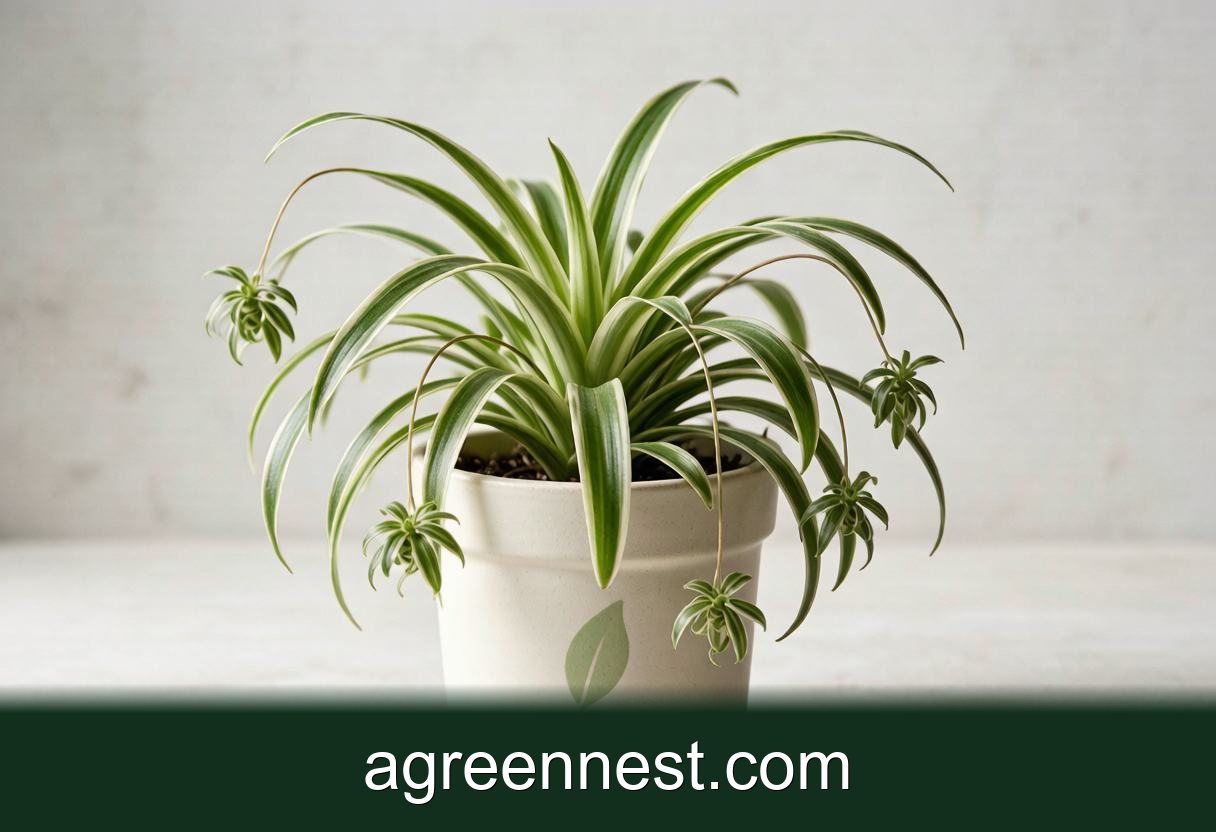
Spider Plant is built for dim rooms. It tolerates bright, indirect light and actually suffers in hot direct sun. Water when the top 2-3 cm of soil feels dry (10 days between waterings), and keep humidity modest. A north or east window, or a few feet back from a bright one, is the sweet spot.
The Chlorophytum comosum on my kitchen shelf has outlived three roommates and a cross-country move. Spider plants earn their easy reputation honestly, yet they still catch beginners with a few quiet demands. This guide walks through the light, the watering beat, those dangling babies, and the pet-safe peace of mind that makes them such a gift. Hardly any plant rewards small attention with so much green return. Mine survived a forgotten winter with only three waterings and looked fine by March.
How Much Light Does a Spider Plant Really Need?
Bright indirect light keeps the stripes crisp and the plant eager to spawn babies. North windows and bright rooms around 100 to 300 foot-candles suit it perfectly. East or west light filtered through a curtain works just as well. Direct sun, though, scorches those pale leaves within a day or two. I learned that the hard way when a hot July pane fried the tips of a plant I had just repotted. Lower light softens the variegation and slows the babies, but the plant stays tidy and healthy. Sheer curtains turn a harsh south window into the bright shade these plants love. A reading spot where you can see comfortably at midday without a lamp is the sweet zone. Rotate the pot a quarter turn each week so all sides reach the light evenly. Watch for brown tips as a sun warning, and pale leaves as a quiet hunger for more light.
What Watering Rhythm Keeps It Happy?
Even moisture pleases Chlorophytum, while soggy soil sends it into collapse. In summer I water roughly every seven to ten days; in winter the gap stretches to every two to three weeks. The top inch of mix should dry before the next drink. Rooms differ, so I watch the soil rather than the date. Pour until liquid runs from the drainage holes, then empty the saucer so the roots never sit in a puddle. Comfortable temperatures run from 65 to 75°F (18 to 24°C) by day and a cooler 55 to 60°F (13 to 16°C) at night. A porous terracotta pot wicks extra moisture away, which protects the plant in a dim room where soil dries slowly. Empty saucers within an hour, because standing water is the real killer here. Weekly a quick pot lift by weight shows the drop that means drink time.
Why Do the Leaf Tips Turn Brown?
Brown, crisp tips are the classic spider plant complaint, and they rarely point to watering. Fluoride and chlorine in tap water are the usual offenders. I switched my own plants to filtered water and the new growth came in clean within a month. Mild humidity helps too. A pebble tray nearby or the natural steam of a bathroom corner keeps those arching leaves from crisping at the ends. Trim the damaged tips with clean scissors just above the brown, and the plant shrugs it off. Monthly a quick leaf rinse clears dust that blocks the weak light.
Can You Propagate the Babies Easily?
Those dangling spiderettes are miniature clones, each with tiny root nubs already formed. Rooting them is almost foolproof, which is why spider plants are the first plant I give to nervous friends. One mother plant can stock a whole shelf by August. Snip a baby with brown nubs at its base, then set it on moist soil or float it in a water glass. Bright indirect light and light watering bring roots in about one to two weeks. Once established, pot it in its own terracotta and treat it like a mature plant. Within a season it sends out babies of its own. Rooted babies make cheerful gifts, and sharing them costs you nothing but a pot. Spring and early summer root fastest, while deep winter slows every cutting down.
Are Spider Plants Safe Around Pets?
The ASPCA lists Chlorophytum comosum as non-toxic to cats and dogs, so you can hang it low without worry. My cat bats at the dangling leaves and chews the odd one, which only costs the plant a ragged edge, never a vet bill. This makes the spider plant a genuine win-win for animal households. Few houseplants match a pretty, shade-friendly one you never have to move out of reach. Place it where the light is right and let the pets roam. Hang a mature specimen in a corner and it trails like living confetti.
Frequently Asked Questions
How often should I water a spider plant in a dim room?
Plan on every ten to fourteen days, letting the top inch dry first. Dim rooms hold moisture longer, so checking the soil beats following a fixed calendar.
Why are my spider plant tips brown even with good water?
Tap water chemicals are the likely cause. Switch to filtered or rainwater and the fresh leaves stay green at the tips within a few weeks.
Can a spider plant live with almost no light?
It tolerates 100 to 300 foot-candles but makes few babies in deep shade. A north window or a few feet from a bright pane keeps it healthy, though not lush.
Spider plants prove that low-light indoor plants can be playful, pet-safe, and endlessly shareable. Give yours bright indirect light, even moisture, and a breathable pot, then enjoy the babies. When a corner feels too dim, a spider plant is often the friendliest first step toward a greener home.
Sources & further reading
GreenNest authors research and write every guide independently. The external links below are reputable references we recommend for deeper reading — they are not the sources we copied from.
- NC State Extension — Plant Toolbox — NC State Extension
- UF/IFAS Gardening Solutions — UF/IFAS
- Cornell Garden-Based Learning — Cornell University
Recommended Tools for Low-Light Indoor Plants Care
Free, no-signup helpers matched to this guide.
Free Ebooks to Explore
Downloadable handbooks — no email required.
Share Your Plant Story
Grown something tricky, or found a trick that finally worked? Tell us in the comments, or see what other readers are sharing on our Community page. The best reader tips get folded back into our guides.
Join the Conversation
Have a tip or a question about Spider Plant Care: Low-Light Friendly & Pet-Safe? Share it below — comments are saved on our server.