 AGreenNest
Low-Light Indoor Plants
Chinese Evergreen Care Guide (Aglaonema commutatum)
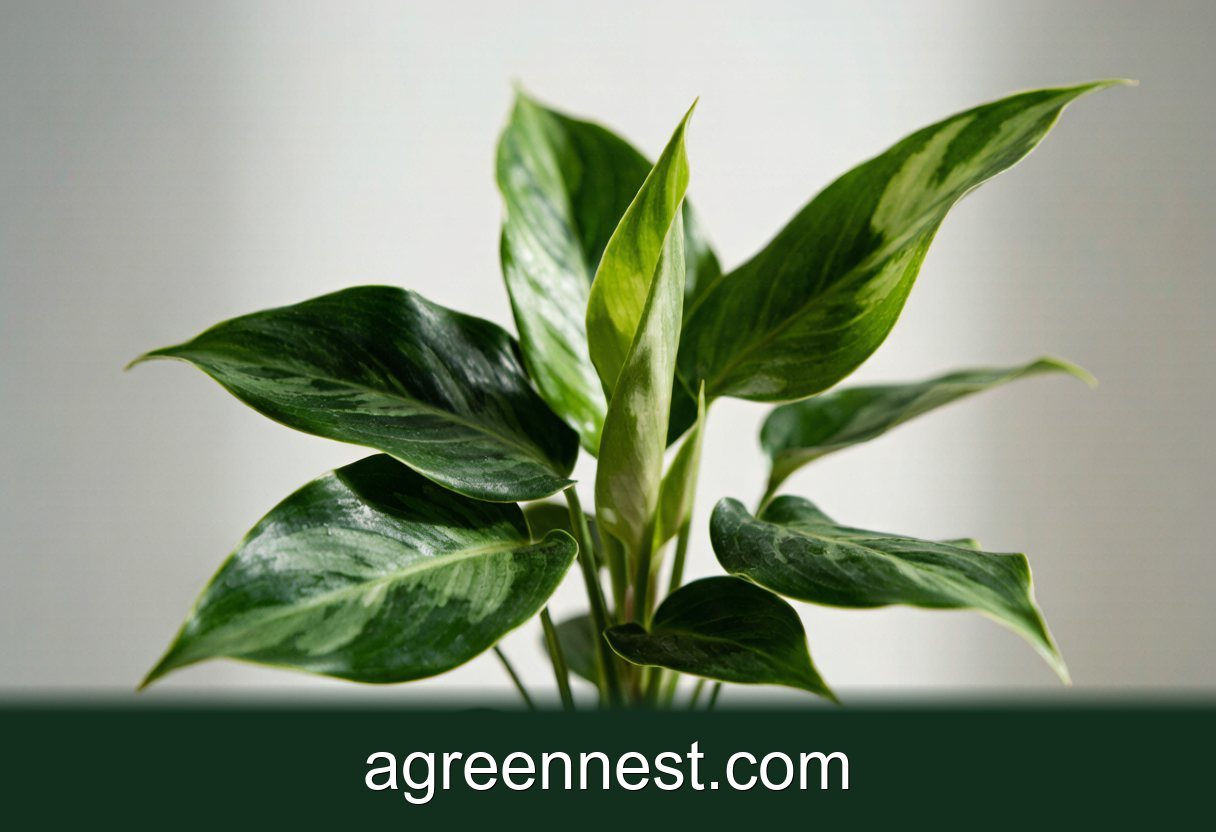
Chinese Evergreen Care Guide (Aglaonema Commutatum) is built for dim rooms. It tolerates bright, indirect light and actually suffers in hot direct sun. Water when the top 2-3 cm of soil feels dry (14 days between waterings), and keep humidity modest. A north or east window, or a few feet back from a bright one, is the sweet spot.
How Chinese Evergreen Came Into My Life
The plant that finally made me believe I could keep houseplants alive was an Aglaonema commutatum my sister gave me during a grey February. At the time my flat got almost no sun, and every fern I tried had crisped within a month. This one, though, unfurled new leaves in a dim corner and seemed cheerfully indifferent to the lack of light. Chinese evergreen comes from the shady forest floors of the Philippines and Southeast Asia, so dim rooms feel like home to it. A dozen cousins in the Aglaonema group offer sprays of silver, pink, and red, and I have since collected four of them. The plain green forms are the toughest, while the pink kinds simply ask for a touch more brightness to hold their colour. Back then I watered it on a whim and still it thrived, which taught me that this genus tolerates neglect better than almost any plant on my shelf. A friend once left hers in a closed bathroom for six weeks and came back to find two new leaves waiting. That stubborn cheerfulness is exactly why I now recommend Chinese evergreen to anyone who says they kill everything they touch.
What Light Does a Chinese Evergreen Prefer?
Low to bright indirect light keeps this plant at its best. Mine sits three feet back from a north facing window, where it receives soft, even light from dawn to dusk and never a beam of hot sun. Direct afternoon rays scorch the leaves to a papery brown, and I found that out the hard way one August. Variegated types with pink or red markings need a little more energy, so I give those an east window instead. If your only option is a dark room, a grow light left on for eight hours a day keeps the foliage lush. Watch the new leaves. When they emerge small and widely spaced, the plant is asking for more light.
How Often Should You Water a Chinese Evergreen?
Unlike the desert succulents I grow, this one likes a steady, gentle sip rather than a long drought. Through spring and summer I water roughly every fourteen days, waiting until the top two to three centimetres of soil feel dry to my fingertip. Winter slows everything, and I stretch that to about every twenty one days. A pot that dries out completely for too long will drop its lower leaves, so I check it on a set day each week. When I do water, I soak the soil until liquid runs from the drainage hole, then empty the saucer within five minutes. Groundwater here is chalky, so every third watering I use rainwater to stop salt building up around the roots.
Soil, Humidity, and a Simple Pebble Tray
A standard peat free houseplant mix is all this plant needs, though I stir in a handful of perlite for extra breathing room. Humidity is where Chinese evergreen shows its tropical side. I set the pot on a tray of pebbles half filled with water, which lifts the local air to a comfortable level without running a machine. Grouping it with two other leafy plants helps as well. Feeding is light. From May through September I pour a balanced 20-20-20 liquid fertilizer at half strength, about once every four weeks, and I skip it entirely in the cold months. Too much food scalds the roots and yellows the tips, so restraint pays off. Repotting is a rare event with this slow grower. I move mine to a pot just one size larger only when roots poke from the drainage hole, which happens about every three years in spring. A deep container holds too much cold soil around the crown, so I choose a shallow, wide bowl instead. After the move I wait a full week before the first watering so any nicks on the roots can heal, and I keep the plant out of direct sun during that recovery spell.
Why Are the Leaves Turning Yellow?
Yellow leaves worry new owners, yet the cause is usually simple. The oldest leaves at the base naturally fade as the plant renews itself, and that is nothing to fix. Widespread yellowing with wet soil points to overwatering, my own early mistake that cost me two plants. Let the top layer dry before the next drink and the plant recovers within a month. Pale leaves with brown scorched patches mean too much sun, so shift it back from the window. Cold drafts from an open door can also bronze the edges, since these plants prefer a steady 60 to 85 degrees Fahrenheit, or 16 to 29 degrees Celsius.
Frequently Asked Questions
Is Chinese evergreen safe around children and pets?
No, the sap and leaves can irritate if chewed, so I keep mine on a high shelf away from my nephew and the family dog.
Can Chinese evergreen grow in a windowless office?
It survives low light better than almost any leafy plant, but a windowless room with no grow light will slowly weaken it. A small desk light on a timer for six hours a day keeps it going.
How do I make more of my Chinese evergreen?
Divide the clump at repotting time, or root a stem cutting in water for three to four weeks. Both methods are gentle and almost foolproof.
Few plants greet a dim, busy home with such patience as the Chinese evergreen. Mine has outlasted leaky pots, a forgotten holiday, and my slow learning curve, and it still sends up fresh leaves each spring. Pick one tolerant green form to begin, then branch into the colourful cultivars once you trust your touch. For a routine matched to your rooms, try our free watering calculator and the light calculator to find its ideal corner.
Sources & further reading
GreenNest authors research and write every guide independently. The external links below are reputable references we recommend for deeper reading — they are not the sources we copied from.
- Aggie Horticulture (Texas A&M) — Texas A&M AgriLife
- NC State Extension — Plant Toolbox — NC State Extension
- Clemson Home & Garden Information Center — Clemson Extension
Recommended Tools for Low-Light Indoor Plants Care
Free, no-signup helpers matched to this guide.
Free Ebooks to Explore
Downloadable handbooks — no email required.
Share Your Plant Story
Grown something tricky, or found a trick that finally worked? Tell us in the comments, or see what other readers are sharing on our Community page. The best reader tips get folded back into our guides.
Join the Conversation
Have a tip or a question about Chinese Evergreen Care Guide (Aglaonema commutatum)? Share it below — comments are saved on our server.