 AGreenNest
Low-Light Indoor Plants
Chinese Evergreen Care: Colorful Low-Light Plant
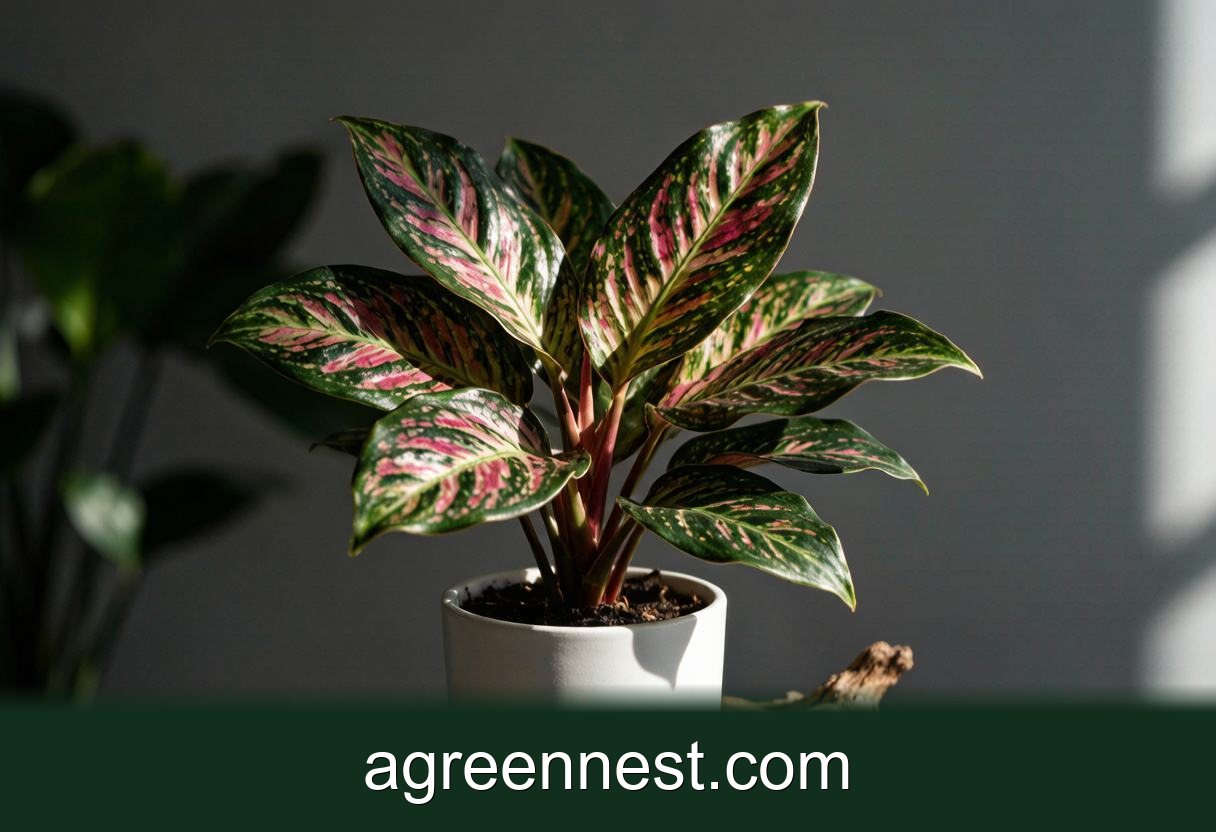
Chinese Evergreen is built for dim rooms. It tolerates low to medium light and actually suffers in hot direct sun. Water when the top 2-3 cm of soil feels dry (10 days between waterings), and keep humidity modest. A north or east window, or a few feet back from a bright one, is the sweet spot.
The Chinese Evergreen (Aglaonema commutatum) brings bold color to the dimmest corners of your home. With pink, red, and silver markings across its broad leaves, it is one of the few low light indoor plants that looks anything but plain. I first met one in a friend's basement apartment that got almost no sun, and it was thriving with more color than my bright windowsill plants.
This guide covers the best colorful varieties, a watering rhythm that prevents rot, and the one safety warning every pet owner needs to hear.
Why Does Chinese Evergreen Love Low Light?
Aglaonema commutatum evolved on the shady forest floor of Southeast Asia, so it is built for filtered, indirect light. It does well in 100 to 300 foot candles, which includes north windows, the middle of rooms, and even fluorescent office lighting.
In very low light the plant grows slowly and its colors stay softer. Move it closer to a window and the pink and red markings deepen beautifully. My own 'Red Siam' went from muddy green to glowing crimson once I nudged it six inches toward the glass.
Colorful varieties to try
- 'Pink Dalmatian': Speckled pink dots over green leaves, a true statement plant.
- 'Red Siam': Deep red stems and veins that glow in low light.
- 'Silver Bay': Silvery centers that brighten a dark shelf.
- 'Maria': Tough, dark green with subtle markings, the easiest for beginners.
Because low light makes the soil dry slowly, a cheap moisture meter takes the guesswork out of watering. You simply insert it and read the dial, which prevents both droughts and the overwatering that kills most Chinese Evergreens.
The Right Watering Rhythm
Slow growth and dim rooms mean Aglaonema commutatum drinks lightly. Water roughly every 7 to 10 days in summer and every 2 to 3 weeks in winter, but always confirm the soil first.
Let the top 1 to 2 inches of soil dry out between drinks. When you do water, soak until liquid runs from the drainage holes, then empty the saucer completely.
Watch the leaves for clues
Drooping, limp leaves usually mean the plant is thirsty. Yellow, soft, or blackened lower leaves usually mean too much water. In low light, lean toward slightly too dry rather than too wet.
Use lukewarm, room temperature water. Cold water can shock the roots and cause brown leaf tips, a common complaint with this plant.
How Do I Keep the Leaves Clean?
Chinese Evergreen has big, flat leaves that collect dust fast, and dust blocks the little light the plant does get. Clean leaves photosynthesize far more efficiently than grimy ones. I set a phone reminder so I never forget this monthly chore.
A simple monthly routine
- Mix a drop of mild dish soap into a bowl of lukewarm water.
- Wipe each leaf gently with a soft, damp cloth, supporting it from underneath.
- Rinse with plain water on a second cloth and dry lightly with a towel.
- Never use leaf shine sprays; they clog the pores and do more harm than good.
Do this once a month in low light, or every two weeks if the room is near a busy window or kitchen. Your Aglaonema will reward you with brighter color and perkier growth.
Is Chinese Evergreen Safe for Pets?
This is the most important safety note for any household with animals. Chinese Evergreen is toxic to cats and dogs if chewed or eaten.
The plant contains calcium oxalate crystals that release on contact, causing immediate mouth pain, drooling, pawing at the face, and sometimes vomiting. The reaction is painful but rarely life threatening.
Keep the plant on a high shelf or in a room your pet cannot access. If you suspect your cat or dog has chewed a leaf, call your veterinarian or a pet poison line right away with the plant name.
That meter also helps you water less often, which keeps the soil drier and less inviting to the gnats that sometimes attract curious pets. It is a small tool that protects both your plant and your furry housemates.
What Are the Common Low-Light Problems?
Even easygoing Aglaonema commutatum sends signals when something is wrong.
- Brown leaf tips: Often dry air or cold water. Raise humidity and use lukewarm water.
- Faded color: Too little light. Move closer to a window or add gentle supplemental light.
- Soft, yellow base leaves: Overwatering. Let the soil dry more and check drainage.
Spider mites can appear in dry, warm rooms. Mist the leaves occasionally and wipe them clean to keep these pests away. I check the undersides of mine every Sunday while I water.
Frequently Asked Questions
Q: Can Chinese Evergreen grow in very low light?
A: Yes, it tolerates dim rooms and fluorescent light, though growth slows and colors soften. Brighter indirect light keeps the leaf patterns vivid.
Q: How often should I water Aglaonema?
A: About every 7 to 10 days in summer and 2 to 3 weeks in winter. Let the top 1 to 2 inches of soil dry before watering again.
Q: Is Chinese Evergreen toxic to pets?
A: Yes, it contains calcium oxalate crystals that hurt a pet's mouth and stomach. Keep it out of reach of cats and dogs.
Chinese Evergreen proves that low light indoor plants can be colorful, not just green. Pair it with a cast iron plant for the darkest corner, and when you are unsure about watering, try our free light calculator to plan the perfect dim spot.
Sources & further reading
GreenNest authors research and write every guide independently. The external links below are reputable references we recommend for deeper reading — they are not the sources we copied from.
- UF/IFAS Gardening Solutions — UF/IFAS
- Cornell Garden-Based Learning — Cornell University
- NC State Extension — Plant Toolbox — NC State Extension
Recommended Tools for Low-Light Indoor Plants Care
Free, no-signup helpers matched to this guide.
Free Ebooks to Explore
Downloadable handbooks — no email required.
Share Your Plant Story
Grown something tricky, or found a trick that finally worked? Tell us in the comments, or see what other readers are sharing on our Community page. The best reader tips get folded back into our guides.
Join the Conversation
Have a tip or a question about Chinese Evergreen Care: Colorful Low-Light Plant? Share it below — comments are saved on our server.