 AGreenNest
Low-Light Indoor Plants
Dieffenbachia Low-Light Care (Dumb Cane)
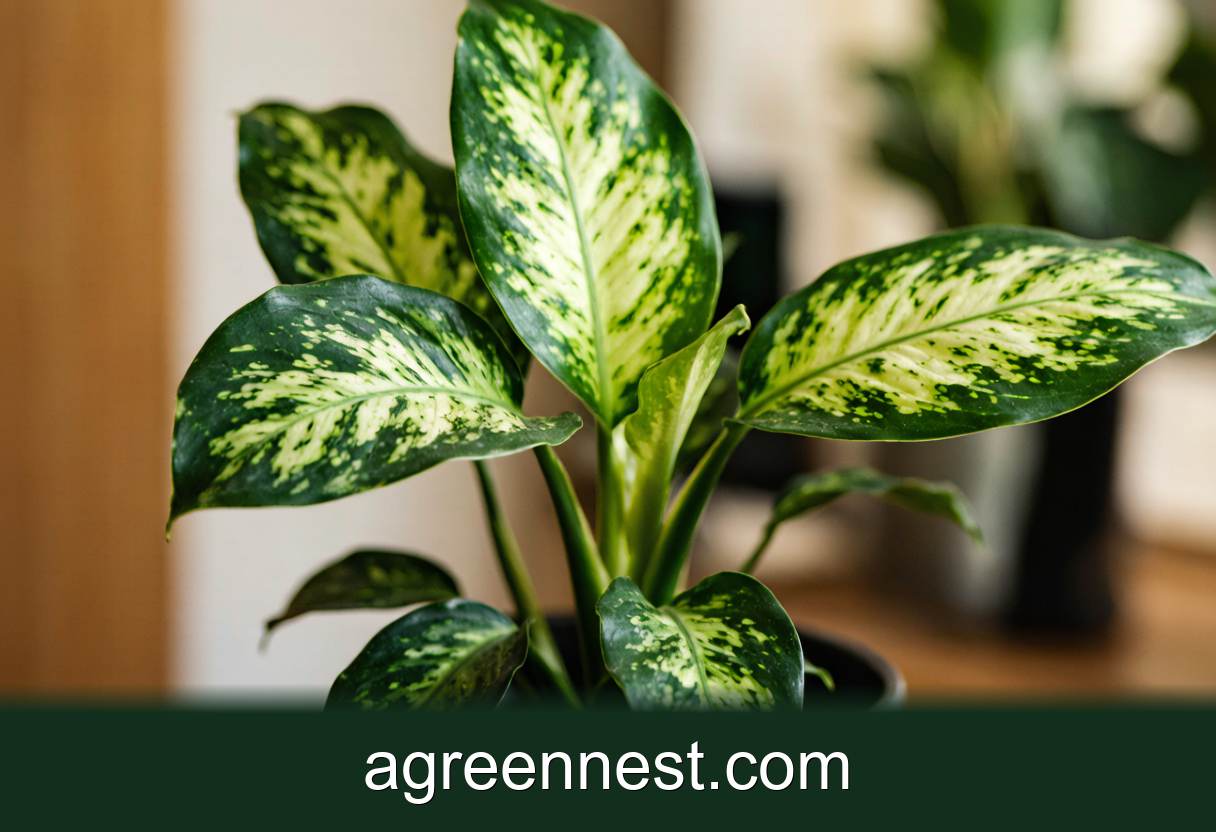
Dieffenbachia Low-Light Care (Dumb Cane) is built for dim rooms. It tolerates a few hours of direct sun and actually suffers in hot direct sun. Water when the top 2-3 cm of soil feels dry (10 days between waterings), and keep humidity modest.
Dieffenbachia, the plant most of us call dumb cane, has been my go-to for dim corners for nearly a decade. The broad, creamy leaves of 'Camille' brightened a flat I once rented that got almost no sun. Few houseplants forgive low light as gracefully as this one does, which is why it still sits in my bedroom. One bathroom plant I kept once perked up after a simple move to the hallway.
What Light Makes Dieffenbachia Happy?
Medium indirect light keeps the variegation strongest, though the plant tolerates a dim living room with ambient daylight. A north or east window works well, and a few feet back from a bright window is even safer. Direct sun bleaches and scorches the patterned leaves within days.
In a darker room, a grow light for 8 to 10 hours daily holds the color and stops the stems from stretching. I run a small LED panel through the grey winter months and the difference in leaf size is obvious. Sheer curtains tame a too-bright sill. North-facing bathrooms can work if a timer runs the light.
Where Should You Set the Temperature?
Keep the room steady between 65 and 75°F (18 and 24°C), away from cold drafts and radiators. Temperatures below 60°F (15°C) trigger leaf drop, which alarmed me the first winter I forgot to move a pot off the windowsill. Average home air suits the plant, and a weekly mist or pebble tray keeps the edges smooth.
Cold glass near a window is the quiet enemy here. Slide the pot back a foot when frost threatens. Stable warmth matters more than any fertilizer you could buy. A thermometer on the sill caught a 12°C drop one night that I would have missed.
How Often Should You Water and Feed It?
Wait until the top 2 inches (5 cm) of soil feel dry, which is usually every 7 to 10 days in active growth. In winter the plant rests, so ease back to every 10 to 14 days. A moisture meter at the 2-inch dry reading removes the guesswork completely.
Consistency beats a fixed calendar, because swinging between bone-dry and soggy stresses the roots. Feed every 4 to 6 weeks in spring and summer with a balanced liquid fertilizer at half strength. Stop in fall and winter, then flush the soil with filtered water every couple of months to clear salt build-up.
I water at the soil line and never mist the crown, since wet crowns invite rot. A pot with a drainage hole is non-negotiable in my home. Loose, well-draining mix lets air reach the roots. Rainwater or distilled water prevents the tip browning that tap minerals cause. Bottom watering trains roots downward and keeps the crown dry.
How Do You Stay Safe and Propagate?
Dieffenbachia seguine and its relative Dieffenbachia picta carry calcium oxalate crystals that sting skin, mouth, and eyes. This is the origin of the name dumb cane, since chewing the stem can swell the tongue. Always wear gloves when pruning and wash up afterward.
Keep the plant away from curious pets and small children, and never let anyone taste a leaf. The hazard is real but easy to manage with a little care. Stem cuttings root in water or moist soil with at least one node, and basal shoots divide neatly at repotting.
Within three to four weeks you will have a fresh plant to share with a friend. Our nephew learned the hard way, so the pot now lives on a high shelf. Repot only every two to three years, stepping up one pot size so the root ball stays snug. Orchid bark by the handful keeps the mix open for years.
Variegation fades in true darkness, so rotate the pot a quarter turn weekly. Dust on broad leaves blocks the little light a dim room provides. Brown leaf tips signal the air is too dry for comfort. Humidity from a small unit at 50 percent fixed the crisp edges on mine.
New growth is the best proof the plant is happy. Older leaves yellow naturally and can be removed. Moss poles are unnecessary for this upright grower. Group it with other low-light plants for a calm corner.
Filtered light through a curtain is kinder than a bare south pane. Clemson Extension notes the sap risk applies to every cultivar. UF/IFAS suggests repotting in spring for fastest root growth. Kew Gardens lists several wild relatives worth knowing. Yellow leaves at the base are normal and not a panic sign. A calm routine beats constant fussing with this steady plant.
Frequently Asked Questions
Can dumb cane grow in low light?
It tolerates low light well, though medium indirect light keeps it fullest and most colorful.
Is Dieffenbachia safe for pets and kids?
No, the sap irritates skin and is toxic if chewed, so place it well away from pets and children.
What temperature does it prefer?
Keep it in a steady 65 to 75°F range and shield it from cold below 60°F.
Dieffenbachia rewards a little patience with big, beautiful foliage in the dimmest rooms of the home. Learn its one caution about sap, then enjoy a plant that asks for so little light. Browse our low-light plant hub for more shade-loving picks and grow with real confidence. Patience always wins with this steady plant.
Recommended Tools for Low-Light Indoor Plants Care
Free, no-signup helpers matched to this guide.
Free Ebooks to Explore
Downloadable handbooks — no email required.
Sources & further reading
GreenNest authors research and write every guide independently. The external links below are reputable references we recommend for deeper reading — they are not the sources we copied from.
- Clemson Home & Garden Information Center — Clemson Extension
- UF/IFAS Gardening Solutions — UF/IFAS
- Royal Botanic Gardens, Kew — Kew Gardens
Share Your Plant Story
Grown something tricky, or found a trick that finally worked? Tell us in the comments, or see what other readers are sharing on our Community page. The best reader tips get folded back into our guides.


Join the Conversation
Have a tip or a question about Dieffenbachia Low-Light Care (Dumb Cane)? Share it below — comments are saved on our server.