 AGreenNest
Low-Light Indoor Plants
String of Turtles Care: Light, Water & Why It Goes Bald
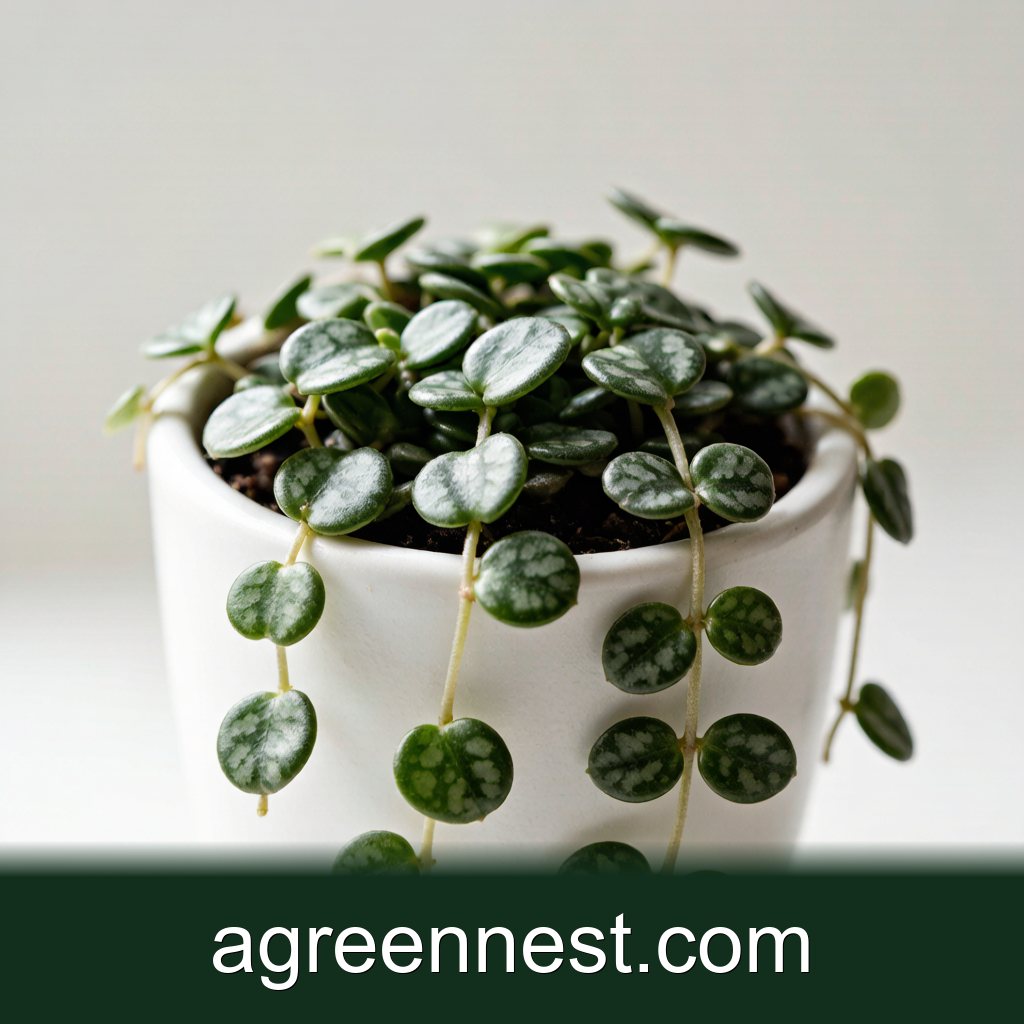
String of Turtles is built for dim rooms. It tolerates bright, indirect light and actually suffers in hot direct sun. Water when the top 2-3 cm of soil feels dry (10 days between waterings), and keep humidity modest. A north or east window, or a few feet back from a bright one, is the sweet spot.
The first time I saw a string of turtles, I thought the leaves were beads someone had painted and strung on wire. They were about the size of a fingernail, deep green with pale silver veins that really did look like a turtle's shell. Then my plant grew, the bottom leaves dropped, and I had a string of bare stems with a few turtles at the tip. That is the usual arc for this one, and it is avoidable with a few simple habits.
What Peperomia prostrata actually is
Peperomia prostrata is a creeping peperomia from Ecuador and Peru, not a succulent despite its chunky leaves. The leaves store a little water, but the stems stay thin and the roots stay fine, so it behaves like a tropical trailer that only looks drought tolerant. Mature vines run 20 to 30cm before they start to flop, and individual leaves are 1 to 2cm across. It is a slow grower next to Tradescantia or pothos, which trips up people who expect a fast filler plant. Even its close relative Peperomia obtusifolia outpaces it.
Because it is small, it earns its spot on a shelf where you can look down at the leaf pattern. Our peperomia care roundup covers the broader family if you want siblings to mix in.
Why Does String of Turtles Go Bald?
Baldness starts when the plant drops lower leaves to feed the growing tips. A vine that loses its bottom foliage is not sick; it is reallocating. Light is the usual trigger. In a dim room the spacing between leaves stretches and the silver markings fade to flat green, so the bare middle looks worse than it is. Move the pot closer to a window and new growth tightens up within three to four weeks.
A second cause is soggy soil at the crown. When fine roots sit wet, the stems rot from the base and the top keeps a few leaves while the middle goes naked. I have lost more of these to pretty, hole-less pots than to anything else, so always use a container with a real drainage hole.
How Often Should You Water It?
The potting mix should dry down in the top 2 to 3cm between drinks. In summer that means roughly every 7 to 10 days; in winter, every 14 to 21 days. I water when a moisture meter reads dry at 3cm deep, because the fine roots hate sitting wet and the leaf drop that follows is the plant's loudest complaint.
Aim water at the soil, never the leaves. Wet foliage on this species invites rot where the stems meet the mix. A small pot dries faster than you expect, so check it rather than marking a fixed day on the calendar. Our indoor watering guide explains the rhythm I use for every container I own.
Light: bright shade, not a dark corner
"Low light plant" gets read as "put it in the gloomiest room," and the string of turtles quietly quits. It wants bright indirect light, about 10 to 14 hours a day of the kind you get 1 to 2 metres from an east or north window, or under a grow light at a modest setting.
Direct midday sun scorches the thin leaves fast, so filter anything through glass in summer. In a dark spot it survives, but the pattern comes back only when you give it more light. A north or east window is the sweet spot I keep mine in. I learned this the hard way with my first plant, which I parked in a hallway that got almost no sun, and it took two months to recover once I moved it.
Soil and the pot that holds it
A dense mix is the silent killer here. Use something airy: one part houseplant compost, one part perlite, and a handful of orchid bark, so water passes through in a couple of seconds. The roots need oxygen more than they need food.
A shallow pot 8 to 10cm wide suits it better than a deep one, because a deep pot holds more mix than the small root ball can dry out. Make sure the pot has a real drainage hole before you commit to it. I mix mine in an old ice cream tub and keep it coarse on purpose, because the fine seedling mix is the trap most shop pots come in.
Humidity and temperature
Aim for 50 to 60% humidity and 18 to 26°C (65 to 79°F). The plant tolerates average living-room air, but crispy leaf edges show up below 40%. A nearby humidifier or a tray of pebbles helps during winter heating. A string of hearts makes a good companion since both want similar conditions on the same shelf.
Making it bushy instead of leggy
The plant only grows from the tips, so a long bare middle is permanent unless you act. Two moves fix it. First, pinch the tips back to just above a leaf when a vine hits 15cm, which forces side shoots. Second, lay the vines back on the soil and pin them down with a hairpin, because nodes touching the mix root and turn into new upright growth.
If a vine is already bald, cut it off at the soil and use the leafy tip as a cutting. Stem cuttings root in water or straight into damp perlite in 2 to 3 weeks. Note that leaves alone will not root the way succulent leaves do; you need a piece of stem with a node. Give it a month and the whole pot looks different.
Problems you will actually meet
Soft, mushy stems at the base mean too much water. Unpot, cut above the rot, and restart the healthy top in fresh dry mix. Pale webbing and stippled leaves point to spider mites, which love dry warm air, so raise humidity and wipe the leaves.
Yellow leaves at the bottom are normal as the plant ages. Yellow across the whole plant with wet soil means overwatering, not hunger. Hold the fertilizer: this is a light feeder, and a weak balanced feed once a month in spring and summer is plenty.
Frequently Asked Questions
Q: Can it live in a north-facing window?
A: Yes, a north window is often ideal because it gives bright indirect light without scorching. Growth will be slower than near an east window, but the leaf pattern stays sharp.
Q: How do I make it fuller instead of one long string?
A: Pinch tips at 15cm and pin vines to the soil so nodes root. New upright shoots fill the pot within a month or two.
Q: Is Peperomia prostrata toxic to cats or dogs?
A: No. Peperomia species are considered non-toxic, so it is a safe choice for pet homes, though any plant chewed in quantity can still upset a stomach.
String of turtles rewards patience more than skill, and the turtle-shell pattern is worth the fuss. Keep the mix airy, let the top dry, and give it bright shade, and you will get the bushy look you wanted. For the broader rhythm of keeping containers happy, our indoor watering guide is the next page I would open.
Recommended Tools for Low-Light Indoor Plants Care
Free, no-signup helpers matched to this guide.
Free Ebooks to Explore
Downloadable handbooks — no email required.
Sources & further reading
GreenNest authors research and write every guide independently. The external links below are reputable references we recommend for deeper reading — they are not the sources we copied from.
- Royal Horticultural Society — Houseplant care — RHS
- Missouri Botanical Garden — Missouri Botanical Garden
- NC State Extension — Plant Toolbox — NC State Extension
Share Your Plant Story
Grown something tricky, or found a trick that finally worked? Tell us in the comments, or see what other readers are sharing on our Community page. The best reader tips get folded back into our guides.
Join the Conversation
Have a tip or a question about String of Turtles Care: Light, Water & Why It Goes Bald? Share it below — comments are saved on our server.