 AGreenNest
Plant Pests & Diseases
How to Deal With Spider Mites
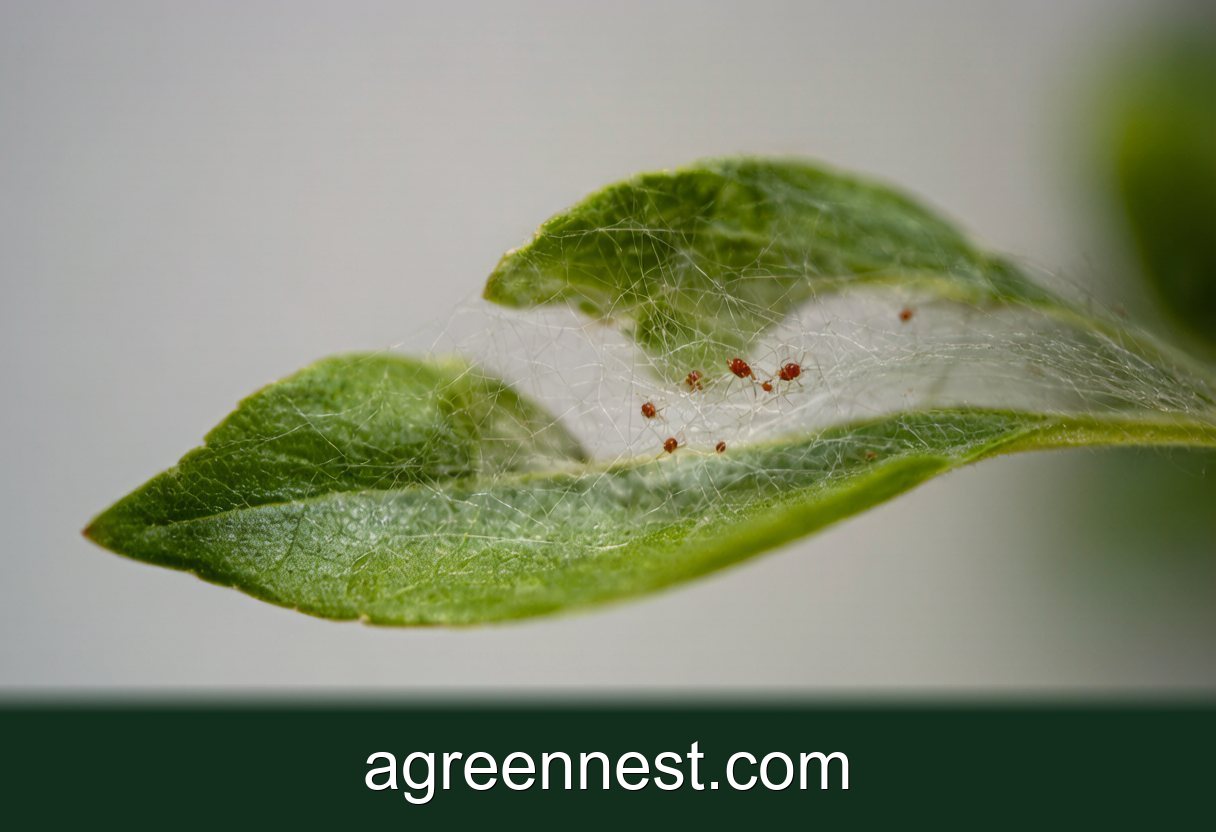
Most How to Deal with Spider Mites problems trace back to the usual indoor pests, not bad luck. Inspect weekly (leaf undersides, stem joints), quarantine new plants, and treat early with a targeted spray. Good airflow and dry foliage do more than any bottle, since prevention beats the cure every time.
What Spider Mites Look Like
The first warning most growers notice is a faint, silvery stippling scattered across the upper leaf surface. Look closer and the real problem appears. Tetranychus urticae, the two-spotted spider mite, is a tiny arachnid rather than an insect, and it feeds by piercing individual plant cells to suck out the contents. NC State Extension points out that a single female can lay 8 to 20 eggs each day when conditions are warm, which is why an infestation seems to explode overnight. Affected leaves fade from green to yellow, then take on a bronzed sheen, and finally drop. Fine webbing gathers in the leaf axils and along stem joints, especially on the undersides where the colony hides. When you suspect mites but cannot see them, hold a sheet of white paper beneath a leaf and tap it firmly. The tiny specks that land and move are almost certainly mites.
Mites also leave behind pale feeding dots that extension specialists call stippling. Unlike thrips, which leave dark frass, or whiteflies, which flutter upward when disturbed, spider mites stay put and spin silk. That silk is the clearest field marker you have. Texas A&M notes that webbing becomes dense only in heavy infestations, so do not wait for it to appear before you act. Catching the colony while it is still small makes every later step easier.
Why Does This Happen?
Spider mites multiply fastest when the air is both hot and dry. Texas A&M AgriLife explains that mite numbers climb sharply above 85°F / 29°C with relative humidity below 50 percent. Indoor heating through the winter builds exactly that environment, so outbreaks often peak from December through February. The pests are also natural hitchhikers. A new plant carried home from a nursery can shelter dozens of mites on its leaf undersides long before any symptom shows. Crowded shelves with poor airflow hand the colony a still, warm pocket to occupy. Because the adults average only about 1/50 of an inch, they stay invisible until the damage is advanced. The American Phytopathological Society treats the injury as feeding stress rather than a true disease, which is why a fungicide will not solve it.
Over fertilization plays a role that many growers overlook. Soft, nitrogen rich new growth is easier for mites to pierce, so a plant fed heavily every week becomes a more attractive target. Dusty leaves are a second quiet risk, because the dust shelters the mites and blocks the water spray you might otherwise use against them. Wipe leaves gently with a damp cloth once a month to remove that film. Quarantine habits matter too, since a single unnoticed plant can seed an outbreak across an entire shelf within 6 to 8 weeks.
How Do You Get Rid of Spider Mites?
Begin by isolating the plant at least 3 feet from its neighbors. A firm stream of room-temperature water, around 70°F / 21°C, washes most adults and their eggs off the leaf undersides. Repeat that rinse every 2 to 3 days across 2 full weeks. After the wash, apply a control product. Neem oil mixed at 1 tablespoon per 1 quart of water, plus a single drop of mild dish soap as an emulsifier, acts as both a suffocant and a feeding deterrent. Insecticidal soap is a second choice, used at roughly 2.5 tablespoons per 1 gallon of water. For a stubborn colony, 70 percent isopropyl alcohol diluted 1 part to 7 parts water can be wiped onto the worst leaves, though you should test one leaf first to avoid burn. Raise the local humidity to between 60 and 80 percent with a pebble tray for 7 to 10 days, since the mites struggle when the air stays moist.
Persistence beats strength here. Mites sheltered in bud axils survive a single treatment, so plan on three passes rather than one. The University of Minnesota Extension suggests checking the paper tap test after each round to confirm the population is falling. If numbers hold steady after 14 days, rotate to a different active ingredient so the colony cannot adapt. Keep the isolated plant away from healthy ones until two consecutive tap tests come back clean.
How Can You Keep Them From Coming Back?
Weekly inspection of the leaf undersides is the most reliable defense you have. Pick a fixed day, perhaps Sunday, and run your thumb along five leaves per plant. Improve airflow with a small fan on a low setting, letting air move across the canopy without blasting the foliage. Space the pots apart so the air circulates between them. The University of Minnesota Extension recommends keeping winter humidity above 50 percent to slow mite reproduction. Quarantine every new purchase for 2 to 3 weeks on a separate shelf before it joins the rest of the collection. Most outbreaks reverse if you act within the first 7 to 10 days, before the population climbs into the thousands.
A simple humidity routine does much of the work for you. Group humidity loving plants on a tray of wet pebbles, or run a small humidifier near the shelf during the dry months. Missouri Botanical Garden guidance echoes the same point, that mites hate moisture on the leaf surface. Trim off the oldest, most webbed leaves during routine care so the colony has fewer places to hide.
Frequently Asked Questions
Q: Will spider mites spread to my other plants?
A: Yes. The mites both crawl and drift on air currents, so isolate the affected plant at once and wash your hands and tools after touching it.
Q: Are spider mites insects that a normal pesticide will kill?
A: No. Tetranychus urticae is an arachnid, not an insect, and many standard insecticides miss it. Miticides, neem, and insecticidal soap are the options that actually work.
Q: How long does it take to clear an infestation?
A: Plan on 3 to 4 weekly treatments, about 21 to 28 days, before signs disappear, because the eggs hatch on a staggered schedule.
Catching spider mites early is half the battle. The evidence from the extension services lines up: prevention through humidity, airflow, and weekly checks beats any bottle of spray. Keep our pest identifier tool bookmarked and inspect new growth every time you water.
Recommended Tools for Plant Pests & Diseases Care
Free, no-signup helpers matched to this guide.
🔍 Free Tool
Pest & Problem Identifier
Pick the symptoms you see and get the likely culprit plus a fix.
Free Ebooks to Explore
Downloadable handbooks — no email required.
Free Ebook
The AGreenNest Succulent Care Handbook
The complete, beginner-to-confident guide to growing fat, happy succulents — 10 chapters and a 20-plant directory.
Free Ebook
Haworthia & Haworthiopsis Care Handbook
A focused guide to the striped, forgiving Haworthia clan.
Sources & further reading
GreenNest authors research and write every guide independently. The external links below are reputable references we recommend for deeper reading — they are not the sources we copied from.
- NC State Extension — Plant Toolbox — NC State Extension
- Aggie Horticulture (Texas A&M) — Texas A&M AgriLife
- American Phytopathological Society — APS
Share Your Plant Story
Grown something tricky, or found a trick that finally worked? Tell us in the comments, or see what other readers are sharing on our Community page. The best reader tips get folded back into our guides.
Join the Conversation
Have a tip or a question about How to Deal With Spider Mites? Share it below — comments are saved on our server.