 AGreenNest
Succulent Care
String of Hearts Care: The Trailing Ceropegia woodii

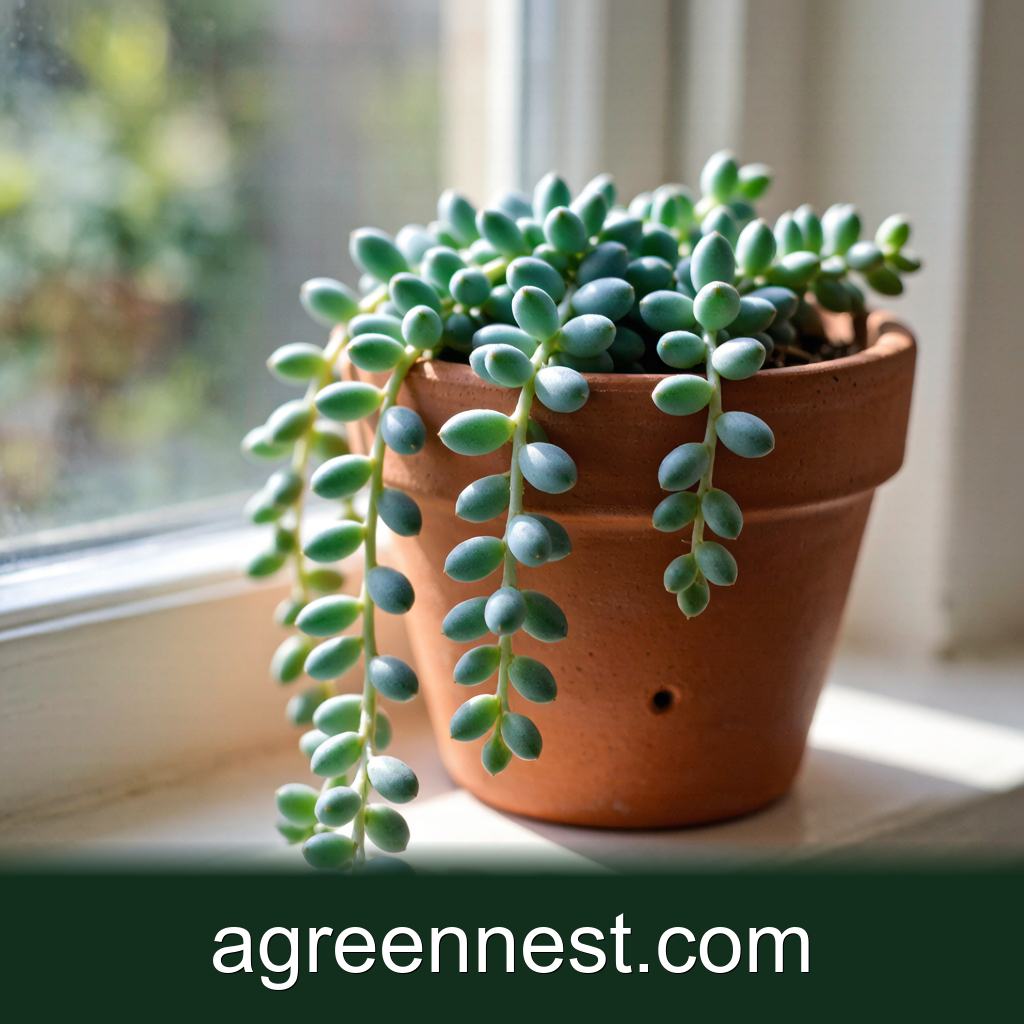
String of Hearts stores moisture in its leaves, so it tolerates some neglect. Give it bright, indirect light and water only when the potting mix has fully dried out (10 days between waterings). Plant it in a gritty, fast-draining mix and a terracotta pot to keep the roots healthy and rot-free.
I almost passed over Ceropegia woodii at a plant swap because its vines looked thin and unremarkable in a nursery pot. Six months later those strings trailed 30 inches down a shelf, each leaf a silver-marbled heart no wider than a fingernail. String of Hearts is an underrated trailing succulent from South Africa, and once you meet its few demands it settles in and grows steadily. Most beginners expect a fussy plant, but this one asks for less than it appears to give, and it forgives the occasional missed watering without complaint.
A friend of mine kept hers on a kitchen shelf for two years with nothing but bright morning light and a drink every ten days. The vine doubled in length and never dropped a leaf, which tells you most of what you need to know about its temperament.
Where Does String of Hearts Come From?
In the wild, Ceropegia woodii sprawls across rocky outcrops in South Africa and nearby regions, sending slender stems that reach 24 to 36 inches in cultivation. The leaves are small, opposite, and heart-shaped, with a deep green upper surface marbled in silver and a plain purple underside. Mature plants also grow rounded, potato-like tubers along the vine and at the soil line. Those tubers store water and nutrients, which is why a seemingly leafless string can sprout again after the top dies back.
A close relative, Ceropegia linearis, shows the same trailing habit with narrower leaves, and both belong to a genus built for dry, bright places. Knowing the family helps you predict the care, because these are not thirst plants at heart.
How Much Light Does It Really Want?
This plant wants bright but filtered light. In my experience 4 to 6 hours of bright indirect sun keeps the silver marbling vivid. An east window is ideal, and a few feet back from a south window also works. Harsh midday sun through glass can bleach the leaves and scorch the vines, so filter strong summer light with a sheer curtain.
Too little light fades the pattern to plain green and stretches the spacing between leaves. The watering and light balance that trailing succulents need applies here, and a supplemental grow light helps keep the color through dim months.
Water Only When the Top Soil Dries
String of Hearts stores moisture in its tubers, so it tolerates brief dryness better than overwatering. I check the top 1 to 2 inches of soil with a finger. When it feels dry, usually every 7 to 10 days in summer, I water until liquid runs from the pot. In winter, cut that to every 2 to 3 weeks as growth slows.
The tubers make the plant deceptive. A pot can look dry on top while the lower soil stays wet and cold, exactly the condition that rots the hidden storage organs. A gritty, fast-draining mix is the safest defense, and I keep a terracotta pot on hand for the extra evaporation.
A Gritty Mix and Warm Air
Use a loose mix of 1 part cactus soil to 2 parts inorganic grit such as pumice or perlite. Heavy, peaty soil stays damp against the tubers and invites rot. Keep the air warm, ideally 64 to 79°F (18 to 26°C). The plant dislikes cold drafts and will drop leaves if a window leaks winter air onto the vines.
Unlike a thirsty Epipremnum aureum, which shrugs off a missed watering, this species punishes a cold wet pot far more than a dry one. Watch the temperature before you watch the calendar, because warmth is the quiet partner to every other demand.
How Do You Propagate Those Trailing Vines?
String of Hearts is easy to multiply, which is handy once a vine grows leggy in dim light. A node carrying one of the potato-like tubers can be laid on damp grit and will root in 2 to 3 weeks. In summer the plant also throws small maroon, trumpet-shaped flowers at the leaf axils. They are a bonus, not a distress signal, and mean the plant is content.
One gardener I know fills a shallow tray with cuttings and ends the season with a dozen new pots to give away. The tubers do most of the work, so even a beginner gets results on the first try.
The One Killer: Cold, Wet, and Dark
If a String of Hearts fails, the cause is almost always the combination of overwatering with cold or dim conditions. The tubers sit near or just under the soil, so a wet, chilly pot turns them to mush before the leaves show clear distress. By the time vines yellow, the tubers may already be gone.
Prevent it by watering on soil dryness, not a calendar, and by moving the plant to its brightest, warmest spot in winter. If you suspect rot, unpot and feel the tubers. Firm ones can be saved by letting the soil dry and replanting the healthy vines. For a visual look at related species, our donkey tail care guide and string of pearls guide show the same light-and-drainage logic.
Frequently Asked Questions
Q: Why are the leaves on my String of Hearts turning plain green?
A: Low light fades the silver marbling. Move the plant to brighter indirect sun for 4 to 6 hours and the new leaves should regain the pattern over the next few weeks.
Q: What are the little potatoes on my Ceropegia woodii vines?
A: Those are water-storing tubers. You can lay a tuber-bearing node on soil to start a new plant, or leave them in place to feed the mother vine.
Q: Can String of Hearts survive a cold room in winter?
A: It prefers 64 to 79°F (18 to 26°C). Below about 54°F (12°C) with wet soil the tubers rot, so keep it warm and water every 2 to 3 weeks at most.
String of Hearts belongs on any bright shelf once you respect its three demands and avoid the cold-wet trap around its tubers. Give it bright indirect light, a gritty mix, and a warm room, and those silver hearts will trail for years with very little fuss. Compare its care with our string of pearls guide if you want a second trailing succulent with similar rules.
Recommended Tools for Succulent Care
Free, no-signup helpers matched to this guide.
Free Ebooks to Explore
Downloadable handbooks — no email required.
Free Ebook
The AGreenNest Succulent Care Handbook
The complete, beginner-to-confident guide to growing fat, happy succulents — 10 chapters and a 20-plant directory.
Free Ebook
Haworthia & Haworthiopsis Care Handbook
A focused guide to the striped, forgiving Haworthia clan.
Sources & further reading
GreenNest authors research and write every guide independently. The external links below are reputable references we recommend for deeper reading — they are not the sources we copied from.
- Aggie Horticulture (Texas A&M) — Texas A&M AgriLife
- Clemson Home & Garden Information Center — Clemson Extension
- Missouri Botanical Garden — Missouri Botanical Garden
Share Your Plant Story
Grown something tricky, or found a trick that finally worked? Tell us in the comments, or see what other readers are sharing on our Community page. The best reader tips get folded back into our guides.


Join the Conversation
Have a tip or a question about String of Hearts Care: The Trailing Ceropegia woodii? Share it below — comments are saved on our server.