 AGreenNest
DIY Plant Projects
Set Up a Propagation Station on Any Windowsill
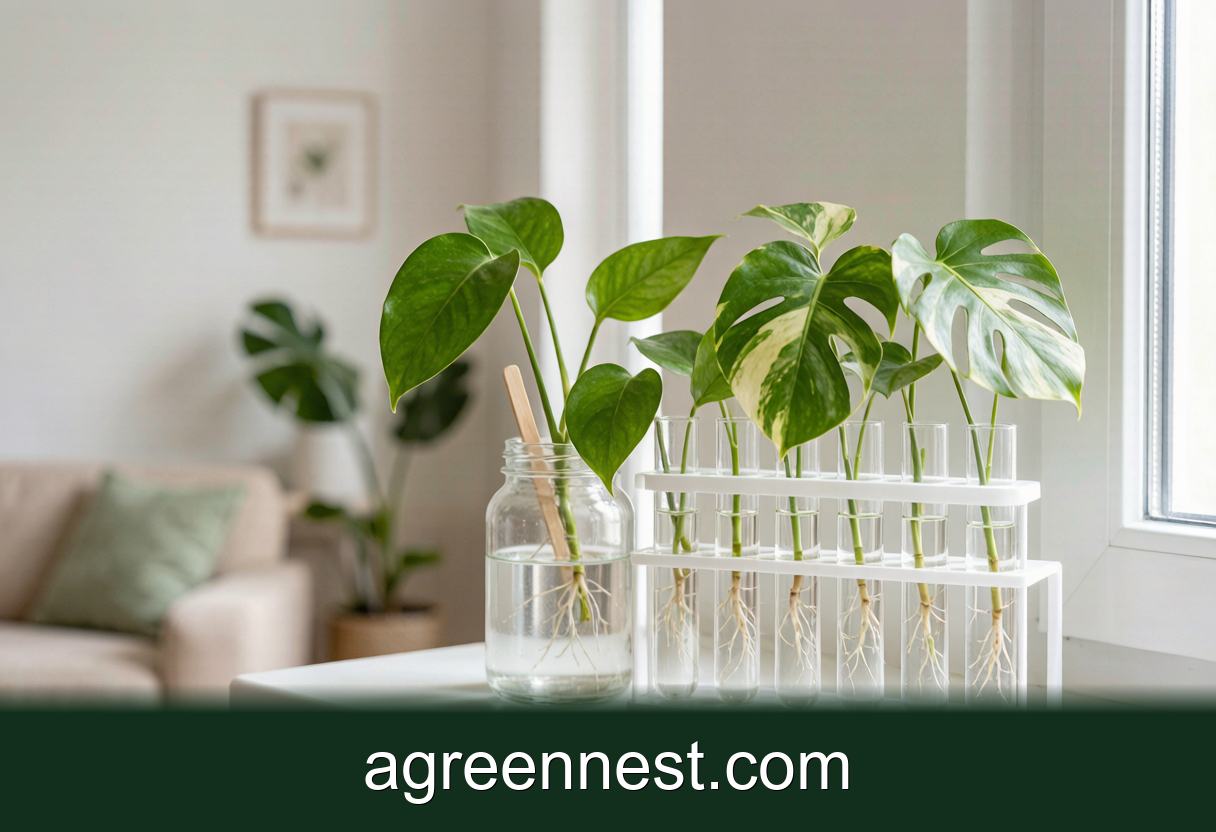
Build Set Up a Propagation Station on Any Windowsill from bits you can source in an afternoon. The frame is simple, but the win is in the details: a level base, drainage you can actually reach, and the light your plants need positioned before you plant. Dry-fit the parts, then plant so the result stays straight and leak-free.
On a rainy Sunday I lined up six jam jars of water on the kitchen sill, and three weeks later I had six new plants for the price of nothing. A propagation station is the highest-return project on this site, because it pays you back in free plants. The whole build costs under 20 dollars if you raid the recycling bin for jars, so the barrier to entry is close to zero. This guide keeps the setup cheap and the details sharp, so your cuttings root instead of rotting.
What You Need
Find a bright windowsill, since east or west light is ideal and south works if it is not scorching. Gather 3 to 6 clean glass jars or a test-tube rack, plus pruners or sharp scissors (the snake-plant shears guide covers what to use). Take cuttings from plants that root in water: Pothos, Philodendron, Spider Plant, Tradescantia, and Peperomia. Pothos is Epipremnum aureum, and the spider plant is Chlorophytum comosum, both reliable rooters. Add an optional tray to catch drips. No heat mat and no hormone powder are needed, because those help but are not required. A basic rack runs 10 to 15 dollars and a pair of pruners another 8 to 12 dollars, but the jars are free. Label each jar with the plant name and the cut date, because unlabeled jars look the same in two weeks and you lose the data.
What Light Does the Sill Need?
East and west sills give 4 to 6 hours of gentle sun, which is enough for most trailers. South glass delivers 6 to 8 hours and can scorch thin leaves, so pull the jars back 20 to 30 cm in high summer. North windows rarely root anything, because the light falls below 100 µmol for most of the day. Watch the leaves for stretch, since a cutting reaching toward the glass is telling you it wants more light. Rotate the jars a quarter turn each refill so all sides grow evenly. Check you are above 200 µmol at midday with a cheap lux meter, the floor for steady rooting.
How Do You Prep the Jars?
Wash the jars first, then fill them with room-temperature water left out overnight (about 20 to 22°C, or 68 to 72°F) so the chlorine off-gasses. Tap water is fine, but fresh-from-tap can slow rooting for a day or two. Pick healthy stems with at least one node, which is the bump where a leaf meets the stem. Roots only grow from nodes, never from a bare leaf, so a node in the water is the whole game. Strip any leaf that would sit below the water line before the cutting goes in.
How Do You Build the Station?
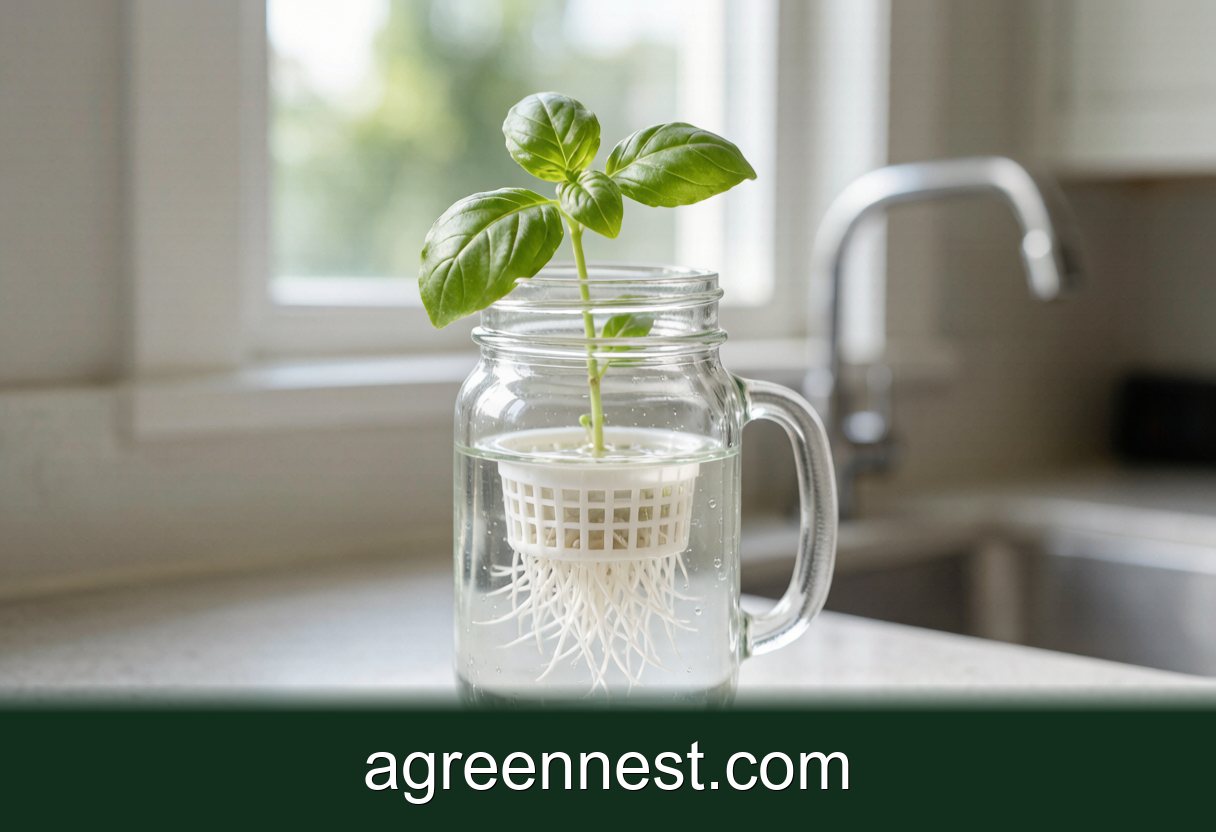
Snip a 10 to 15 cm stem just below a node, then strip the lower leaves so only the top two or three remain. Drop the cutting in water so the node is submerged but the leaves stay in the air, because leaves underwater rot and foul the jar. Line the jars on the sill with a small label showing plant and date, so you learn what roots fast. Refresh the water every 4 to 5 days, since stagnant water smells and stalls roots. Wait next, because pothos roots in 7 to 14 days while slower types take 3 to 4 weeks. Philodendron (Philodendron hederaceum) lands between 10 and 21 days, and peperomia (Peperomia obtusifolia) needs the full 3 to 4 weeks. Tradescantia is the fastest of the group and can show roots in under a week when the sill stays warm.
Aftercare Once Roots Appear
Once roots reach 2 to 3 cm long, you can pot them or leave them in water. Pothos lives in water long-term if you feed it lightly every few weeks with a quarter-strength mix. If potting, use a gritty mix for succulents or normal soil for tropicals, and keep the soil lightly damp for the first week so the water-roots transition. The station itself needs almost nothing: top up evaporated water, change it weekly, and slide it back from the glass if a heatwave pushes the room above 30°C, equal to 86°F.
Why Are My Cuttings Rotting?
A leaf or node is underwater, or the water went stale. Trim the rot, re-cut above a clean node, drop into fresh water, and keep the leaves out of the liquid. Most failures trace to that single error, so check the water line before you blame the plant. Cloudy water means bacteria, and a full change with a rinse of the jar clears it within a day.
Can You Root Succulents in Water?
No, because succulent leaves root on dry soil, not in water, and water rots them fast. Use this station for tropical trailers like the four listed above. Save the succulents for a dry leaf tray where the air does the work, and you will see pups in 4 to 6 weeks instead of mush.
Moving Roots Into Soil
Pot when the roots hit 2 to 3 cm, then use a small 8 to 10 cm pot so the young root ball is not lost in wet soil. Water lightly for the first week and keep the humidity up with a clear bag if your home sits below 40 percent. Roots that grew in water are fragile, so handle them by the stem, never by the thread. After two weeks the plant should stand on its own and push new leaves. Drape a 50 percent shade cloth over the pot for the first three days to soften the move from water to soil and cut transplant shock to almost nothing.
Frequently Asked Questions
How long before I pot them?
Pot when roots hit 2 to 3 cm. Too early and they stall, too late and they get tangled, but tangling is not fatal. Mark the date on the jar so you can compare speeds between species.
Do I need rooting hormone?
Never for these plants. Hormone helps slow rooters, yet the species above root fine without it, so skip the bottle and save the money.
Why are my cuttings rotting instead of rooting?
A leaf or node sits underwater, or the water went stale. Trim the rot, re-cut above a node, use fresh water, and keep leaves in the air.
The propagation station is the one project I tell every beginner to build first, because it turns worry into spare plants. Start with a pothos you already own, label the date, and watch the nodes throw roots. Once you have spares, the kokedama ball is where the extras go, and the loop from cutting to hanging art closes without costing you a cent.
Recommended Tools for DIY Plant Projects Care
Free, no-signup helpers matched to this guide.
Free Ebooks to Explore
Downloadable handbooks — no email required.
Free Ebook
The AGreenNest Succulent Care Handbook
The complete, beginner-to-confident guide to growing fat, happy succulents — 10 chapters and a 20-plant directory.
Free Ebook
Haworthia & Haworthiopsis Care Handbook
A focused guide to the striped, forgiving Haworthia clan.
Sources & further reading
GreenNest authors research and write every guide independently. The external links below are reputable references we recommend for deeper reading — they are not the sources we copied from.
- Aggie Horticulture (Texas A&M) — Texas A&M AgriLife
- Michigan State University — Gardening — Michigan State University
- University of Minnesota Extension — U Minnesota Extension
Share Your Plant Story
Grown something tricky, or found a trick that finally worked? Tell us in the comments, or see what other readers are sharing on our Community page. The best reader tips get folded back into our guides.
Join the Conversation
Have a tip or a question about Set Up a Propagation Station on Any Windowsill? Share it below — comments are saved on our server.