 AGreenNest
Low-Light Indoor Plants
Golden Pothos Care Guide (Epipremnum aureum)
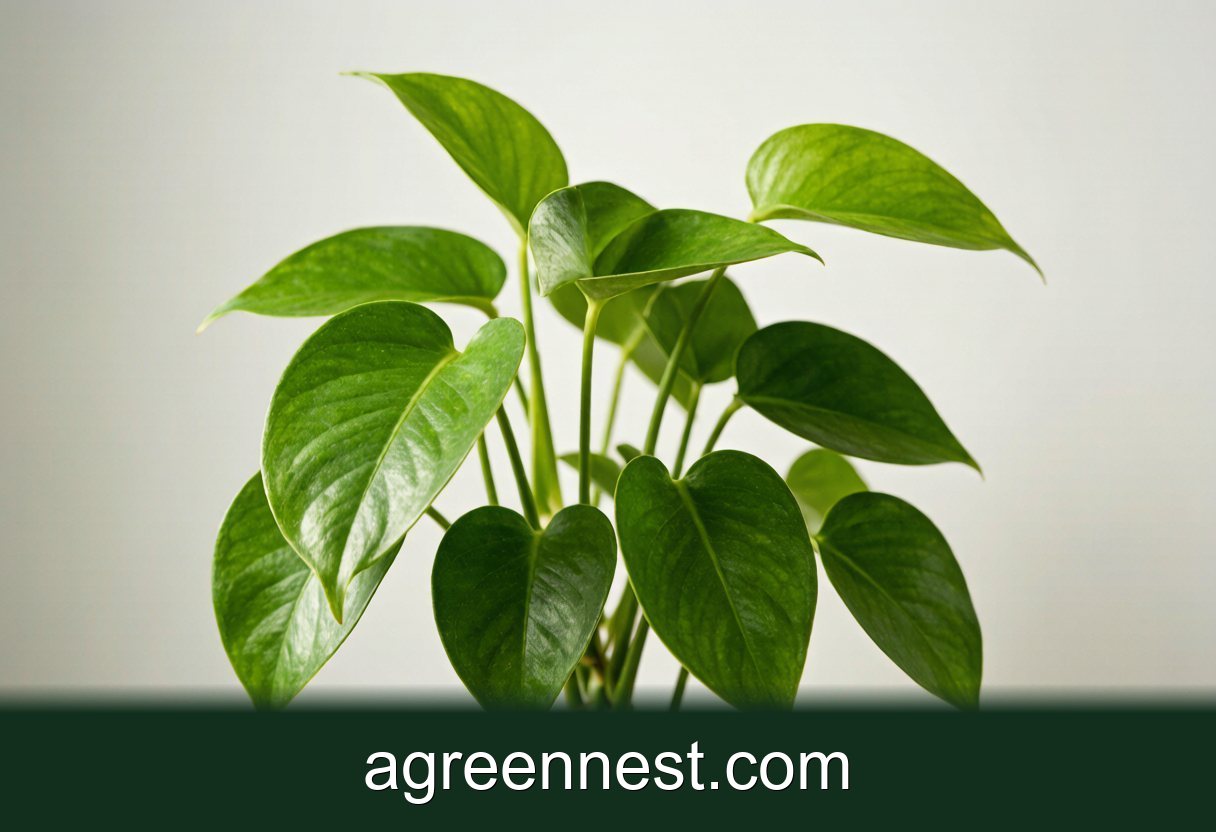
Golden Pothos Care Guide (Epipremnum Aureum) is built for dim rooms. It tolerates bright, indirect light and actually suffers in hot direct sun. Water when the top 2-3 cm of soil feels dry (14 days between waterings), and keep humidity modest. A north or east window, or a few feet back from a bright one, is the sweet spot.
Golden Pothos at a Glance
| Care factor | What Golden Pothos wants |
|---|---|
| Light | low to bright indirect light; keep it out of hot, direct sun |
| Water | water deeply when the top 2 to 3 cm of soil dries, roughly every 14 days in the growing season |
| Temperature | comfortable from 60 to 85°F (16 to 29°C) |
| Humidity | average home humidity is fine |
| Soil | a standard peat-free houseplant mix |
| Difficulty | very easy, great for beginners |
| Pet safe | no, keep it away from cats and dogs |
Epipremnum aureum is the plant most people picture when they hear the words easy houseplant. Mine spent two years in a dim hallway and still pushed out a fresh leaf every month. The yellow variegation on the leaves is more than decoration. It is a useful signal. Leaves with clear cream and green markings mean the plant is content. Foliage that fades to plain green usually wants more light. Leaves that look bleached or thin have met too much direct sun.
When I first started keeping houseplants, a Golden Pothos was the one that refused to die on me. That early win is probably why I still point nervous beginners toward it. The plant shrugs off missed waterings and dim corners in a way few other leafy species will. It also earns a place on NASA's list of plants studied for cleaning indoor air, which is a pleasant bonus for a bedroom or office.
What kind of light does Golden Pothos actually want?
This is the question I hear most from friends just starting out. The short answer is indirect light. A north or east window is ideal. A few feet back from a bright south or west window also works. The plant tolerates low light better than almost any other leafy houseplant, which explains its popularity in offices and bathrooms.
Hot, direct afternoon sun is the real trouble. I left a pothos on a sunny kitchen sill through one July heatwave. Within a week the leaves carried pale, papery patches where the sun had cooked them. Moving it back from the glass let it recover, though the damaged leaves never regained their colour.
How often should you water it?
Water deeply, then wait for the soil to dry. Let the top 2 to 3 cm of soil dry out before the next drink. During the active growing season, that normally means every 14 days. In winter, when growth slows, stretch that to every 21 to 28 days. Your home, your pot, and the season all shift the timing.
A finger test beats any fixed schedule. Push your index finger into the soil up to the second knuckle. Dry means water. Cool and damp means wait a few more days. The sap and leaves can irritate pets if chewed, so keep the pot clear of cats and dogs.
Soil, pots, and drainage
A standard peat-free houseplant mix is all you need. Drainage is the keyword. A pot with a real drainage hole is non-negotiable, because standing water is the quickest way to lose a Golden Pothos. Terracotta is my preference for this plant. Clay pulls a little moisture from the soil and helps avoid the soggy conditions that breed root rot.
Mixing your own is simple. Blend two parts peat-free compost with one part perlite. That ratio gives roots air while holding enough moisture for a fortnight. Repot every two to three years in spring, only moving up one pot size, since the plant prefers to feel slightly snug.
Temperature and humidity
Golden Pothos stays comfortable from 60 to 85°F (16 to 29°C). It dislikes cold drafts and suffers below about 50°F (10°C). Keep it away from leaky winter windows and out of the line of air conditioning vents in summer.
Humidity is a minor concern. Average household air suits it. If winter heating leaves the air very dry, a light weekly misting helps, though it is optional rather than essential.
Feeding and leaf care
Growth picks up with a little food. From April through September, apply a balanced liquid houseplant fertiliser at half the label strength once a month. Skip feeding entirely during the dark winter months.
Dust collects on the broad leaves and blocks light. I wipe mine with a damp cloth every few weeks. The plant seems to stand up straighter afterwards, and it certainly looks better on the shelf.
How do you propagate Golden Pothos?
This is the satisfying, easy part. Take a stem cutting with at least two leaves and one node, the bumpy point where a leaf joins the stem. Let the cut end dry for a day or two. Then place it in water or barely moist soil. Roots usually show within 10 to 14 days.
I keep a jar of pothos cuttings on my desk and hand them to visitors. It is a relaxed way to share a plant. Once roots reach a few centimetres, pot the cutting and treat it like a mature specimen.
Common problems and easy fixes
- Leaning or stretched growth means it wants more light. Move it brighter or add a small grow light.
- Mushy, yellow base signals overwatering. Let the soil dry out and check the roots for rot.
- Brown, crispy edges usually point to low humidity or fertiliser salt build-up. Flush the soil with plain water and lift the humidity a little.
Frequently Asked Questions
Q: How often should I water Golden Pothos?
Water deeply when the top 2 to 3 cm of soil dries, roughly every 14 days in the growing season and far less in winter.
Q: Is Golden Pothos safe for pets?
No. The sap and leaves can irritate cats and dogs if chewed, so keep the pot out of reach.
Q: What light is best?
Low to bright indirect light. Keep it out of hot, direct sun.
Golden Pothos rewards a little attention with years of easy beauty and asks for very little back. For a personalised schedule, try our free watering calculator and pair it with the light calculator to pick the perfect spot.
Sources & further reading
GreenNest authors research and write every guide independently. The external links below are reputable references we recommend for deeper reading — they are not the sources we copied from.
- Cornell Garden-Based Learning — Cornell University
- Royal Botanic Gardens, Kew — Kew Gardens
- Royal Horticultural Society — Houseplant care — RHS
Recommended Tools for Low-Light Indoor Plants Care
Free, no-signup helpers matched to this guide.
Free Ebooks to Explore
Downloadable handbooks — no email required.
Share Your Plant Story
Grown something tricky, or found a trick that finally worked? Tell us in the comments, or see what other readers are sharing on our Community page. The best reader tips get folded back into our guides.
Join the Conversation
Have a tip or a question about Golden Pothos Care Guide (Epipremnum aureum)? Share it below — comments are saved on our server.