 AGreenNest
DIY Plant Projects
Make a Terracotta Self-Watering Spike
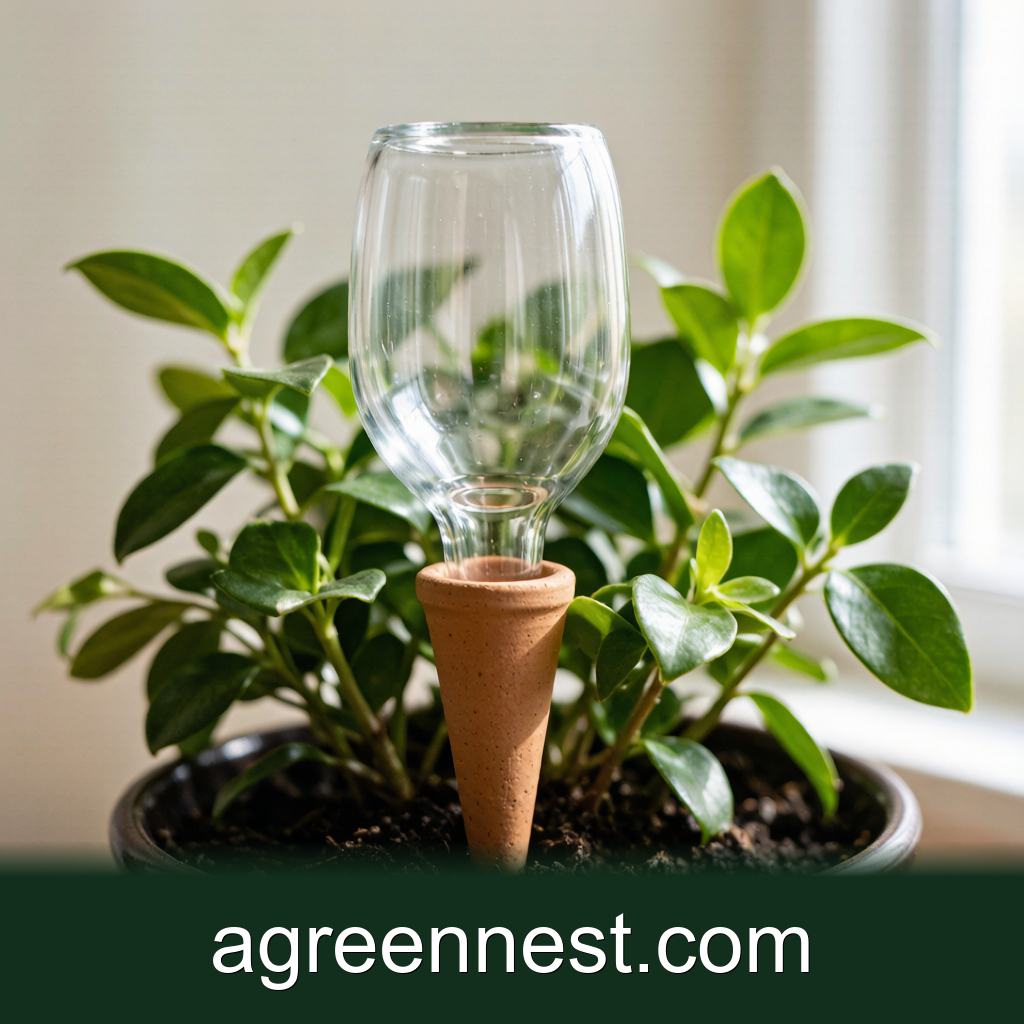
A terracotta self-watering spike is a porous clay cone you push into the soil and top with a water bottle. It releases moisture by capillary draw, keeping roots evenly damp for 10 to 14 days. Use it for thirsty plants when you travel, not for succulents or cacti that need dry soil.
The internet swears a cotton string through a bottle cap will water your plant for a month. It will not. Cotton rots, the water films instead of wicks, and the plant sits dry while you are away. A terracotta spike works because the clay itself moves water, with no fabric to fail.
What a self-watering spike actually does
Unglazed terracotta is porous. Push a clay cone into damp soil, set a water bottle on top, and water seeps out through the clay as the surrounding mix dries. That capillary draw stays constant and slow, so the root zone remains evenly moist instead of swinging from soaked to bone dry.
Clay porosity is the whole trick. Fired unglazed terracotta has microscopic channels that pass liquid by surface tension, so water creeps outward only when the surrounding soil is drier than the cone. On a 15cm pot of Epipremnum aureum, a 750ml bottle lasts about 10 to 14 days in a normal room. The rig is a reservoir, not a miracle. It will not feed the plant, and it cannot save a specimen that is already root rotted.
What you need for the build
- One unglazed terracotta cone spike, 12 to 18cm long with a 2.5 to 4cm base. Commercial spikes cost about $3 to $8 each and are worth the money if you only need one or two.
- One glass wine bottle, 750ml, or a 1.5L plastic bottle, both cleaned.
- A cork or rubber grommet that fits the spike neck and the bottle mouth.
- Optional, to build your own: a 6 to 8cm terracotta pot, a cork to plug the drain hole, and silicone sealant.
Total spend is zero if you already own a spare terracotta pot and a bottle. That lone fact is the only reason to DIY the cone instead of buying one.
Step 1: Soak and prep the clay
Rinse the terracotta cone and soak it in water for 10 minutes. Dry clay pulls moisture out of the soil on the first fill and can shock a plant. When you make your own spike from a small pot, plug the drainage hole with a cork, run a bead of silicone around the inside, and let it cure for 24 hours before use.
Step 2: Seat the spike in the pot
Push the cone into the potting mix next to the root ball, leaving 3 to 4cm above the soil line. Angle it toward the centre of the pot. One spike covers a 15 to 20cm pot. A 25 to 30cm pot needs two, placed opposite each other so moisture reaches both sides.
Step 3: Fill and invert the bottle
Fill the bottle with water. Press or screw it onto the spike neck, then turn it upside down and stand it in the soil. Water seeps in over a few seconds. If it gushes and then stops, the seal is good. When it keeps running, the cork is loose and you need a tighter fit before you leave.
Step 4: Read the flow rate by pot and room
Warm rooms drain faster. At 24 to 26°C (75 to 79°F) a 750ml bottle empties in roughly 10 days on a thirsty plant; at 18°C (64°F) it stretches closer to 14. Refill when the bottle is empty and the top 2cm of soil feels dry. A moisture meter confirms the spike is doing its job without you digging around the roots.
Step 5: Run a 3 day test before you travel
Set the rig up three days before you leave. Check the soil at the spike base: it should be damp but not sodden. After three days, if it is still dry, the spike was not soaked or the mix is hydrophobic. Pre-water once and re-seat. If the soil is a swamp, your plant drinks less than you assumed, so swap to a smaller bottle.
Will a spike overwater a healthy plant?
Rarely, if you size it right. The clay only releases water as fast as the soil draws it, so a well draining mix in a normal room self limits. The failures I see run the opposite way: people use it on a plant that wanted to dry out, or they never test and come home to a sour, anaerobic pot. Test first and you remove the risk.
Which plants should never get one?
Skip the spike for anything that stores water. Aloe, Haworthia, cacti, and Lithops will rot above a constant water source. The same goes for a terracotta pot collection full of succulents, where you want the clay to pull moisture away, not feed it back. For a whole shelf of mixed plants, the two pot wick planter scales better than a row of bottles, and a moss pole build covers the climbers that need steadier moisture at the roots.
Frequently Asked Questions
Q: Can I use a plastic bottle instead of glass?
A: Yes. A 1.5L plastic bottle lasts longer than a 750ml wine bottle and will not break if it tips. The only downside is looks. Use glass on a shelf you actually see, plastic in a utility room or greenhouse.
Q: How do I stop the bottle from growing algae?
A: Algae forms in clear bottles left in light. Use a brown or green glass bottle, wrap the bottle in foil, or keep the rig in shade. A little algae in the neck does not hurt the plant, but a clogged spike does.
Q: My spike stopped releasing water after a week. What happened?
A: The clay pores clogged with mineral deposits, common with hard tap water. Soak the cone in a 1:10 white vinegar solution for an hour, rinse, and it flows again. Refill with filtered water to slow the buildup.
A terracotta spike is the cheapest reliable way to keep a thirsty plant alive through a trip, and the build takes under half an hour if you test it first. Soak the clay, seat it beside the roots, and run the three day check before you walk out the door. If you are still guessing at how damp the mix really is, our moisture meter how to shows you exactly where to probe.
Recommended Tools for DIY Plant Projects Care
Free, no-signup helpers matched to this guide.
Free Ebooks to Explore
Downloadable handbooks — no email required.
Free Ebook
The AGreenNest Succulent Care Handbook
The complete, beginner-to-confident guide to growing fat, happy succulents — 10 chapters and a 20-plant directory.
Free Ebook
Haworthia & Haworthiopsis Care Handbook
A focused guide to the striped, forgiving Haworthia clan.
Sources & further reading
GreenNest authors research and write every guide independently. The external links below are reputable references we recommend for deeper reading — they are not the sources we copied from.
- Michigan State University — CANR — Michigan State University
- NC State Extension Plant Toolbox — NC State Extension
- University of Minnesota Extension — U Minnesota Extension
Share Your Plant Story
Grown something tricky, or found a trick that finally worked? Tell us in the comments, or see what other readers are sharing on our Community page. The best reader tips get folded back into our guides.
Join the Conversation
Have a tip or a question about Make a Terracotta Self-Watering Spike? Share it below — comments are saved on our server.