 AGreenNest
Low-Light Indoor Plants
Orbifold Calathea Care Guide (Calathea orbifolia)
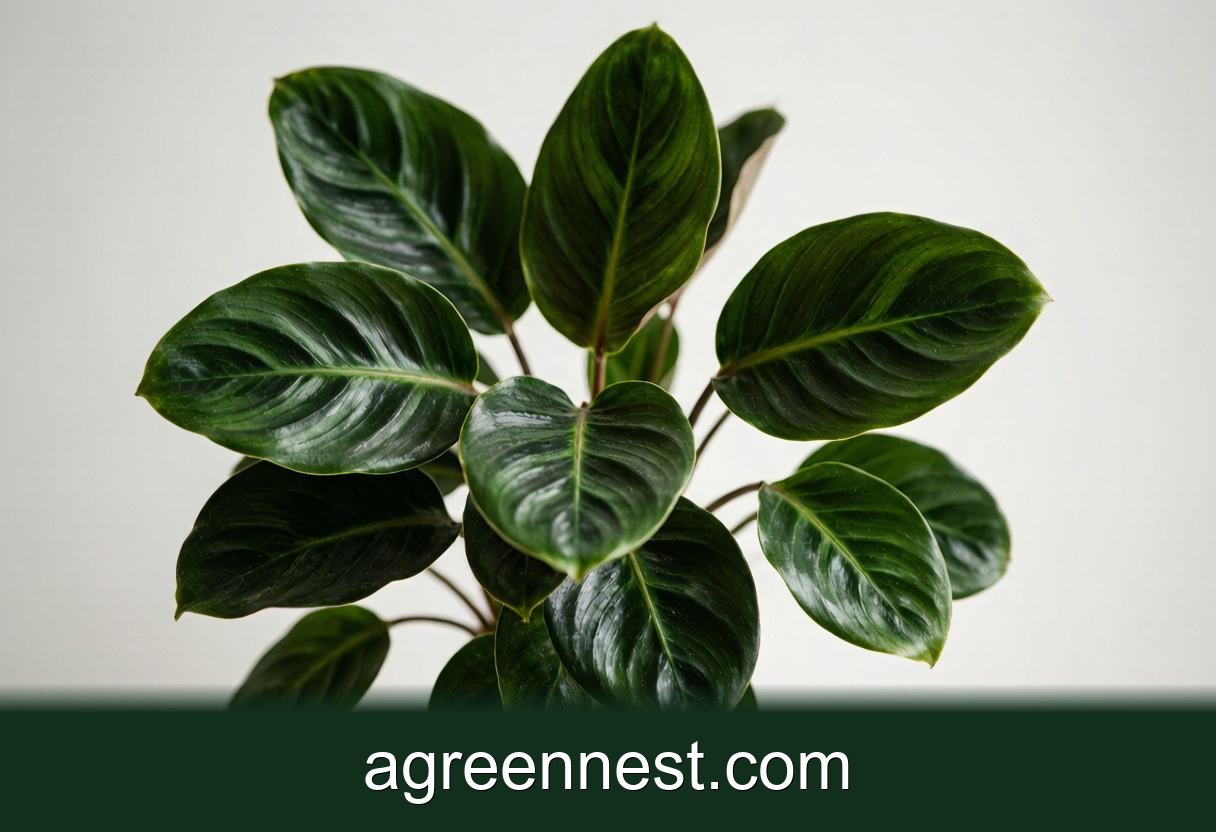
Orbifold Calathea Care Guide (Calathea Orbifolia) is built for dim rooms. It tolerates bright, indirect light and actually suffers in hot direct sun. Water when the top 2-3 cm of soil feels dry (12 days between waterings), and keep humidity modest. A north or east window, or a few feet back from a bright one, is the sweet spot.
Orbifold Calathea at a Glance
| Care factor | What this plant wants |
|---|---|
| Light | low to bright indirect light, never hot direct sun |
| Water | a deep soak when the top 2 inches of soil dry, about every 12 days in summer |
| Temperature | from 60 to 82°F (16 to 28°C) |
| Humidity | steady 50% or more, a pebble tray helps |
| Soil | a peat-free houseplant mix with extra perlite |
| Difficulty | easy once the basics are right |
| Pet safe | yes, non-toxic to cats and dogs |
When I first brought home a Calathea orbifolia, I set it on a sunny kitchen sill and watched the leaves scorch within a week. That plant taught me more about patience than any book ever did. The broad, paddle shaped leaves carry silver stripes that almost glow in dim rooms, and the whole clump slowly turns toward the light as the day passes.
Why Does My Calathea Fold Its Leaves at Night?
Calatheas belong to a group of plants that practise nyctinasty, the gentle folding of leaves after dark. My orbifolia closes its leaves like quiet hands each evening, then opens them again by breakfast. This daily movement is completely normal and a good sign that the plant is healthy. If the leaves stay folded through the morning, the room may be too cold or the soil too dry. A steady temperature between 65 and 75°F (18 and 24°C) keeps the rhythm calm. I keep a small thermometer beside the pot so I can spot a draft before the plant reacts.
Light That Keeps the Stripes Crisp
Bright, indirect light is the sweet spot for this species. A north or east window works beautifully, and a spot three or four feet back from a bright south window also succeeds. Direct midday sun burns the foliage within hours, leaving bleached patches that never recover. During the grey months of January and February, I move mine closer to the window and add a 40 watt grow light for about 10 hours a day. The stripes stay sharp and the new leaves unfurl a deep, even green. Most growers overestimate how much sun a calathea wants, so when in doubt, give it less.
How Often Should I Water a Calathea Orbifolia?
Water deeply only when the top 2 inches of soil feel dry to the finger. In the active growing season from April to September, that works out to a soak roughly every 12 days in my flat. Winter slows everything down, and I stretch the gap to about 18 days. I use room temperature water, never straight from the cold tap, because cold shocks the roots. A simple rule I follow is to pour until liquid runs from the drainage hole, then empty the saucer after 20 minutes. The soil should feel like a wrung out sponge, damp but never soggy. Overwatering causes far more losses than drought, so I would rather wait an extra day than risk rot.
Soil, Pots, and the Drainage Rule
A standard peat free houseplant mix forms the base, and I stir in one part perlite to every three parts soil for extra airflow. The pot must have a real drainage hole, since sitting in water is the fastest way to lose a calathea. Terracotta breathes better than glossy plastic, and a 6 inch pot suits a young plant for its first year. When roots peek from the base after about 14 months, I move up to an 8 inch container in early spring. Repotting on a mild March morning keeps transplant shock low.
Temperature and Humidity: The Comfort Zone
This plant drinks humidity from the air as much as from the soil. I aim for 50% relative humidity or higher, and a shallow pebble tray with an inch of water beneath the pot does the trick. Grouping it near a peace lily and a fern creates a small moist pocket that all three enjoy. Temperatures from 60 to 82°F (16 to 28°C) suit it, but I keep it away from heaters and open windows in December. Brown, crispy edges almost always signal dry air rather than poor watering, so raising humidity fixes most leaf complaints.
How Do I Propagate This Plant?
The reliable method is division at repotting time. I slide the clump from its pot, tease the roots apart, and separate a section that carries at least three stems and a healthy root ball. Let any cut surface dry for a day or two before it meets soil, then plant and keep the mix barely moist until new growth appears. Spring gives the best odds, with roots usually showing in 3 to 4 weeks. Seed is possible but slow, so division remains my go to for sharing plants with friends.
Common Problems and Quiet Fixes
Leaning or stretched growth means the plant wants more light. Move it brighter or add a grow light, and the next leaves will stand taller. A mushy, yellow base points to overwatering. Let the soil dry and check the roots, trimming any that feel soft and brown. Brown, crispy edges usually come from low humidity or fertiliser salt build up. I flush the pot with two litres of plain water every two months to wash away residue. A balanced 10-10-10 liquid feed at half strength, once a month from May to August, keeps the colour rich without burning the tips.
Frequently Asked Questions
How often should I water Orbifold Calathea?
A deep soak every 12 days in summer and about 18 days in winter works for most homes. Always test the top 2 inches of soil first.
Is Orbifold Calathea safe for pets?
Yes. It is listed as non-toxic to cats and dogs, so a curious nibble will not send you to the vet.
What light is best for this plant?
Low to bright indirect light wins. Keep it out of hot, direct sun, which scorches the leaves within hours.
Orbifold Calathea rewards a little attention with years of quiet beauty, and the nightly leaf folding never stops feeling like a small miracle. Start with the basics, a bright indirect spot, a soak when the soil dries, and steady humidity, and you will have a plant that grows with you. For a schedule tuned to your home, try our free watering calculator and pair it with the light calculator to find the perfect windowsill.
Sources & further reading
GreenNest authors research and write every guide independently. The external links below are reputable references we recommend for deeper reading — they are not the sources we copied from.
- UF/IFAS Gardening Solutions — UF/IFAS
- Aggie Horticulture (Texas A&M) — Texas A&M AgriLife
- NC State Extension — Plant Toolbox — NC State Extension
Recommended Tools for Low-Light Indoor Plants Care
Free, no-signup helpers matched to this guide.
Free Ebooks to Explore
Downloadable handbooks — no email required.
Share Your Plant Story
Grown something tricky, or found a trick that finally worked? Tell us in the comments, or see what other readers are sharing on our Community page. The best reader tips get folded back into our guides.
Join the Conversation
Have a tip or a question about Orbifold Calathea Care Guide (Calathea orbifolia)? Share it below — comments are saved on our server.