 AGreenNest
Low-Light Indoor Plants
African Violet Care Guide (Saintpaulia ionantha)
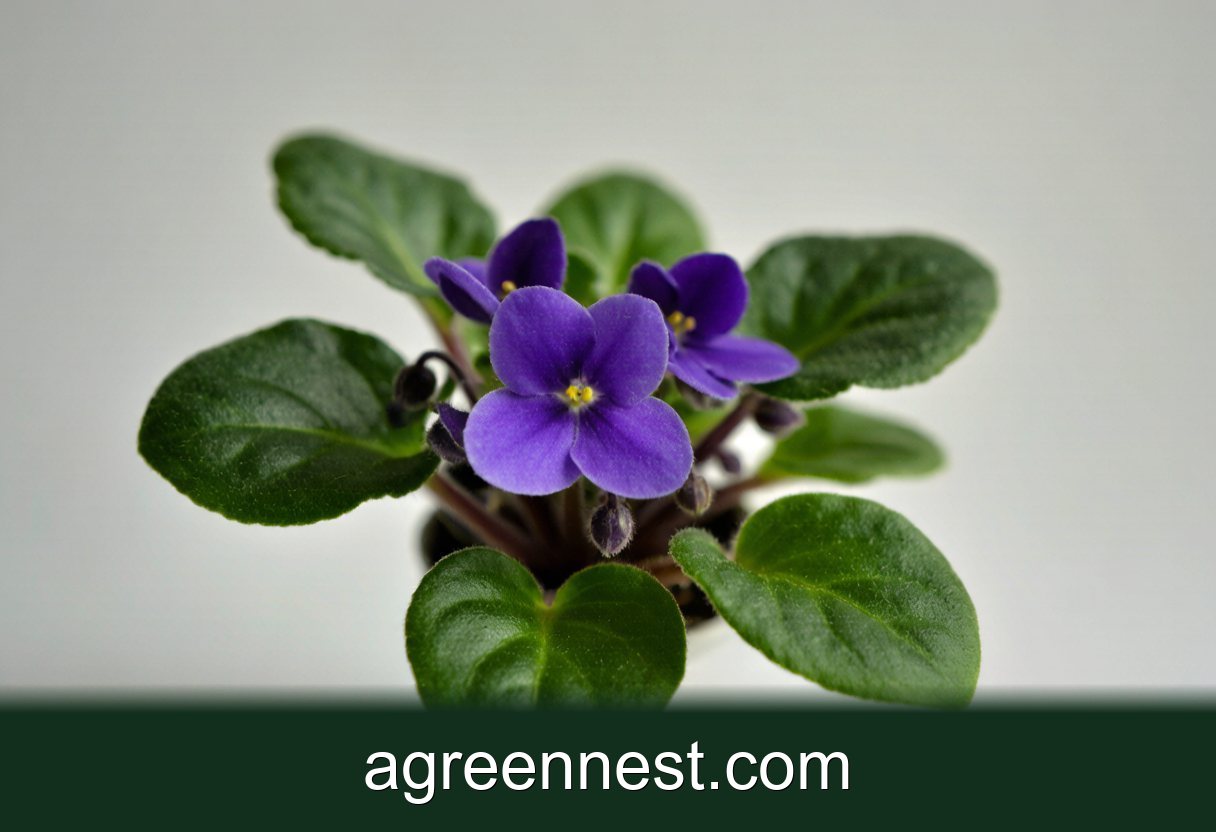
Do not overthink African Violet Care Guide (Saintpaulia Ionantha). It thrives in bright, indirect light and asks for little: water when the top layer of soil dries (10 days between waterings), and keep it away from harsh midday sun. A slightly lean soil and a stable, warm spot are all it needs to look good through the year.
African Violet at a Glance
| Care factor | What African Violet wants |
|---|---|
| Light | bright indirect light, with a little gentle morning or evening sun |
| Water | water from below when the top layer dries, roughly every 10 days in the growing season, and far less in winter |
| Temperature | comfortable around 60 to 80°F (16 to 27°C) |
| Humidity | it likes a humid spot or a pebble tray |
| Soil | a standard peat-free houseplant mix |
| Difficulty | straightforward with the basics right |
| Pet safe | yes, it is generally regarded as pet-safe |
My grandmother kept a Saintpaulia ionantha blooming on her kitchen windowsill for nearly 20 years, and I have been a little in awe of the plant ever since. The secret was not fancy, she simply watered from below and never let cold tap water touch the leaves. Those fuzzy leaves mark the species, and they stain brown when water sits on them.
Light Needs
Bright indirect light brings the longest, most generous flowering. A north or east window is ideal, and a little gentle morning or evening sun is welcome. Keep the plant away from harsh midday beams, which fade the petals and scorch the leaf edges. Under the right brightness it can bloom almost continuously, opening a fresh flush of flowers every 6 to 8 weeks through the year.
A grow light helps through the dark months. Run a full spectrum bulb 12 hours a day at 20 to 30 cm above the foliage, and you will keep flowers coming when the sun is weak. Turn the pot a quarter turn weekly so the crown stays round rather than bending toward one pane of glass.
Watering Schedule
Water from below for best results. Set the pot in a saucer of room temperature water for 15 to 20 minutes, then let it drain fully. I water roughly every 10 days in the growing season, and only every 20 to 25 days in winter when growth slows. Always use water at about 70°F (21°C), because cold liquid leaves pale, permanent blotches on the leaves.
Avoid wetting the foliage whenever you can. If you must water from the top, aim at the soil and wipe stray drops off the leaves with a soft cloth. Empty the saucer after watering so the roots never sit in a puddle, which quickly leads to crown rot at the center of the plant.
Soil and Pot
A standard peat-free houseplant mix keeps this plant happy. I lighten mine with 1 part perlite to 3 parts mix so the roots breathe and the top dries between drinks. A pot with a real drainage hole is non-negotiable, because sitting in water is the fastest way to lose an African Violet. Shallow azalea pots suit the shallow root system better than a deep container.
Feed lightly every 14 days in spring and summer with 1 teaspoon of African violet fertilizer per gallon of water. Ease off to once a month in autumn and stop in deep winter, since the plant is resting and extra salts only build up in the soil.
Temperature and Humidity
Comfortable room temperatures between 60 and 80°F (16 and 27°C) suit it best. It likes a humid spot or a pebble tray, so set the pot on a tray of wet gravel and top it up twice a week. Keep it away from cold drafts and from the dry breath of a heating vent, both of which brown the edges and stall the buds.
How to Propagate African Violet
A single leaf laid on moist soil is the classic method. Snip a healthy leaf with 4 cm of stem, press the stem into a gritty mix, and keep it barely moist at 70°F (21°C). Tiny plantlets appear at the base within 4 to 6 weeks. You can also split a crowded clump at repotting time, teasing the offsets apart and potting each into its own 7 cm container.
Common Problems and Fixes
Leaning or stretched growth means the plant wants more light, so move it brighter or add a grow light. A mushy, yellow base signals overwatering, so let the soil dry and check the roots for soft, dark sections. Brown, crispy edges usually point to low humidity or salt build-up, so flush the pot with 2 cups of plain water and raise humidity near the plant.
Why Are My African Violet Flowers Small?
Small blooms usually trace back to light or feeding. Move the plant into brighter indirect light for at least 10 hours a day, and resume a half-strength feed every 14 days through the growing season. Older plants also flower better after a spring repot, because fresh mix restores the nutrients the roots have used up over the previous year.
How Often Should I Repot African Violet?
Repot every 12 to 18 months, or when roots peek from the drainage hole. Go up just one size, from a 9 cm pot to a 10 cm pot, since too much soil stays wet around such a shallow root ball. Refresh the top 2 cm of mix each spring even if you skip a full repot, and the crown will stay healthy and floriferous.
Frequently Asked Questions
Q: How often should I water African Violet?
A: Water from below when the top layer dries, roughly every 10 days in the growing season and far less in winter.
Q: Is African Violet safe for pets?
A: Yes, it is generally regarded as pet-safe for cats and dogs.
Q: How do I make more of it?
A: Use a single leaf laid on moist soil or split the clump at repotting time.
African Violet asks for little yet gives months of colour in return. For a personalised schedule, try our free watering calculator and pair it with the light calculator to find the brightest safe spot in your home.
Recommended Tools for Low-Light Indoor Plants Care
Free, no-signup helpers matched to this guide.
Free Ebooks to Explore
Downloadable handbooks — no email required.
Sources & further reading
GreenNest authors research and write every guide independently. The external links below are reputable references we recommend for deeper reading — they are not the sources we copied from.
- Royal Horticultural Society — Houseplant care — RHS
- Missouri Botanical Garden — Missouri Botanical Garden
- Royal Botanic Gardens, Kew — Kew Gardens
Share Your Plant Story
Grown something tricky, or found a trick that finally worked? Tell us in the comments, or see what other readers are sharing on our Community page. The best reader tips get folded back into our guides.
Join the Conversation
Have a tip or a question about African Violet Care Guide (Saintpaulia ionantha)? Share it below — comments are saved on our server.