 AGreenNest
Hydroponic Growing
Growing Cucumbers Hydroponically: A Step-by-Step Guide
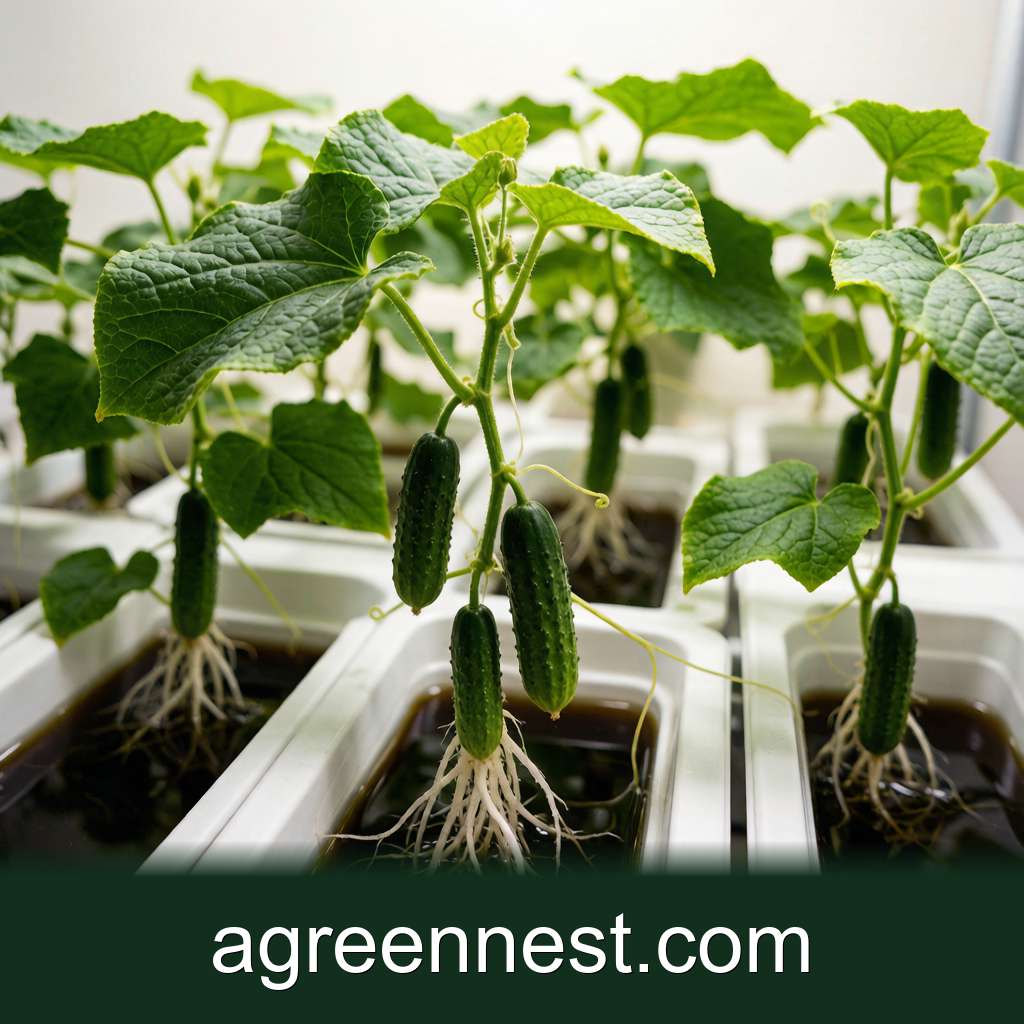
Run Growing Cucumbers Hydroponically at steady strength: 1.5-2.0 EC, pH 5.8-6.2, reservoir 18-22 C. Provide 13-16 hours of grow-light or bright supplemental light for 14-16 hours a day. The only common failure is stale solution, so top up daily and swap the reservoir every 7-14 days so roots stay white and active.
A single cucumber plant in a bucket of water can outproduce three in soil, but only if you keep the root zone cooler than the air and feed it aggressively. Miss that target and you get a lush vine with zero fruit. Numbers decide everything in hydroponic cucumbers, so this guide leads with the specs that actually move the needle.
Pick a Parthenocarpic Variety First
Do not grow a standard field cucumber indoors. Those varieties need bees to set fruit, and your living room has none. Choose a parthenocarpic type that fruits without pollination. The cultivar Cucumis sativus produces dependable parthenocarpic lines such as 'Diva', 'Bush Champion', 'Spacemaster', and 'Telegraph Improved'. Each sets smooth, seedless fruit on its own, which removes the single most common beginner failure.
Compact bush types stay around 60 to 90 cm and suit a single 10 to 15 litre reservoir. Vining types reach 1.5 to 2 m and need trellis netting, but they crop longer. Start from seed or a nursery seedling. Either way you want one plant per 10 to 15 litres of solution.
Choose the Right System
Deep water culture is the simplest entry. A 15 litre tote with the plant in a net pot and its roots dangling in aerated nutrient solution is enough for one bush cucumber. Our DWC walkthrough shows the build. The NFT method suits longer vining rows if you want more plants.
Whatever you pick, an air stone running 24 hours is not optional. Cucumber roots are hungry for oxygen, and still water turns anaerobic within a day in summer heat.
What Numbers Matter Most?
Get these four values right and the plant does the rest.
- pH: hold 5.5 to 6.0, ideally 5.8. Cucumbers lock out calcium above 6.5 and iron below 5.4, so check every 2 to 3 days with a meter. Our pH guide covers correction without guesswork.
- EC: 1.8 mS/cm in early growth, rising to 2.2 to 2.4 mS/cm once fruit forms. A two part hydroponic nutrient mixed to the label gives this. Soil fertiliser will not.
- Air temperature: 21 to 24°C by day, 16 to 18°C at night. Warm nights above 24°C cause flower drop.
- Root zone: keep the reservoir at 20 to 22°C. Insulate the tote or sit it in a shaded spot, because roots above 25°C stop taking up calcium and the tips burn.
How Much Light Do Cucumbers Need?
Give 12 to 14 hours of light at 400 to 600 µmol/m²/s, or at least 8 hours of strong sun in a greenhouse. A grow light guide for beginners helps if your windows are weak. The 2026 grow light picks narrow the hardware down.
Train the main stem up a string and pinch side shoots to one leaf. That pushes energy into fruit instead of foliage. Mist the flowers lightly if your air is dry, though parthenocarpic types usually set without it.
Feeding and Reservoir Care
Top up with plain water every 2 to 3 days as the plant drinks. Replace the full solution every 10 to 14 days so salt levels stay balanced. Watch for algae by keeping the reservoir dark with a lid or foil, since green slime steals nutrients and clogs the stone.
Harvest at 15 to 20 cm long, about 50 to 70 days after transplant, while the skin is still glossy. Picking often signals the plant to keep producing. A left on fruit drains the vine and slows the next set.
What Goes Wrong and How Do You Read It?
Bitter cucumbers come from heat stress or uneven water, not from the variety. Shade the reservoir and keep the EC steady. Yellow leaf edges with brown tips mean calcium shortage, usually from warm roots rather than missing feed. Tip burn shows the same way and clears once the root zone cools.
Powdery mildew appears as white dust on leaves in still, humid air. Improve airflow and remove the first affected leaf. The same dwarf tomato guide problems apply here, since both are fruiting vines in water. Fruiting vines like Solanum lycopersicum and Cucumis sativus share the same calcium demand.
Frequently Asked Questions
Q: Do I need to hand pollinate hydroponic cucumbers?
A: Not if you grow a parthenocarpic variety like 'Diva' or 'Spacemaster', which set fruit without pollination. Standard types need a paintbrush swipe between male and female flowers.
Q: How many cucumbers does one plant give?
A: A healthy bush type yields 10 to 20 fruits over its 8 to 10 week run. A trellised vining type can give 30 or more across a longer season.
Q: Why are my cucumber leaves yellow at the edges?
A: Usually calcium lockout from a root zone above 25°C or a pH over 6.5. Cool the reservoir and drop pH to 5.8, and new growth should be clean.
Q: Can I grow cucumbers and lettuce in one reservoir?
A: Not well. Cucumbers want EC 2.2 to 2.4 and warm roots. Lettuce wants EC 1.2 and cool roots, so they fight. Run separate totes.
Q: Why are my cucumbers bitter or misshapen?
A: Heat and uneven feeding cause both. Keep day air under 24°C, hold EC steady at 2.2 to 2.4, and harvest before fruits exceed 20 cm.
Cucumbers are the crop that proves hydroponics pays off: same space, more fruit, fewer pests. Start with one parthenocarpic plant in a 15 litre DWC tote, watch the root temperature, and you will be picking crisp cucumbers while soil gardeners wait for theirs. Our hydroponics for beginners guide is the place to begin if this is your first water garden.
Recommended Tools for Hydroponic Growing Care
Free, no-signup helpers matched to this guide.
Free Ebooks to Explore
Downloadable handbooks — no email required.
Free Ebook
The AGreenNest Succulent Care Handbook
The complete, beginner-to-confident guide to growing fat, happy succulents — 10 chapters and a 20-plant directory.
Free Ebook
Haworthia & Haworthiopsis Care Handbook
A focused guide to the striped, forgiving Haworthia clan.
Sources & further reading
GreenNest authors research and write every guide independently. The external links below are reputable references we recommend for deeper reading — they are not the sources we copied from.
- Aggie Horticulture (Texas A&M) — Texas A&M AgriLife
- UF/IFAS Gardening Solutions — UF/IFAS
- University of Minnesota Extension — U Minnesota Extension
Share Your Plant Story
Grown something tricky, or found a trick that finally worked? Tell us in the comments, or see what other readers are sharing on our Community page. The best reader tips get folded back into our guides.
Join the Conversation
Have a tip or a question about Growing Cucumbers Hydroponically: A Step-by-Step Guide? Share it below — comments are saved on our server.