 AGreenNest
Hydroponic Growing
Deep Water Culture: Step by Step
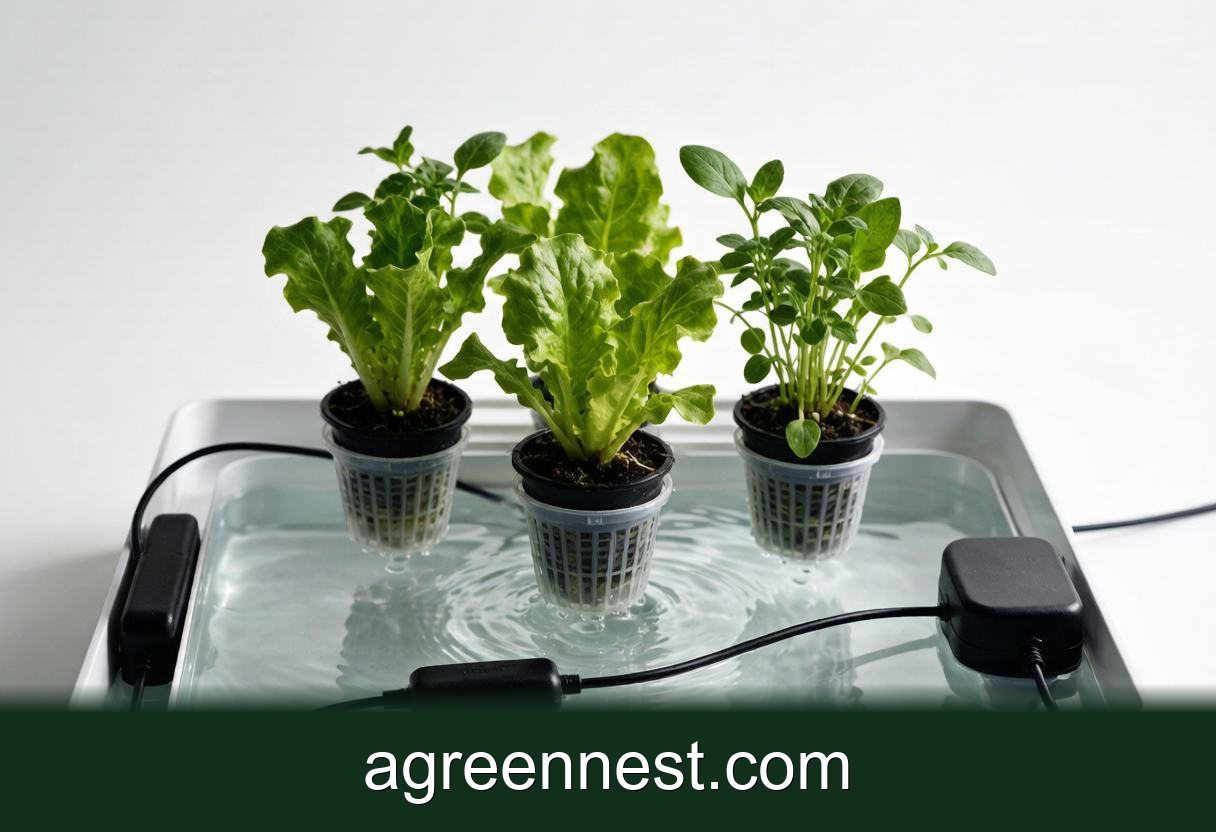
Deep Water Culture grows fastest with 2 weeks between waterings at 18-22 C. Aim for 1.5-2.0 EC and pH 5.8-6.2, and give 13-16 hours of grow-light or bright supplemental light (14-16 hours daily). Keep roots dark and aerated, and change the reservoir every 1-2 weeks to avoid salt buildup.
What Deep Water Culture Is
Deep Water Culture suspends plant roots in a nutrient reservoir that an air stone keeps constantly bubbling. The roots hang free in the solution instead of sitting in media, so they drink and breathe at the same time. You build the whole thing from a dark bucket, a lid, a net pot, and an air pump, which is why it costs under 30 dollars to start. Most beginners choose DWC because there is no pump loop to fail, only a small air pump that draws 2 to 4 watts. Lactuca sativa and basil reach harvest in 30 to 45 days when the solution stays between 18 and 22°C (64 and 72°F). Because the bucket holds 10 to 20 liters, the system buffers temperature and nutrient swings far better than thin NFT films.
Why Build DWC Before Other Systems
DWC forgives mistakes that would kill an NFT rail within the hour. The large water volume means a missed top up or a warm afternoon only nudges the conditions instead of crashing them. You get a real margin for error while you learn to read pH and EC. The trade off is weight and space, since a full 20 liter bucket weighs about 20 kilograms (44 pounds) and needs a solid shelf. Unlike soil, the method needs no weeding and no pest soil to manage, which cuts weekly work to a quick test and a top up. Most first time growers see their first harvest within six to eight weeks of seeding.
What You Need to Build It
Gather a 10 to 20 liter dark bucket with a tight lid, because light through the plastic grows algae fast. Buy one net pot per plant, sized 2 to 3 inches (5 to 7 centimeters) to seat the root ball. A 200 to 400 liter per hour air pump with a 2 to 4 inch air stone supplies the oxygen the roots demand. Pick a two part A/B hydroponic nutrient rather than a single bottle, since balanced calcium and nitrate prevent tip burn. You also need a pH meter and a small EC pen, both available for under 25 dollars combined. Add a seedling starter cube and a young transplant with visible white roots before you fill the tank.
How to Assemble the Bucket
Drill a hole in the lid to match each net pot, spacing them 15 to 20 centimeters (6 to 8 inches) apart so leaves do not overlap. Fill the bucket with filtered water to 2 centimeters (1 inch) below the lid and mix the A and B nutrient to label strength, aiming for 1.5 to 2.0 EC. Drop the air stone to the bottom and start it before adding plants so the solution saturates with oxygen. Set the pH to 5.8 to 6.2 using the included down or up solution, then recheck after 30 minutes because the mix shifts as it stabilizes. Place each seedling so the roots dangle into the film and the stem stays dry above the collar. After assembly, run the system empty for a day to confirm the pump stays cool and the lid seals.
How Do You Keep the Solution Healthy?
Test pH and EC every 3 to 4 days, and top up with plain water as the level drops from transpiration. In summer the bucket loses 1 to 2 liters a week to evaporation, so watch the mark you draw on the side. Change the full reservoir every 1 to 2 weeks, or sooner if the water turns cloudy or smells sour. Keep the bucket between 18 and 22°C (64 and 72°F) with a fan if the room runs warm, because root rot sets in above 24°C (75°F). When you swap the solution, rinse the air stone in clean water to clear the white salt crust that blocks bubbles.
Which Plants Grow Best in DWC?
Leafy greens and herbs are the safe winners because their light root load suits still water. Ocimum basilicum and mint crop continuously if you pinch the tops every two weeks. Strawberries do well at 2.0 to 2.4 EC but need netting as the fruit weighs the stems down. Fruiting tomatoes and peppers are possible yet demand 2.5 to 3.0 EC, strong light for 14 to 16 hours, and a trellis the bucket cannot provide alone. You should run one crop type per bucket so the nutrient recipe stays consistent. Start with lettuce, then add basil once the first system runs clean for a full month.
Frequently Asked Questions
Q: Why is an air stone required in DWC?
A: Without constant oxygen the submerged roots drown and rot within two days. The stone keeps the solution saturated so roots stay white and absorb nutrients.
Q: How often should I change the DWC solution?
A: Every 1 to 2 weeks, or immediately if it clouds or smells. A 20 liter bucket usually stays clean for the full two weeks in cool rooms.
Q: Can I grow anything in a DWC bucket?
A: Leafy greens and herbs love it and are the easy wins. Fruiting plants are harder because they need higher EC, more light, and physical support the bucket does not give.
DWC is the gateway to soil less growing because it is cheap, stable, and simple to read. Hold the pH near 6.0, keep the air stone running, and swap the tank every 1 to 2 weeks, and you will harvest greens on a steady cycle. Plan each feed with the care schedule tool so no change date slips, and add a second bucket only after the first one delivers a clean harvest.
Sources & further reading
GreenNest authors research and write every guide independently. The external links below are reputable references we recommend for deeper reading — they are not the sources we copied from.
- Michigan State University — Gardening — Michigan State University
- UF/IFAS Gardening Solutions — UF/IFAS
- University of Minnesota Extension — U Minnesota Extension
Recommended Tools for Hydroponic Growing Care
Free, no-signup helpers matched to this guide.
Free Ebooks to Explore
Downloadable handbooks — no email required.
Free Ebook
The AGreenNest Succulent Care Handbook
The complete, beginner-to-confident guide to growing fat, happy succulents — 10 chapters and a 20-plant directory.
Free Ebook
Haworthia & Haworthiopsis Care Handbook
A focused guide to the striped, forgiving Haworthia clan.
Share Your Plant Story
Grown something tricky, or found a trick that finally worked? Tell us in the comments, or see what other readers are sharing on our Community page. The best reader tips get folded back into our guides.
Join the Conversation
Have a tip or a question about Deep Water Culture: Step by Step? Share it below — comments are saved on our server.