 AGreenNest
Plant Care Accessories
Best Grow Lights for Plants in 2026 (What Actually Matters)
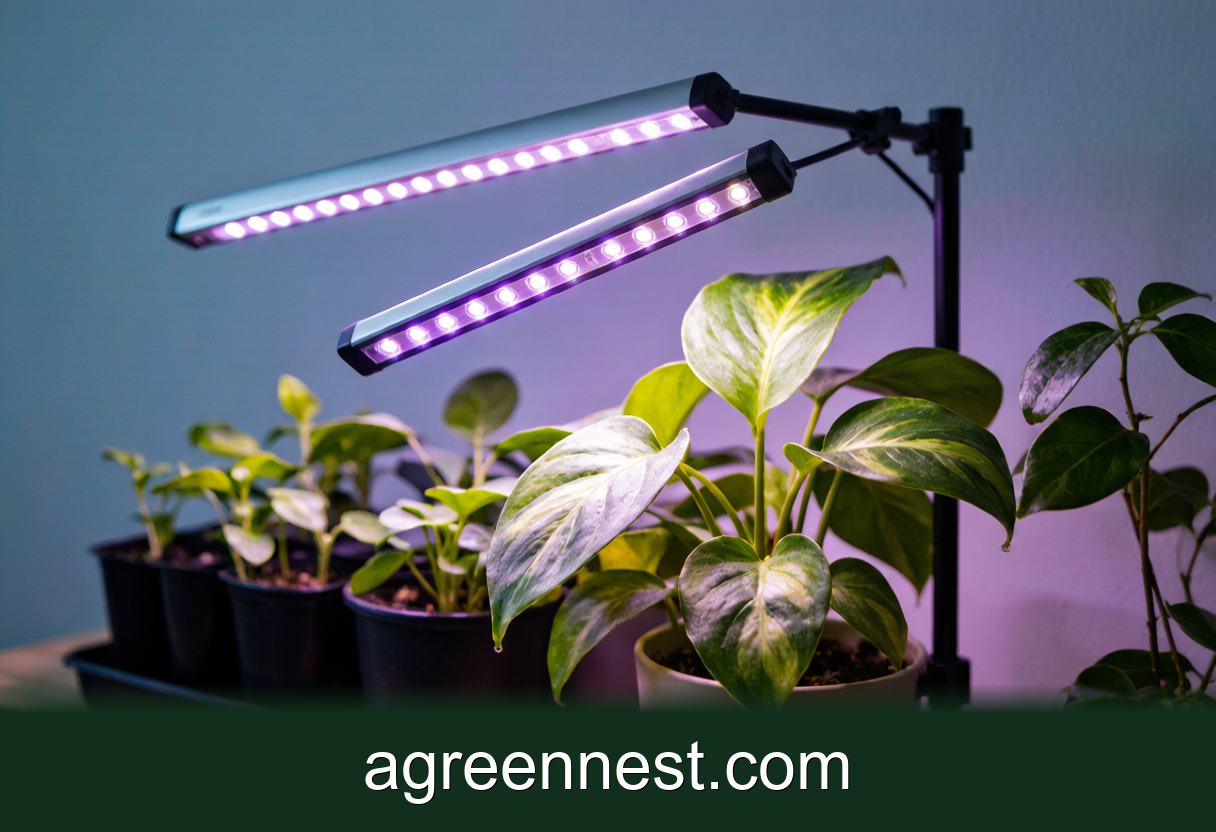
The right accessory turns Best Grow Lights for Plants in 2026 (What Actually Matters) from guesswork into routine. Measure what the plant actually needs, and pair it with a light check so bright, indirect light is a real value, not a hope. Spend once, read often, and let the data guide watering and feeding.
The Three Numbers That Matter
Most grow light guides are a list of store links with the phrase full spectrum repeated until it means nothing. That approach is useless. Fixtures either deliver the photons your plant can use or they do not, and you can prove it with three numbers.
PPFD, measured in micromoles per square metre per second, tells you how many usable light particles hit the leaf. Low light plants want roughly 50 to 150 of those units. Succulents and herbs want 200 to 400. Below 50, almost nothing grows. The plant merely survives.
Spectrum comes next. White LEDs in the 4000 to 6500K range grow foliage just fine. You do not need purple blurple lights. They look odd and they photograph badly under room light.
Coverage at height is the third number. Panels rated 300 micromoles at 15 cm deliver only 80 at 45 cm. Hang height decides everything. The basics of grow lights cover the setup itself, so this is the buying shortlist.
Lumens and watts describe the bulb, not the plant, so ignore them on the box.
What Should I Actually Buy?
One shelf with a few plants needs a 20 to 40 W white LED bar and a timer. Look for a listed PPFD or an honest claim of bright window equivalence. Expect to pay about $25 to $45.
Shelves of 60 to 120 cm need a panel or two bars hung 20 to 30 cm above the canopy for 12 to 14 hours a day. Budget roughly $50 to $90 for a decent setup.
Seedlings, herbs, and hydroponic greens need a higher PPFD bar, around 200 plus at the canopy. Plan on $60 to $120 for that tier.
Avoid no name 1000W blurple panels that actually draw 20 W and list no PPFD. They are a night light with a fan. Spend the money on a measured white bar instead.
Read the return policy before you buy, because some panels ship with the wrong plug. Heat output matters in a small room during summer months.
Are Timers Really Necessary?
Yes. Plants need a day length, and a cheap mechanical or smart timer on a 12 to 14 hour cycle beats a fancy light left on a switch you forget. I have killed more plants by forgetting to turn a light off than by owning a weak one. The timer costs less than a single replacement plant.
How Do You Use It Without Cooking the Plant?
Start at the maker's maximum height, then watch new growth for sunburn like scabs. Raise the light if you see them. More light is not automatically better once you pass what the species wants.
One simple rule works: match the hours to the plant type. Most houseplants and herbs want 12 to 14 hours. Succulents and winter growth want 10 to 12. Use the timer and stop guessing.
Watch the colour of new leaves as your first clue. Pale, faded growth means the light sits too far away.
How Do I Read a PPFD Chart?
Manufacturers publish a PPFD map that shows light levels across the footprint. Read the number at the centre and at the corners, because the corners always fall lower. Good panels hold at least 70 percent of centre value at the edges. Poor panels drop to 40 percent and leave outer plants starving.
Distance changes the reading fast. Moving the light from 15 cm to 30 cm above the canopy can cut PPFD by roughly half. Measure at the height you will actually hang, not at the lab spec distance. Phone lux meters give a rough check, though they are not a true PPFD reading.
This matters because plants respond to the dose, not the bulb. Lower numbers for longer hours can equal high numbers for fewer hours. Track the daily light integral if you want real control.
When Should You Upgrade Your Setup?
Upgrade when your plants stop responding to more hours at the current light. Stretched growth that returns within a week of raising the lamp means you have hit the ceiling. Moving from a 20 W bar to a 40 W bar roughly doubles the usable footprint.
Cost per plant drops as you scale. That $90 shelf light serving 12 plants costs under $8 each. That $40 clip on serving two plants costs $20 each. Buy the size that matches the shelf, not the impulse.
Replace bulbs after about 18 months, since diode output fades with use. Dimmer lights that once gave 200 may now give 150. Mark the purchase date on the fixture so you remember.
Frequently Asked Questions
Do I need a purple light for my plants to grow?
No. White full spectrum LEDs grow foliage fine and look normal in a room. Purple lights are a marketing holdover from older diode tech.
How many hours a day should the light run?
Twelve to 14 for most houseplants and herbs, 10 to 12 for succulents and in winter. The timer makes this automatic.
Can a grow light replace a window entirely?
For many low light types and herbs, yes, with enough PPFD and the right hours. Sun loving succulents need a strong bar, not a clip on.
Buy on PPFD and coverage at height, not on watts or colour. That $40 white LED bar on a timer grows more than a $120 unnamed panel you cannot aim. Start with one shelf light and measure results before you fill the room.
Measure once, then trust the numbers over the marketing claims. Your plants will show the truth faster than any spec sheet.
Sources & further reading
GreenNest authors research and write every guide independently. The external links below are reputable references we recommend for deeper reading — they are not the sources we copied from.
- Michigan State University — Gardening — Michigan State University
- Oregon State University Extension — Oregon State Extension
- University of Minnesota Extension — U Minnesota Extension
Recommended Tools for Plant Care Accessories Care
Free, no-signup helpers matched to this guide.
Free Ebooks to Explore
Downloadable handbooks — no email required.
Free Ebook
The AGreenNest Succulent Care Handbook
The complete, beginner-to-confident guide to growing fat, happy succulents — 10 chapters and a 20-plant directory.
Free Ebook
Haworthia & Haworthiopsis Care Handbook
A focused guide to the striped, forgiving Haworthia clan.
Share Your Plant Story
Grown something tricky, or found a trick that finally worked? Tell us in the comments, or see what other readers are sharing on our Community page. The best reader tips get folded back into our guides.
Join the Conversation
Have a tip or a question about Best Grow Lights for Plants in 2026 (What Actually Matters)? Share it below — comments are saved on our server.