 AGreenNest
Hydroponic Growing
Nutrient Film Technique (NFT) (Hydroponics)
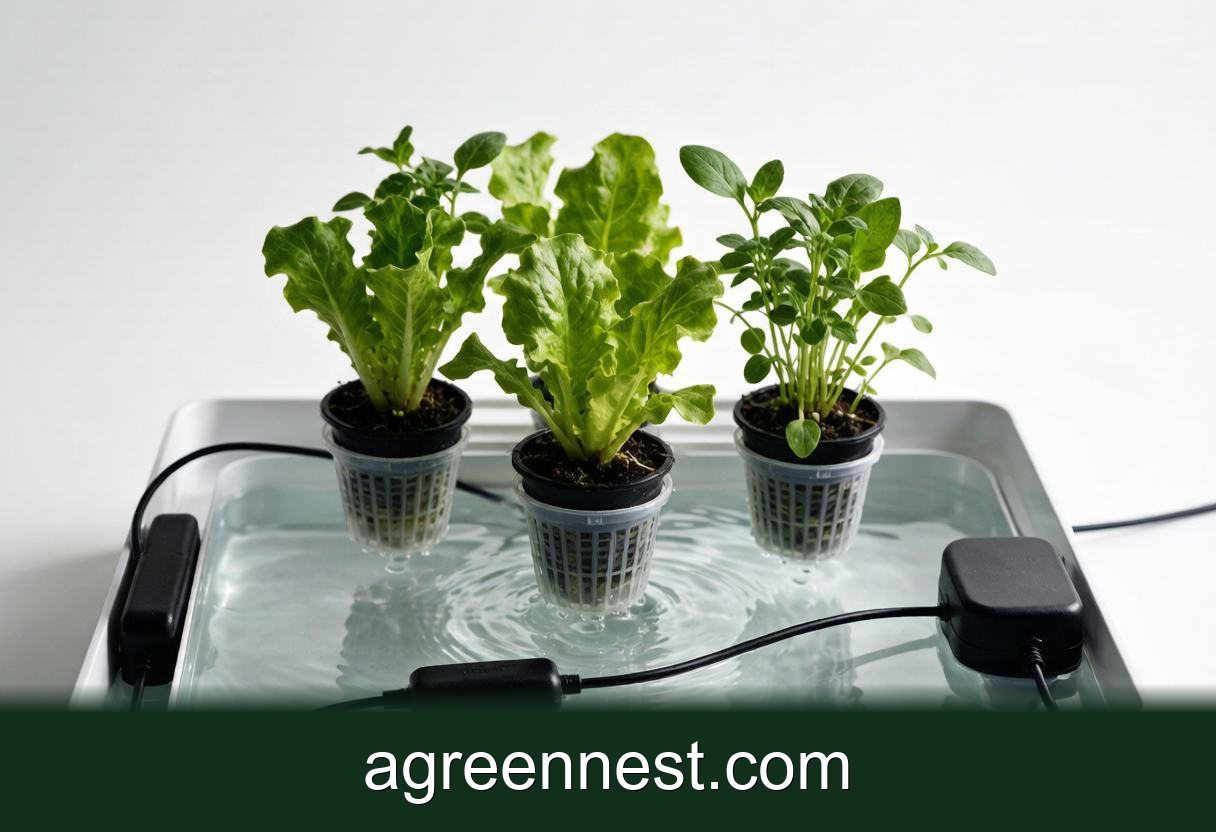
Run Nutrient Film Technique (NFT) (Hydroponics) at steady strength: 1.5-2.0 EC, pH 5.8-6.2, reservoir 18-22 C. Provide a few hours of direct sun for 14-16 hours a day. The only common failure is stale solution, so top up daily and swap the reservoir every 7-14 days so roots stay white and active.
What the Nutrient Film Technique Is
Nutrient Film Technique moves a thin sheet of solution through sloped channels so roots sit in a shallow flowing film rather than a deep tank. The channel slopes about 1 in 100, or roughly 1 centimeter of drop per meter of length, which is enough to keep the film moving without pooling. You pump solution from a reservoir up to the high end and let gravity pull it back, so the same nutrient circulates all day. Most home NFT rigs run 4 to 6 inch wide PVC channels holding 8 to 12 plants per rail. Because the film is only a few millimeters deep, roots get constant oxygen from the air above the stream. Lactuca sativa and other leafy greens thrive in this setup and reach harvest in 30 to 45 days.
Why Choose NFT Over Other Systems
NFT uses far less solution than deep water culture because the reservoir only needs to stay a few liters full. Space efficiency is the real draw, since vertical stacking of channels grows more plants per square foot than any soil bed. The downside is zero buffer, so a pump failure cuts oxygen within minutes and wilt appears in under an hour. You must run the pump continuously, 24 hours a day, with no timer off period. Unlike Kratky passive systems, NFT gives no slack for power outages, so a battery backup is worth the 40 dollar cost. Most commercial growers pair the pump with an alarm that texts them if flow stops.
How to Build a Basic NFT Rail
Cut a length of 4 inch PVC to the space you have, typically 1.2 to 1.8 meters (4 to 6 feet) for a countertop unit. Drill 5 to 7 centimeter (2 to 3 inch) holes every 20 centimeters (8 inches) along the top to seat the net pots. Support the rail on a stand and shim the high end up by 1 to 2 centimeters so the film drains. Plumb a 400 to 800 liter per hour submersible pump from the reservoir into the high end through half inch tubing. Set the flow so the channel bottom shows a thin wet line, not a flooded trench. After the first run, check that no hole leaks and that the return drops quietly back into the tank.
What Strength Should the Nutrient Be?
Run the solution at 1.5 to 2.0 EC and hold pH between 5.8 and 6.2 for consistent uptake. In warm rooms the EC climbs as water evaporates, so top up daily with plain water and re test the strength each morning. A target of 150 to 250 ppm of nitrate keeps lettuce green without tip burn. Most failures trace to a stale reservoir, so swap the full tank every 7 to 14 days even if levels look fine. When you change the solution, scrub the reservoir walls because algae films acidify the mix overnight. Keep the reservoir temperature between 18 and 22°C (64 and 72°F) so root rot stays away.
How Much Light Does NFT Need?
Give the rail 14 to 16 hours of bright light, split between morning sun and supplemental LEDs if the window is weak. Leafy greens need about 12 to 18 moles of light per day to avoid stretching toward the glass. When natural light falls short in winter, add a 20 to 40 watt full spectrum bar per rail and run it on a timer. Direct sun for a few hours is fine, but temperatures above 28°C (82°F) at the roots will cook the film. Because the channels are shallow, they heat faster than a bucket, so shade the rail midday in summer.
Which Crops Work Best in NFT
Leafy greens and herbs lead the list because their shallow roots suit the film. Ocimum basilicum and mint crop continuously when you pinch the tops every two weeks. Strawberries, known botanically as Fragaria ananassa, also work but need more EC around 2.0 to 2.4. Fruiting tomatoes are possible yet demand 2.5 to 3.0 EC and strong support, which most home rails cannot hold. You should start with one crop per rail so nutrient needs stay uniform and no plant outcompetes the others. Rotate the rail position every two weeks so all plants get equal light from the window.
Frequently Asked Questions
Q: Do I need pumps and timers for NFT?
A: Yes. NFT is an active system and the pump must run 24 hours a day. Passive systems like Kratky need no pump, but NFT will kill plants within an hour of a stop.
Q: Why are my NFT leaves pale?
A: Usually the pH drifted above 6.5, so iron locked out. Test the solution and correct pH back to 5.8 to 6.2, then watch new growth green up within a week.
Q: Can I run NFT without a greenhouse?
A: Absolutely. A bright windowsill or a LED bar in a spare room works. Keep the reservoir cool and the light on a 14 to 16 hour timer and yields stay steady year round.
NFT rewards precision more than any other home method, and the numbers are what keep it stable. Hold EC at 1.5 to 2.0, pH near 6.0, and swap the tank every 7 to 14 days, and you will pull harvests every month. Start with lettuce and basil, log each reservoir change in the care schedule tool, and add a second rail only after the first one runs clean for a full season.
Sources & further reading
GreenNest authors research and write every guide independently. The external links below are reputable references we recommend for deeper reading — they are not the sources we copied from.
- Oregon State University Extension — Oregon State Extension
- Michigan State University — Gardening — Michigan State University
- NC State Extension — Plant Toolbox — NC State Extension
Recommended Tools for Hydroponic Growing Care
Free, no-signup helpers matched to this guide.
Free Ebooks to Explore
Downloadable handbooks — no email required.
Free Ebook
The AGreenNest Succulent Care Handbook
The complete, beginner-to-confident guide to growing fat, happy succulents — 10 chapters and a 20-plant directory.
Free Ebook
Haworthia & Haworthiopsis Care Handbook
A focused guide to the striped, forgiving Haworthia clan.
Share Your Plant Story
Grown something tricky, or found a trick that finally worked? Tell us in the comments, or see what other readers are sharing on our Community page. The best reader tips get folded back into our guides.
Join the Conversation
Have a tip or a question about Nutrient Film Technique (NFT) (Hydroponics)? Share it below — comments are saved on our server.