 AGreenNest
Hydroponic Growing
Hydroponic Herbs on Your Kitchen Windowsill
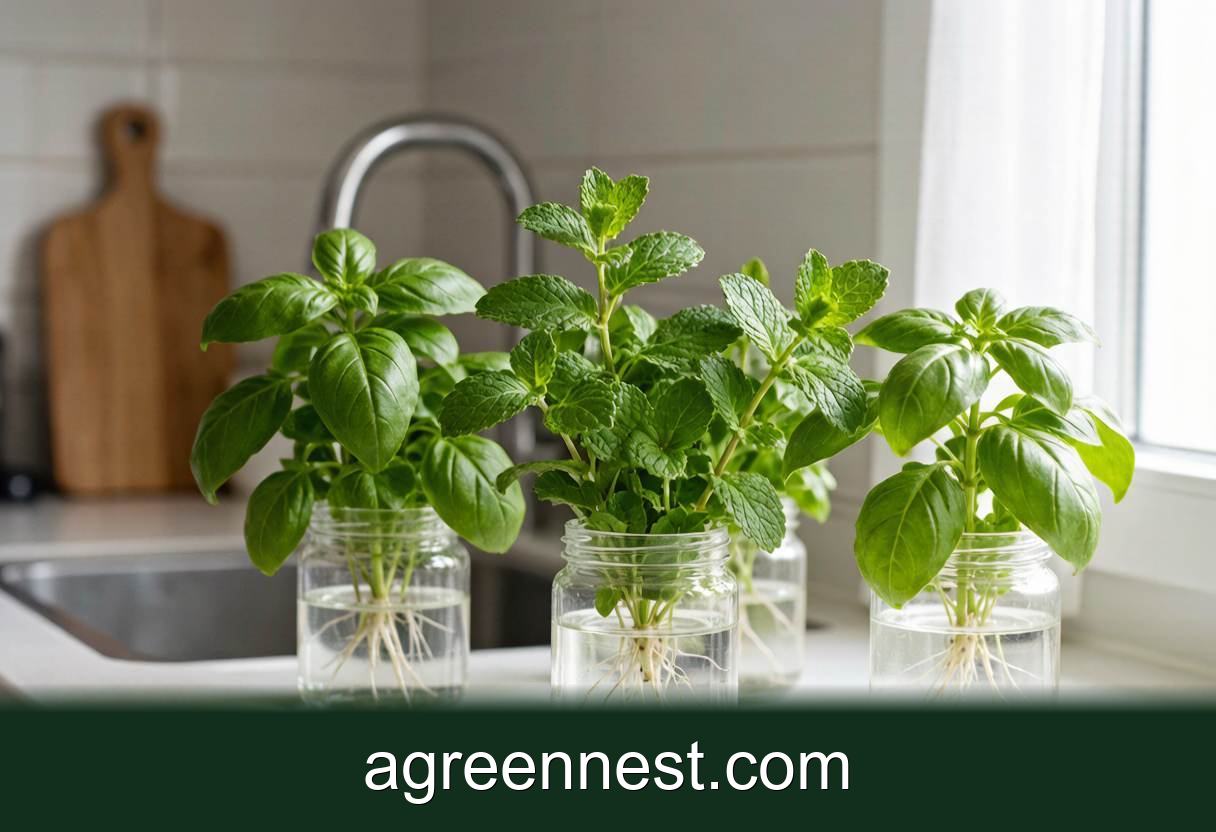
Run Hydroponic Herbs on Your Kitchen Windowsill at steady strength: 1.5-2.0 EC, pH 5.8-6.2, reservoir 18-22 C. Provide an east or north window for 14-16 hours a day. The only common failure is stale solution, so top up daily and swap the reservoir every 7-14 days so roots stay white and active.
Fresh herbs steps from your stove change the way you cook, and a windowsill hydroponic garden makes that possible all year. You can grow basil, mint, and parsley in water with no soil and no fuss. The numbers are friendly for beginners, and the payoff lands on your plate within weeks.
Why Grow Herbs Hydroponically?
Potted herbs from the supermarket wilt within days, and garden beds are out of reach in winter. Hydroponic herbs live in a small jar of nutrient water right by the window, so they stay lush and ready to snip. There is no soil mess on the counter, and you get a continuous harvest instead of one tired bunch.
Fewer pests show up because there is no damp potting mix to hide in. Growth runs faster when nutrients reach the roots directly, and the jar becomes a fragrant decoration above the sink. Herbs are light feeders compared with tomatoes, which makes them ideal for a gentle, low-maintenance water garden. A single jar costs under 5 dollars and needs about 1 liter of solution to get started.
Choosing Your Herbs
Three herbs lead the pack for windowsill hydroponics, and each brings something different to your cooking. Basil, or Ocimum basilicum, is the easiest and most rewarding, loving warmth and bright light. Mint, often Mentha spicata, is vigorous and forgiving, but keep it in its own container or it dominates the shelf. Parsley, known botanically as Petroselinum crispum, starts slow yet lives long, with curly and flat types both working.
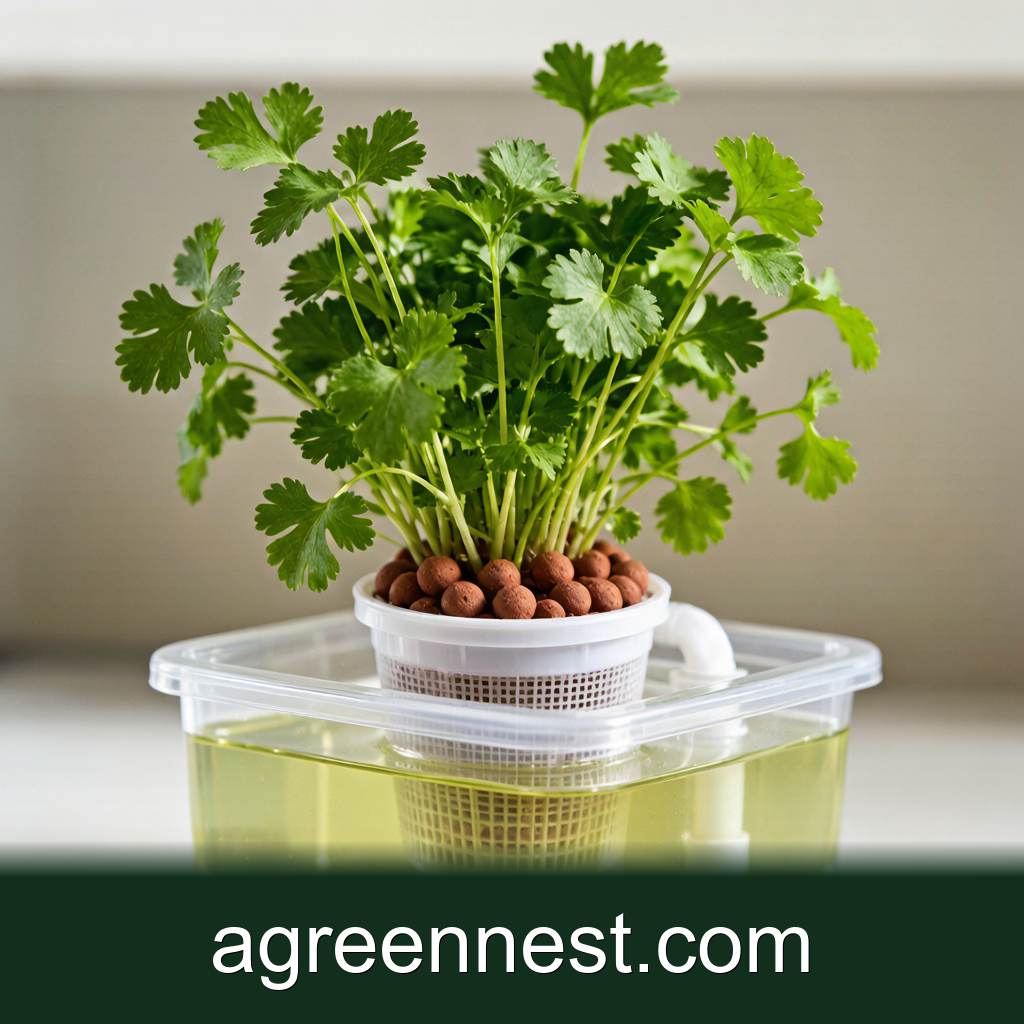
Cilantro (Coriandrum sativum) also succeeds, though it bolts quickly in heat, so keep it cool. Start from seedlings rather than seeds if you want fast results, since parsley especially takes its time to sprout. A young transplant costs 3 to 5 dollars at a garden store and saves you three weeks of waiting.
How Much Light Do Windowsill Herbs Need?
Herbs want more light than lettuce, so placement is the first real decision. A south or east window gives the best natural brightness, but most kitchens fall short in winter. Aim for 12 to 16 hours of bright light each day, and do not trust a cloudy pane alone to do the job.
Supplement with a small full-spectrum LED bar when natural light dips below that target. Rotate the jars weekly so all sides of the plant reach the light. If stems stretch toward the glass and leaves shrink, that is your cue to add a grow light, because basil in particular sulks without enough photons.
The Right Nutrient Dose
Herbs prefer a light feed, and overfeeding is the most common windowsill mistake. Strong solution scorches the roots and burns leaf tips, so keep it gentle from the start. Target around 0.8 to 1.4 EC, which is roughly 400 to 700 PPM for most meters.
Use a formula balanced for leafy greens or herbs, and dilute to half strength for seedlings before building up slowly. Check pH before planting and weekly after, since herbs sit happily in the 5.5 to 6.5 range. Drifting pH quietly starves plants even when nutrients are present, so a quick test saves a lot of guessing. Refresh the reservoir every two to three weeks to avoid salt buildup on the roots.
How Do You Set Up the Jars?
The setup could not be simpler, and you probably own everything already. Use an opaque glass jar or wrap a clear one to block light from the liquid. A 1 liter mason jar with a 5 cm net pot is plenty for one plant. Hold the stem with clay pebbles or a clean sponge, then fill so only the lower roots touch the water and keep the level 2 to 3 cm below the stem base.
Cover the top so light cannot reach the inside. A passive Kratky-style jar works beautifully for herbs because they finish one reservoir before it goes stale. If you prefer, a small pump adds oxygen, but most herb jars do fine without one, and you swap the solution every 7 to 14 days.
The Harvest Cycle
The joy of hydroponic herbs is a steady, cut-and-come-again supply rather than one big cut. Harvest little and often to keep plants bushy and productive. Snip basil just above a leaf pair to trigger two new stems, and take mint from the top down to prevent flowering.
Cut parsley outer stems at the base while the center keeps producing, and never remove more than a third of the plant at one time. With this rhythm, a single basil plant can supply a family for months. Stagger a second jar every few weeks and you will never run out of fresh flavor.
Keeping a Continuous Supply
Continuity is the real goal, and it is easy once you build a small rotation. Start a new seedling every three to four weeks as insurance against a tired plant. Move the oldest jar to a brighter spot if growth slows, and pinch flower buds on basil and mint to extend leaf production.
Mint especially wants discipline, because left alone it flowers and the leaves turn bitter. A weekly pinch keeps it in its flavorful leafy phase, and a cool room near 18 to 22 °C helps every herb stay crisp. Compost and restart any plant that turns woody after about 4 to 6 months of steady cutting.
Troubleshooting Common Issues
Even hardy herbs signal when something is off, so learn the early warnings before they spread. Yellow lower leaves are usually normal aging, but widespread yellow means a weak feed. Brown crisp tips point to nutrient strength that is too high, so dilute the solution right away.
Pale, stretching stems mean not enough light, and slimy roots mean warm light-exposed water that needs cooling and shading. Whitefly or aphids call for a rinse of the leaves and better airflow near the window. None of these spell disaster, because herbs bounce back fast once you correct light, strength, or pH.
Frequently Asked Questions
Q: Can you grow herbs in just water on a windowsill?
A: Yes, with a balanced hydroponic nutrient solution herbs thrive in water year-round, provided they get enough light.
Q: How much light do hydroponic herbs need?
A: Aim for 12 to 16 hours of bright light, supplementing a sunny window with a grow light in winter when days shorten.
Q: What nutrient strength is best for basil and mint?
A: Keep it light at about 0.8 to 1.4 EC and dilute further for young seedlings to avoid burned roots.
A windowsill herb garden turns everyday cooking into something special, and hydroponics makes it clean, continuous, and nearly effortless. Keep the reservoir between 18 and 22 °C, hold pH near 5.8 to 6.2, and top up daily so roots stay white. Start with one jar of basil and let the routine guide the rest of your indoor garden.
Recommended Tools for Hydroponic Growing Care
Free, no-signup helpers matched to this guide.
Free Ebooks to Explore
Downloadable handbooks — no email required.
Free Ebook
The AGreenNest Succulent Care Handbook
The complete, beginner-to-confident guide to growing fat, happy succulents — 10 chapters and a 20-plant directory.
Free Ebook
Haworthia & Haworthiopsis Care Handbook
A focused guide to the striped, forgiving Haworthia clan.
Sources & further reading
GreenNest authors research and write every guide independently. The external links below are reputable references we recommend for deeper reading — they are not the sources we copied from.
- UF/IFAS Gardening Solutions — UF/IFAS
- Aggie Horticulture (Texas A&M) — Texas A&M AgriLife
- Michigan State University — Gardening — Michigan State University
Share Your Plant Story
Grown something tricky, or found a trick that finally worked? Tell us in the comments, or see what other readers are sharing on our Community page. The best reader tips get folded back into our guides.

Join the Conversation
Have a tip or a question about Hydroponic Herbs on Your Kitchen Windowsill? Share it below — comments are saved on our server.