 AGreenNest
Hydroponic Growing
pH Management (Hydroponics)
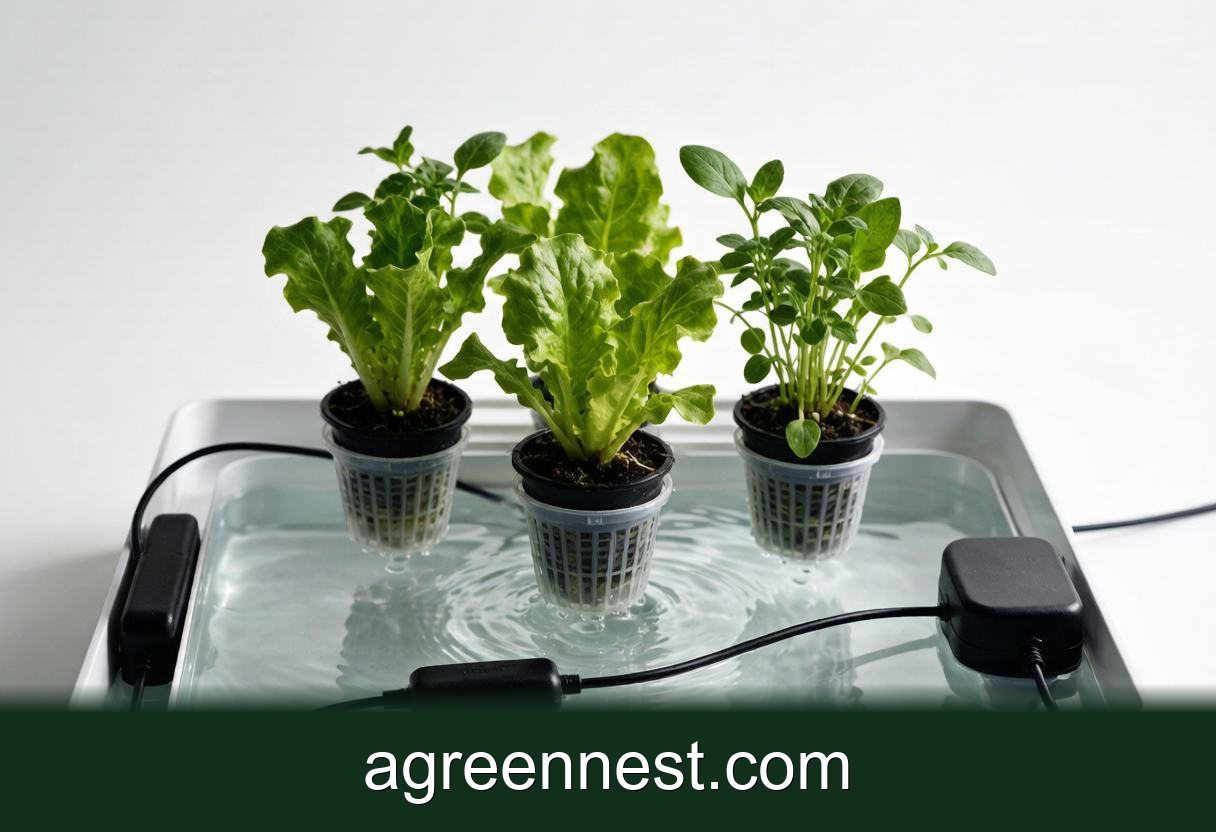
PH Management (Hydroponics) grows fastest with a 1.5-2.0 EC nutrient solution at 18-22 C. Aim for 1.5-2.0 EC and pH 5.8-6.2, and give 13-16 hours of grow-light or bright supplemental light (14-16 hours daily). Keep roots dark and aerated, and change the reservoir every 1-2 weeks to avoid salt buildup.
The pH of your nutrient solution decides whether your plants eat. Even a perfect fertilizer fails if the water is too acidic or too alkaline. Roots absorb each element only inside a narrow band. Move outside that band and the food sits in the tank unused while the plant starves.
Most hydroponic crops want a nutrient pH between 5.5 and 6.5. Leafy greens like lettuce sit near 5.8 to 6.2. Fruiting crops such as tomatoes and peppers lean toward 6.0 to 6.5. The window is wide enough that a home grower can hold it with simple tools and a steady habit.
Temperature and pH move together more than people expect. A reservoir that climbs to 26 degrees Celsius, or 79 degrees Fahrenheit, can swing half a point in a single afternoon. Cool the root zone and the pH settles, which is one more reason to keep the tank out of direct sun.
Root zone pH also changes with crop age. Young plants prefer the middle of the band where calcium and magnesium stay available. Older plants tolerate the edges as long as you test on schedule. Write the date and reading next to each other so trends become visible over a month of growth.
Why pH Controls Nutrient Uptake
Roots take in minerals through active transport. Each ion, whether it is calcium, iron, or nitrate, has a preferred acidity. At pH 5.5, iron and manganese flow freely into the plant. At pH 7.0, they form solids the plant cannot drink.
A solution that drifts too high locks out iron first. New leaves turn yellow while the veins stay green. A solution that drops too low frees aluminum and manganese to toxic levels. Either extreme shows up as weak, pale growth within a week of the swing.
Checking pH is cheaper than fixing a deficit. A 10 dollar meter pays for itself in one avoided crop loss, and liquid kits cost even less to keep on hand.
What Range Should You Target?
Aim for 5.8 to 6.2 during the vegetative stage. Seedlings are delicate, so keep them near 6.0. Mature leafy crops hold steady at 5.8 and reward you with crisp growth.
Track EC alongside pH every time you test. Target 1.5 to 2.0 EC for most greens and herbs. Raise to 2.0 to 2.5 EC for fruiting plants in full bloom. A swing of more than 0.5 in pH across a single day means the solution is breaking down.
Keep the reservoir at 18 to 22 degrees Celsius, equal to 64 to 72 degrees Fahrenheit. Warm water drifts faster and feeds bacteria that sour the mix. Cooler water stays stable and is easier to manage from week to week.
How to Test and Adjust
Test every two to three days with a meter or liquid drops. Drops are cheap and need no batteries, though they read in steps of 0.2. A digital meter reads to 0.1 and is worth it for serious growers who want precision.
To lower pH, add phosphoric acid based pH down. Use 1 to 2 milliliters per 10 liters of solution and stir well. To raise pH, use potassium hydroxide based pH up in the same small dose. Add a little, wait ten minutes, then test again. Overcorrecting is the main beginner mistake and it swings the band the wrong way.
Write the dose in a log each time. A notebook turns guesswork into a repeatable routine you can trust across crops and seasons.
Calibrate the meter every few weeks with a known buffer of pH 4.0 or 7.0. Cheap probes drift and read a full point off after a month of use. A two minute calibration saves a whole crop from a hidden swing.
When Does the Reservoir Need a Change?
Change the full reservoir every 1 to 2 weeks. The plant pulls nutrients unevenly, so the leftover salts skew the mix even when pH looks fine. Fresh solution resets the balance and restarts healthy uptake.
Top up daily with plain water as the level falls. This keeps strength steady between changes and prevents shock to the roots. Rinse the container and the roots each time you swap to clear biofilm that harbors germs.
Cover the reservoir fully at all times. Light through the lid feeds algae that compete for oxygen and swing the pH downward. A tight, dark lid keeps the world stable and clean.
Hard water is another quiet enemy. Tap water above 150 ppm of calcium carbonate pushes pH up on its own. Filter it or use rainwater so your pH down does not fight the supply all week.
Frequently Asked Questions
Q: Do I need pumps and timers?
A: Not always. Passive systems like Kratky need none. Active systems such as deep water culture and nutrient film technique do require a pump.
Q: Is hydroponic food the same as normal fertilizer?
A: No. Use a proper two part A and B hydroponic nutrient. Ordinary soil fertilizer will clog and leave the mix unbalanced.
Q: Why are my leaves pale?
A: The pH is usually off, so roots cannot absorb the food. Test and correct the pH to between 5.5 and 6.5.
Q: Can I move a soil plant to water?
A: Soft stemmed types like pothos and lucky bamboo transition easily. Most soil root balls do not make the switch well.
pH management is a rewarding way to grow without soil. Start small and measure often so the numbers stay in range. Use our hydroponics guide and the care schedule tool to keep your solution balanced week after week.
Recommended Tools for Hydroponic Growing Care
Free, no-signup helpers matched to this guide.
Free Ebooks to Explore
Downloadable handbooks — no email required.
Free Ebook
The AGreenNest Succulent Care Handbook
The complete, beginner-to-confident guide to growing fat, happy succulents — 10 chapters and a 20-plant directory.
Free Ebook
Haworthia & Haworthiopsis Care Handbook
A focused guide to the striped, forgiving Haworthia clan.
Sources & further reading
GreenNest authors research and write every guide independently. The external links below are reputable references we recommend for deeper reading — they are not the sources we copied from.
- UA Controlled Environment Agriculture Center — U Arizona CEAC
- UF/IFAS Gardening Solutions — UF/IFAS
- University of Minnesota Extension — U Minnesota Extension
Share Your Plant Story
Grown something tricky, or found a trick that finally worked? Tell us in the comments, or see what other readers are sharing on our Community page. The best reader tips get folded back into our guides.
Join the Conversation
Have a tip or a question about pH Management (Hydroponics)? Share it below — comments are saved on our server.