 AGreenNest
Low-Light Indoor Plants
Elephant Ear Care Guide (Alocasia amazonica)
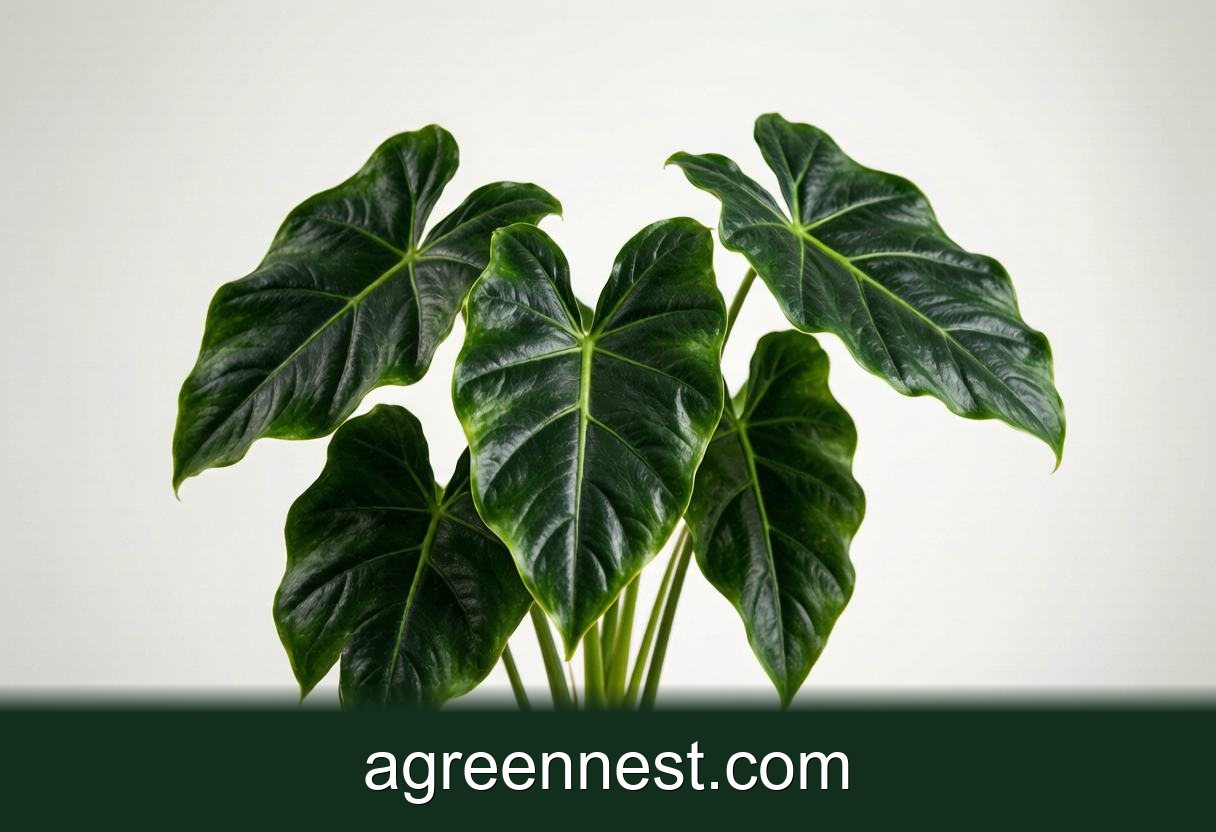
Elephant Ear Care Guide (Alocasia Amazonica) is built for dim rooms. It tolerates bright, indirect light and actually suffers in hot direct sun. Water when the top 2-3 cm of soil feels dry (12 days between waterings), and keep humidity modest. A north or east window, or a few feet back from a bright one, is the sweet spot.
Elephant Ear at a Glance
| Care factor | What Elephant Ear wants |
|---|---|
| Light | bright indirect light, with a little gentle morning or evening sun |
| Water | water deeply only when the top 2 to 3 cm of soil feels dry, roughly every 12 days in the growing season, far less in winter |
| Temperature | comfortable between 60 and 85°F (16 and 29°C) |
| Humidity | it likes a humid spot or a pebble tray |
| Soil | a standard peat-free houseplant mix |
| Difficulty | best once you have a little experience |
| Pet safe | no, keep it away from cats and dogs |
Alocasia amazonica is the plant that stops people in their tracks at the garden centre. The arrow-shaped leaves rise on stiff stems, each one veined in pale silver that catches the light from across the room. Many owners first meet it as Alocasia polly, a smaller nursery selection with the same dramatic look. Despite the tropical appearance, this is not a demanding diva once you understand two things: it hates wet feet and it dislikes sudden change.
Why Does Elephant Ear Drop Leaves?
Leaf drop is the behaviour that alarms new owners most. The plant reacts strongly to movement, to a missed watering, or to a cold draft by shedding a leaf or two. That sounds dramatic, but it is normal self-defence. The stored energy simply redirects to the remaining stems while the plant adjusts.
Watch the newest leaves rather than the oldest ones. Lower leaves yellow and fall as part of routine growth, especially when a fresh upper leaf is unfurling. Only worry when several leaves drop within a week or when the stems themselves go soft at the base.
What Light Keeps It Happy?
Bright indirect light is the sweet spot. A north or east window suits it beautifully, and a spot a few feet back from a bright south window works as well. Some gentle morning or evening sun is welcome, but hot midday rays scorch the thin leaf tissue and leave brown patches that never heal.
Too little light makes the stems stretch and lean toward the window. Rotate the pot a quarter turn each week so the plant grows evenly instead of bowing to one side. A sheer curtain is your friend in a very bright room.
How Often Should You Water It?
Water when the top 2 to 3 centimetres of soil feel dry to the touch. In the growing season that is roughly every 10 to 14 days, with 12 days a reasonable average. Winter slows everything, and a cool room may need water only every 21 to 28 days.
Use room-temperature water and pour until it drains from the base. Empty the saucer within an hour. Humidity matters as much as moisture: aim for 40 to 60 percent around the leaves, using a pebble tray or a small humidifier. Crisp brown edges are the classic sign that the air is too dry.
Soil, Pot, and Humidity
A peat-free houseplant mix gives the right balance of moisture and air. Many owners improve drainage by blending in one part perlite to three parts mix. The plant enjoys consistent dampness but never sogginess, so the texture of the medium does the heavy lifting.
Group it with other tropical plants to build a humid pocket. A bathroom with a window is often the perfect home. Mist the leaves lightly in winter when central heating drops the humidity below 30 percent.
Temperature and Placement
Warmth keeps Alocasia amazonica content. It grows best between 60 and 85°F, which is 16 to 29°C, and it sulks below about 55°F, or 13°C. Keep it away from air conditioning vents and from doors that swing open to cold air.
Place the pot where temperature stays steady through the day. A corner that swings from warm afternoon sun to a chilly night draft will trigger more leaf drop than any watering mistake. Stability beats perfection here.
How to Propagate Elephant Ear
Division is the reliable method. At repotting time, tease the root clump apart so each section keeps at least one stem and a fist of roots. Pot the divisions into fresh mix at the same depth they grew before.
Young pups sometimes appear at the base on their own. Wait until a pup has three leaves and its own roots before separating it, then treat it exactly like a small adult. Keep new plants in bright indirect light and water a little less until they show fresh growth.
Common Problems and Simple Fixes
Yellowing lower leaves are usually age or a missed watering, so check the soil before acting. Spider mites love dry, warm corners and show as fine webbing under the leaves; rinse the foliage and raise humidity to discourage them. Soft, blackened stems mean rot from cold and wet, so cut back to firm tissue and repot in fresh dry mix.
Brown crispy edges point to low humidity or fertiliser salt build-up. Flush the pot with plain water every couple of months and ease off feeding in winter. Consistent care prevents most trouble before it starts.
Frequently Asked Questions
Q: How often should I water Elephant Ear?
A: Water when the top 2 to 3 centimetres of soil feel dry, roughly every 12 days in the growing season and far less in winter.
Q: Is Elephant Ear safe for pets?
A: No, the leaves can irritate cats and dogs if chewed, so keep it out of reach.
Q: What light is best?
A: Bright indirect light from a north or east window, or a few feet back from a bright south window.
Elephant Ear rewards a steady hand with years of architectural drama. For a personalised schedule, try our free watering calculator and pair it with the light calculator to pick the perfect spot.
Sources & further reading
GreenNest authors research and write every guide independently. The external links below are reputable references we recommend for deeper reading — they are not the sources we copied from.
- Royal Botanic Gardens, Kew — Kew Gardens
- Missouri Botanical Garden — Missouri Botanical Garden
- Aggie Horticulture (Texas A&M) — Texas A&M AgriLife
Recommended Tools for Low-Light Indoor Plants Care
Free, no-signup helpers matched to this guide.
Free Ebooks to Explore
Downloadable handbooks — no email required.
Share Your Plant Story
Grown something tricky, or found a trick that finally worked? Tell us in the comments, or see what other readers are sharing on our Community page. The best reader tips get folded back into our guides.
Join the Conversation
Have a tip or a question about Elephant Ear Care Guide (Alocasia amazonica)? Share it below — comments are saved on our server.