 AGreenNest
Succulent Care
Zebra Plant Care Guide (Haworthiopsis fasciata)
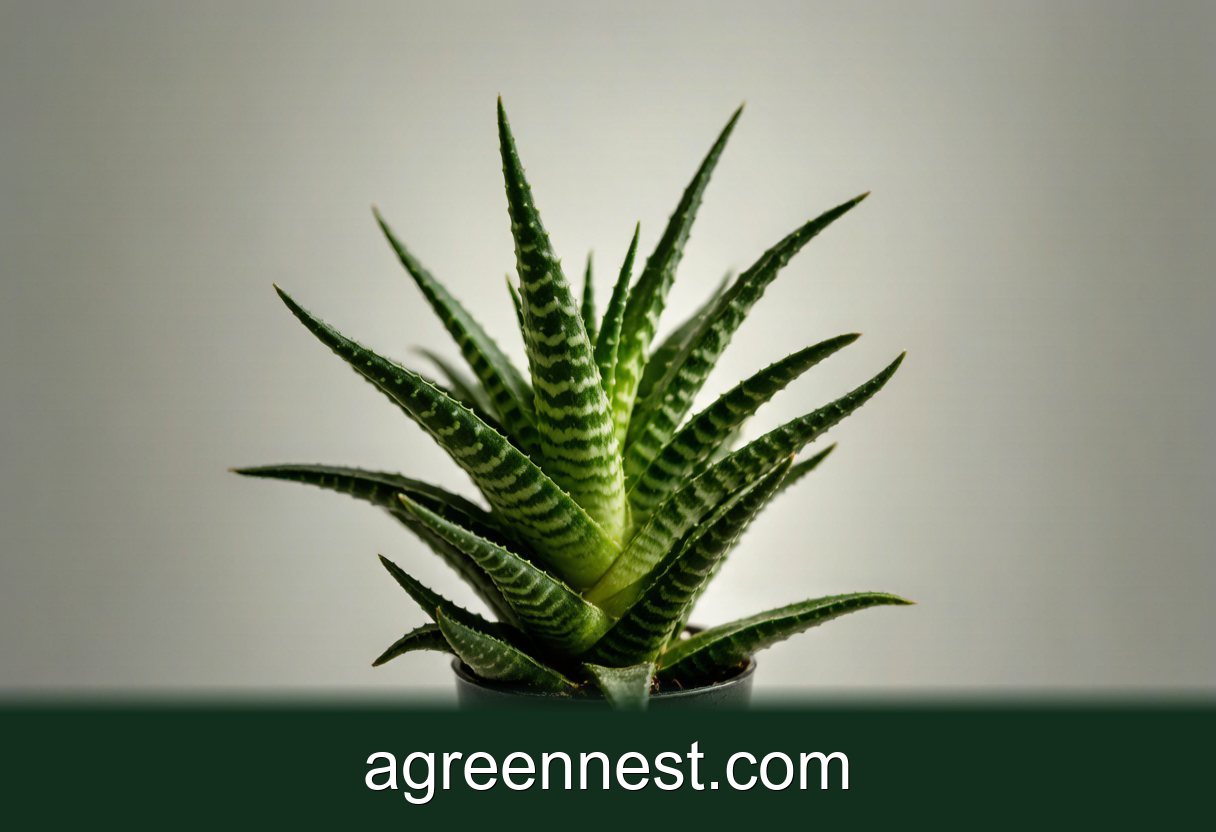
The secret to a happy Zebra Plant Care Guide (Haworthiopsis Fasciata) is restraint. Place it in bright, indirect light, then wait until the soil is bone dry before watering (18 days between waterings). Use a lean, sandy soil and a porous pot so excess moisture escapes fast and rot never gets started.
Zebra Plant at a Glance
| Care factor | What Zebra Plant wants |
|---|---|
| Light | bright indirect light, with a little gentle morning or evening sun |
| Water | water deeply only when the soil has dried out completely, roughly every 18 days in the growing season, and far less in winter |
| Temperature | comfortable around 55 to 85°F (13 to 29°C) |
| Humidity | average home humidity is fine |
| Soil | a gritty, free-draining succulent mix |
| Difficulty | very easy, great for beginners |
| Pet safe | yes, it is generally regarded as pet-safe |
My first Haworthiopsis fasciata arrived in a 6 cm pot from a weekend market, looking like a tiny aloe that someone had painted with white toothpaste. Two years on, it is still one of the most forgiving plants on my windowsill. Those bold horizontal stripes are not a disease or a pest, they are simply the plant's natural markings, and scrubbing at them does nothing but stress the leaf.
Light Needs
Bright indirect light keeps these little succulents compact and vivid. A north or east window works beautifully, and a little gentle morning or evening sun is welcome. Avoid the hot midday beam, which can scorch the fleshy leaves within a few hours. In my own home I keep one about 60 cm back from a south window, where the light is bright but filtered through a sheer curtain.
Grow lights make a fine backup during the dim winter months. Run a full spectrum bulb for 10 to 12 hours a day if your room stays dark, and you will prevent the stretching that low light causes. Rotate the pot a quarter turn every 14 days so all sides receive even exposure, and the rosette stays symmetrical instead of leaning toward the glass.
Watering Schedule
Restraint is the whole game with this species. Wait until the soil is bone dry, then water deeply, and let every drop drain away. During the active growing season from spring through early autumn I water roughly every 18 days, and in winter I stretch that to every 30 to 40 days because the plant is barely moving. A cheap moisture meter reading below 2 on a 1 to 10 scale is my signal to reach for the can.
Overwatering is the single fastest way to lose a zebra plant. The roots sit close to the surface and rot quickly in cold, wet soil. When in doubt, wait another week, because the plant shrugs off dryness far better than it survives soggy feet. I water with about 120 ml for a 9 cm pot, enough to wet the root ball without flooding the saucer.
Soil and Potting
A gritty, free-draining succulent mix is essential here. I blend 2 parts coarse sand to 1 part cactus soil, then add a handful of perlite for extra air. A terracotta pot with a real drainage hole is non-negotiable, because the porous clay pulls excess moisture from the root zone and helps the mix dry faster between drinks.
Repot only every 2 to 3 years, or when the offsets crowd the rim. Go up just one size, from a 7 cm pot to a 9 cm pot, since too much soil stays wet for too long around such a small root ball. Refresh the top 2 cm of mix each spring with fresh gritty blend, and the plant will reward you with steady growth.
Temperature and Humidity
Comfortable room temperatures between 55 and 85°F (13 and 29°C) suit it perfectly. It tolerates the average home humidity without complaint, so there is no need for a pebble tray or a humidifier. Keep it away from drafty windows in January and from heating vents that blast dry air, both of which can wrinkle the leaves and dull the stripes.
How to Propagate Zebra Plant
The easiest route is an offset pup pulled from the base, though a single healthy leaf laid on dry soil also works. Let any cut surface callus for 1 to 2 days before it touches soil or water, then set it on a barely moist mix and wait. Roots usually appear within 3 to 5 weeks at 70°F (21°C). I pot up the new plantlet once it has three or four roots at least 2 cm long, moving it into a 7 cm terracotta pot.
Common Problems and Fixes
Leaning or stretched growth means the plant wants more light, so move it brighter or add a grow light. A mushy, yellow base signals overwatering, so let the soil dry and inspect the roots for black, soft sections, trimming any that fail the gentle tug test. Brown, crispy edges usually point to low humidity or salt build-up, so flush the pot with 2 cups of plain water and raise humidity a little near the plant.
Why Does My Zebra Plant Lean?
Most leaning comes from uneven light, not weak stems. The plant simply reaches toward the brightest window. Rotate the pot every 14 days and place it where light arrives from above, and the lean usually corrects within a month. If the base is also soft, the cause is rot rather than light, and you should check the roots immediately before the whole rosette collapses.
What Should I Do About Brown Leaf Tips?
Brown tips are rarely fatal. Flush the soil every 8 weeks with 1 teaspoon of balanced fertilizer per gallon of water to clear salt build-up, and mist the leaves lightly during dry spells. Trim only the dead portion with clean scissors, leaving a thin margin of brown so you do not cut into live tissue. New growth will come in clean once the salts are gone and the air is a little kinder.
Frequently Asked Questions
Q: How often should I water Zebra Plant?
A: Water deeply only when the soil has dried out completely, roughly every 18 days in the growing season and far less in winter.
Q: Is Zebra Plant safe for pets?
A: Yes, it is generally regarded as pet-safe for cats and dogs.
Q: How do I make more of it?
A: Use an offset pup pulled from the base or a single leaf laid on dry soil.
Zebra Plant rewards a little restraint with years of easy beauty. For a personalised schedule, try our free watering calculator and pair it with the light calculator to pick the perfect spot for your striped little friend.
Sources & further reading
GreenNest authors research and write every guide independently. The external links below are reputable references we recommend for deeper reading — they are not the sources we copied from.
- Royal Horticultural Society — Houseplant care — RHS
- Aggie Horticulture (Texas A&M) — Texas A&M AgriLife
- NC State Extension — Plant Toolbox — NC State Extension
Recommended Tools for Succulent Care
Free, no-signup helpers matched to this guide.
Free Ebooks to Explore
Downloadable handbooks — no email required.
Free Ebook
Haworthia & Haworthiopsis Care Handbook
A focused guide to the striped, forgiving Haworthia clan.
Free Ebook
The AGreenNest Succulent Care Handbook
The complete, beginner-to-confident guide to growing fat, happy succulents — 10 chapters and a 20-plant directory.
Share Your Plant Story
Grown something tricky, or found a trick that finally worked? Tell us in the comments, or see what other readers are sharing on our Community page. The best reader tips get folded back into our guides.
Join the Conversation
Have a tip or a question about Zebra Plant Care Guide (Haworthiopsis fasciata)? Share it below — comments are saved on our server.