 AGreenNest
Succulent Care
Ghost Plant Care Guide (Graptopetalum paraguayense)
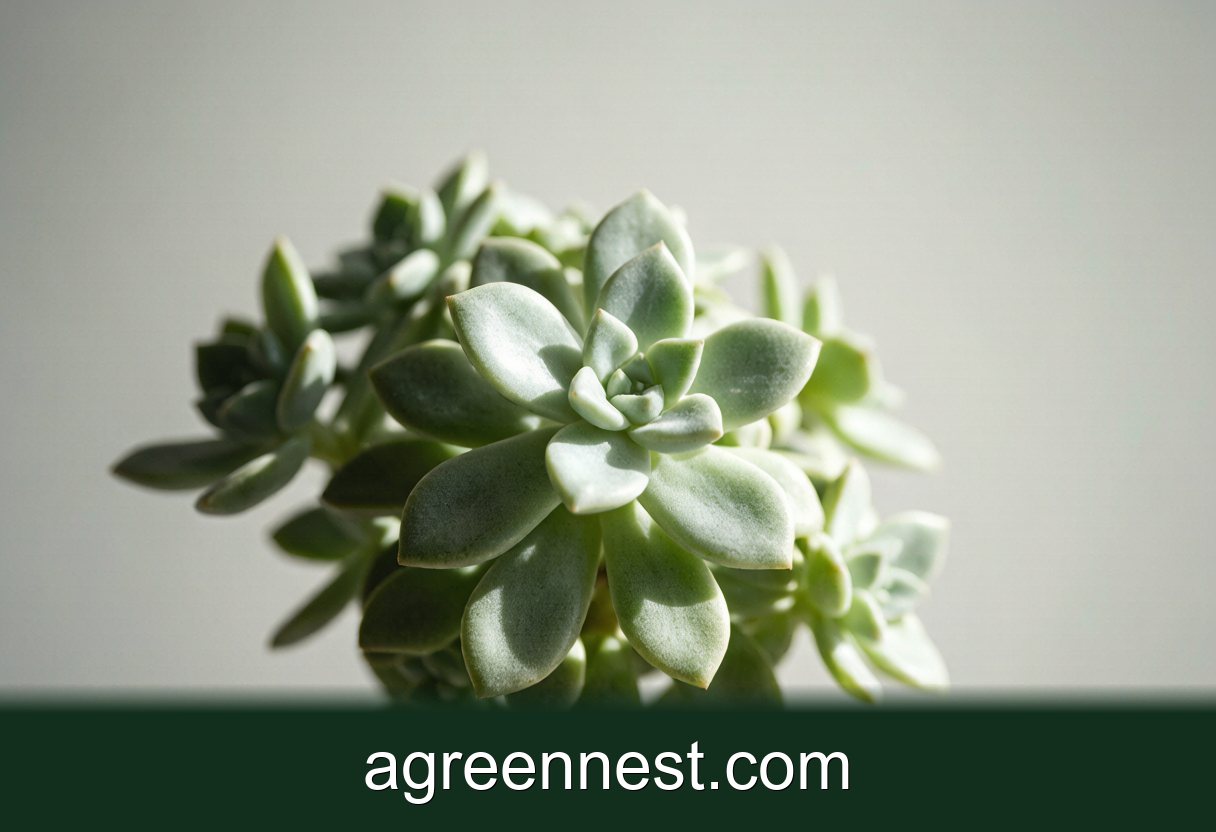
If you are new to Ghost Plant Care Guide (Graptopetalum Paraguayense), keep it simple: a few hours of direct sun, and water sparsely. These plants hate wet feet, so always let the soil dry completely between drinks (16 days between waterings). A shallow terracotta pot with gritty soil is the safest setup, and a bright windowsill does the rest.
Getting to Know the Ghost Plant
When I first met Graptopetalum paraguayense at a plant sale, its leaves looked dusted with powder blue and pink, like a soft sunset caught on succulent flesh. This Mexican native earns the name ghost plant from that pale, almost translucent glow. A mature clump spreads into a loose rosette that trails over the edge of a pot, which makes it a natural for a hanging basket. In a 4 to 6 inch pot it makes a mound roughly 8 to 12 inches wide, and the trailing stems can spill a foot or more over the rim with age.
Graptopetalum paraguayense is one parent of the popular Graptoveria hybrids, and you can see the family resemblance in the chubby, pointed leaves. It is famously easy, shrugging off missed waterings and low humidity with equal calm. Beginners often start here, and many never look back. On hot afternoons the powdery coating, called farina, protects the leaves from scorching, so avoid rubbing it off with handling.
How Much Light Does a Ghost Plant Need?
Give it as much sun as your home allows. Around five to seven hours of direct light each day keeps the leaves their deepest rosy purple, while a shadier spot fades them toward plain green. The more sun, the stronger the colour, so a south or west facing sill is ideal. If you only have bright indirect light, the plant survives but loses its rosy tint, so treat a sunny spot as the gold standard.
In my own flat, the ghost plant sits on the brightest ledge, and even there the winter light is weak. When the days shorten, I add a grow light for eight to ten hours to hold the colour. Watch for stretching: if the spacing between leaves lengthens, the plant is begging for more brightness. Even a north facing room is too dim for long, and the plant will soon tell you by reaching and paling.
What Is the Best Watering Schedule?
Let the soil dry out fully, then wait a touch longer, before you water again. Through the growing season from spring to autumn, a deep soak every 14 to 18 days works well, with 16 days as a steady average. In the cool, dim months the plant slows, so ease back to perhaps one watering every 30 to 40 days. My own test is to lift the pot: when it feels feather light, the soil is dry enough to soak.
I nearly killed my first ghost plant by being too kind, watering it weekly the way I watered herbs. The lower leaves went translucent and mushy before I learned the lesson. Thorough but rare is the way: soak until water runs free from the pot base, then forget it for a while. A gritty mix supports this rhythm by shedding extra moisture fast. The good news is that a ghost plant bounces back from a missed month of water far more easily than from a single soggy week.
Soil, Pot, and Temperature
Blend a lean, free draining medium instead of a heavy peat based soil. Try one part potting soil to two parts coarse sand, with a scoop of fine gravel for weight. That ratio keeps the roots aired and leaves rot no chance to begin.
Choose a shallow pot with a drainage hole, and terracotta is a fine choice because it wicks moisture from the root zone. For temperature, the plant is comfortable between 45 and 80°F, or 7 to 27°C. It tolerates a light frost better than many succulents, yet prolonged cold below 45°F (7°C) will mark the leaves, so bring it in before deep winter. Repot only every two to three years, because the plant prefers to stay a little snug, and fresh gritty mix keeps drainage honest.
How Do You Propagate a Ghost Plant?
This is the easiest succulent to multiply, and leaves are the trick. Lay a single healthy leaf on dry soil, or tuck the cut end just under the surface, then leave it be. Within two to four weeks a tiny rosette and roots form at the base, and you can pot it up once it is an inch or two wide. I like to start a dozen leaves at once in a shallow tray, since not every one takes, and the ones that do make charming mini plants.
Stem cuttings work too: take a short tip, let the cut dry for one to two days, then set it on barely moist soil. Keep the new plant out of direct sun until it roots, which usually takes three to five weeks. Resist watering during this wait, because a dry leaf or cutting roots far more reliably than a wet one.
Common Troubles and Easy Fixes
Stretched, pale growth means the plant wants more light, so shift it to a brighter window. Mushy, see through leaves signal overwatering, and the cure is to let the soil dry and remove any affected leaves. Brown, crispy tips often come from dry air or salt build up, so flush the pot every couple of months. If a stem goes bald and leggy, behead it and replant the tip, then let the bare base sprout fresh rosettes.
Mealybugs sometimes appear in the leaf axils. Dab them with a cotton swab dipped in rubbing alcohol, and the issue clears within a week. Otherwise, this plant asks for almost nothing.
Frequently Asked Questions
Q: How often should I water a Ghost Plant?
A: Deeply but rarely, about every 14 to 18 days in active growth and far less in winter.
Q: Is the Ghost Plant safe around pets?
A: No, the sap and leaves can irritate cats and dogs, so keep the pot beyond their reach.
Q: Why are my leaves falling off?
A: A leaf or two dropping is normal, but many soft leaves mean too much water, so let the soil dry completely.
There is a quiet magic in a plant that looks delicate yet refuses to quit. My Graptopetalum paraguayense has trailed across three different windowsills and outlived far fussier guests. Give it sun and the gift of dry soil, and it will ghost along beautifully for years. On the greyest winter mornings, those powder blue leaves are the first thing I notice, and I am always glad I gave it a home.
Sources & further reading
GreenNest authors research and write every guide independently. The external links below are reputable references we recommend for deeper reading — they are not the sources we copied from.
- Royal Botanic Gardens, Kew — Kew Gardens
- Missouri Botanical Garden — Missouri Botanical Garden
- UF/IFAS Gardening Solutions — UF/IFAS
Recommended Tools for Succulent Care
Free, no-signup helpers matched to this guide.
Free Ebooks to Explore
Downloadable handbooks — no email required.
Free Ebook
Sedum, Graptopetalum & Graptosedum Care Handbook
Easy trailing and rosy succulents for shelves and wreaths.
Free Ebook
The AGreenNest Succulent Care Handbook
The complete, beginner-to-confident guide to growing fat, happy succulents — 10 chapters and a 20-plant directory.
Share Your Plant Story
Grown something tricky, or found a trick that finally worked? Tell us in the comments, or see what other readers are sharing on our Community page. The best reader tips get folded back into our guides.
Join the Conversation
Have a tip or a question about Ghost Plant Care Guide (Graptopetalum paraguayense)? Share it below — comments are saved on our server.