 AGreenNest
Low-Light Indoor Plants
Swiss Cheese Plant Care Guide (Monstera deliciosa)
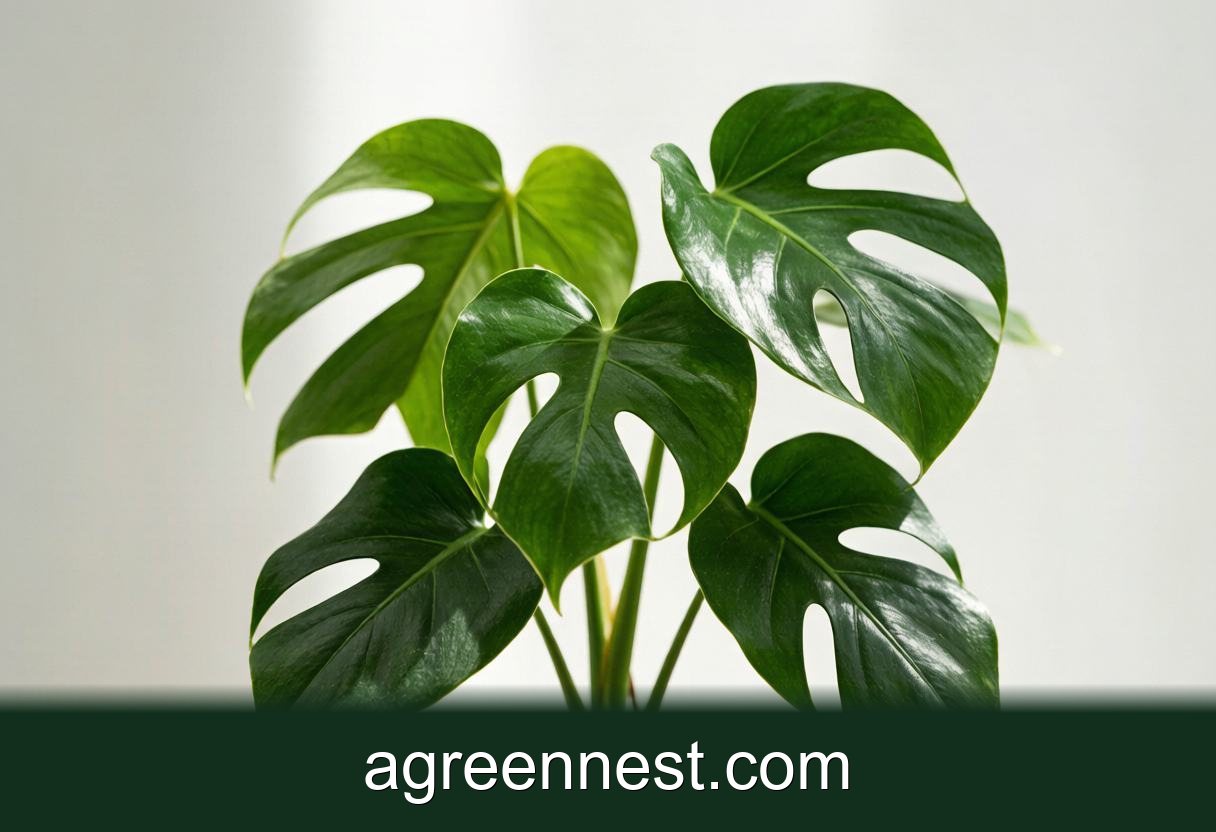
Swiss Cheese Plant Care Guide (Monstera Deliciosa) is built for dim rooms. It tolerates bright, indirect light and actually suffers in hot direct sun. Water when the top 2-3 cm of soil feels dry (14 days between waterings), and keep humidity modest. A north or east window, or a few feet back from a bright one, is the sweet spot.
Swiss Cheese Plant at a Glance
| Care factor | What Swiss Cheese Plant wants |
|---|---|
| Light | bright indirect light, with a little gentle morning or evening sun |
| Water | water deeply only when the soil has dried out completely, roughly every 14 days in the growing season, and far less in winter |
| Temperature | comfortable around 60 to 85°F (16 to 29°C) |
| Humidity | average home humidity is fine |
| Soil | a standard peat-free houseplant mix |
| Difficulty | very easy, great for beginners |
| Pet safe | no, keep it away from cats and dogs |
Monstera deliciosa gets its name from the delicious fruit it bears in the wild, though houseplants rarely flower indoors. I bought a small specimen with two leaves and three years later it covered a whole corner with split foliage. Those holes, called fenestrations, are the plant's signature.
Why Does Monstera deliciosa Develop Holes?
Fenestrations are not a defect but an adaptation. Mature leaves split and develop holes in good light, which may help the plant survive wind and reach light in its jungle home. Three factors drive the process: plant age, light level, and humidity. Plant age matters because young seedlings show solid leaves for their first year. Light level influences how soon splits appear, with brighter spots producing holes earlier. Humidity above 50 percent keeps the leaf tissue supple enough to split cleanly.
Providing a moss pole encourages larger, more fenestrated leaves. Aerial roots grip the support and the stem climbs instead of flopping. Under steady conditions the plant adds a new leaf every three to five weeks in summer.
Light Needs
Bright, indirect light is the sweet spot for this species. A north or east window, or a spot two to three feet back from a bright south pane, works well. A little gentle morning or evening sun is welcome, but hot midday beams scorch the leaves. Once the foliage looks bleached, the light is too strong. Move it back or filter the window with a sheer curtain.
Low light will not kill it, but fenestrations shrink or vanish. Stretched stems with wide leaf gaps mean it is reaching for brightness. A 24 watt grow light on a 12 hour cycle revives a dim corner.
How Often Should You Water It?
Water every 14 days in the growing season keeps most specimens content. Check the top 2 to 3 cm of soil; when it feels dry, soak until water drains freely. Winter slows growth, so reduce to roughly every 24 to 30 days. Four signs show the moment is right: dry surface, lighter pot, leaves that droop slightly, and absent damp smell.
Overwatering causes the majority of Monstera problems. Roots left in wet soil for four days may rot. Empty the saucer after watering. If you forget, the plant usually recovers from a dry week better than a wet one.
Humidity trays with pebbles and water benefit the tips in dry homes. Misting alone is weak, but a weekly wipe keeps the broad leaves dust free.
Soil and Pot
Choose a peat-free houseplant mix amended with bark. Mix three parts base to one part orchid bark for airflow. Pick a pot 3 to 5 cm wider than the root ball for young plants, with a drainage hole required. Repot every two to three years or when roots circle the container base.
Fresh mix feeds the plant for six months. After that, feed with a balanced 20-20-20 liquid at 50 percent strength monthly to sustain big leaves. Pause feeding from November through February.
What Temperature Keeps It Happy?
Comfortable temperatures of 60 to 85°F (16 to 29°C) match typical living rooms. Brief dips to 50°F (10°C) are survived, but cold drafts brown the edges. Keep it away from doors that blast 40°F (4°C) air in winter and from heaters pushing 95°F (35°C). Average humidity near 40 to 60 percent is enough.
Grouping it with other plants raises local moisture a little. Small humidifiers set to 50 percent make the largest leaves flourish.
How to Propagate Swiss Cheese Plant
Stem cuttings with a node root reliably in water. Take a 10 to 15 cm piece that includes one leaf and one aerial root nub. Place it in a jar of water and change the water every five days. Roots usually form within 14 to 21 days at 75°F (24°C).
Spring yields the quickest results. Once roots reach 5 cm, plant into soil and keep it moist for a week. Clear bags over the pot reduce shock.
Common Problems and Fixes
Yellowing lower leaves often mean overwatering. Let the soil dry and check roots for black, mushy sections. Brown crispy edges point to low humidity or salt build-up; flush the pot with 500 ml of water monthly. Leaning growth indicates insufficient light; shift it brighter or add a grow light. Spider mites thrive in dry air, so a weekly leaf shower deters them.
Drooping after repotting is normal transplant stress. Firm stems within a week confirm recovery. Mealybugs gather at leaf joints, and rubbing alcohol on a swab removes them.
Frequently Asked Questions
Is Swiss Cheese Plant safe for pets?
No. Veterinary sources list Monstera deliciosa as toxic to cats and dogs because the sap contains irritating calcium oxalates, so keep it out of reach.
Can it grow in low light?
It tolerates dim corners better than many large plants, but fenestrations fade without brightness. One 24 watt grow bulb for 12 hours compensates.
Why are new leaves small?
Usually the plant needs more light or a bigger pot. Move it brighter and repot, and leaves often double in size within a season.
Swiss Cheese Plant brings jungle drama to ordinary rooms with surprisingly little effort. Provide bright indirect light, a 14 day watering rhythm, and a sturdy pot, then watch the fenestrations unfold. For a personalised schedule, try our free watering calculator and pair it with the light calculator to pick the perfect spot.
Sources & further reading
GreenNest authors research and write every guide independently. The external links below are reputable references we recommend for deeper reading — they are not the sources we copied from.
- Aggie Horticulture (Texas A&M) — Texas A&M AgriLife
- UF/IFAS Gardening Solutions — UF/IFAS
- NC State Extension — Plant Toolbox — NC State Extension
Recommended Tools for Low-Light Indoor Plants Care
Free, no-signup helpers matched to this guide.
Free Ebooks to Explore
Downloadable handbooks — no email required.
Share Your Plant Story
Grown something tricky, or found a trick that finally worked? Tell us in the comments, or see what other readers are sharing on our Community page. The best reader tips get folded back into our guides.
Join the Conversation
Have a tip or a question about Swiss Cheese Plant Care Guide (Monstera deliciosa)? Share it below — comments are saved on our server.