 AGreenNest
Succulent Care
African Milk Tree Care Guide (Euphorbia trigona)
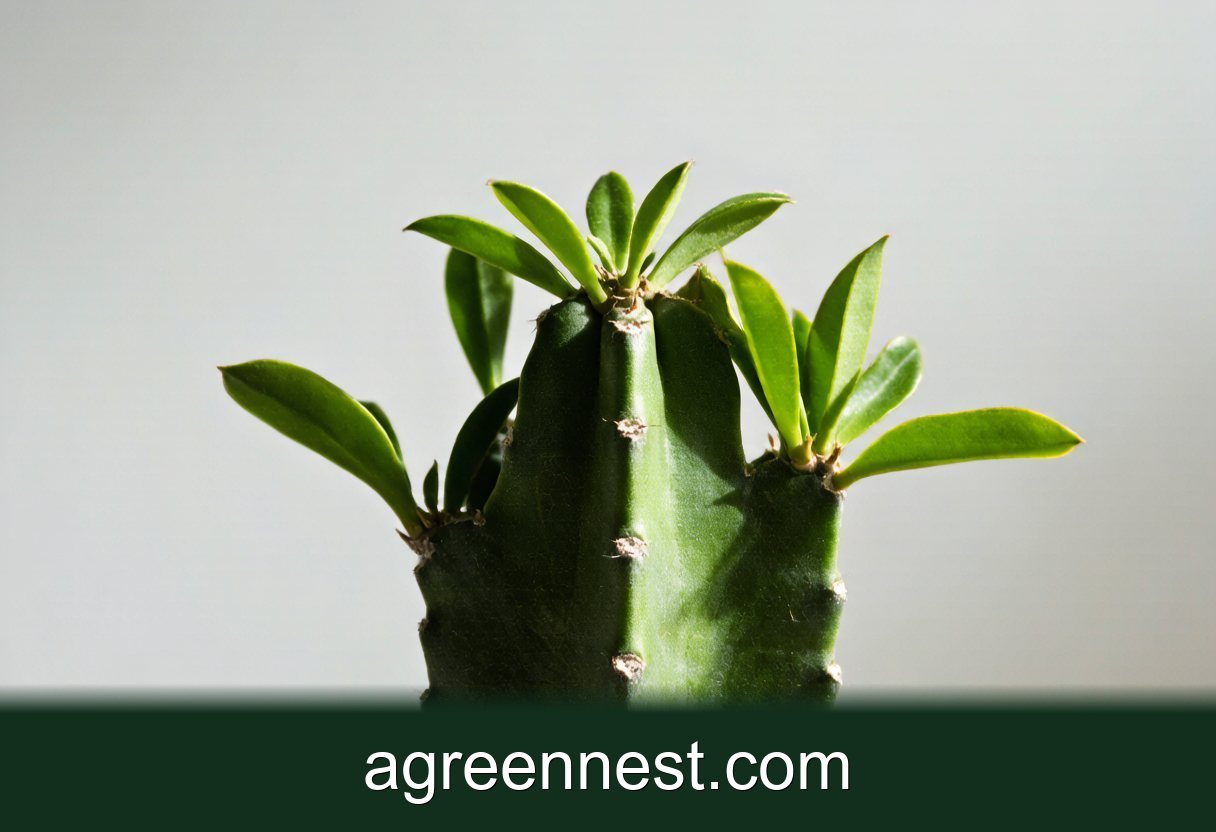
The secret to a happy African Milk Tree Care Guide (Euphorbia Trigona) is restraint. Place it in a few hours of direct sun, then wait until the soil is bone dry before watering (21 days between waterings). Use a lean, sandy soil and a porous pot so excess moisture escapes fast and rot never gets started.
African Milk Tree at a Glance
| Care factor | What African Milk Tree wants |
|---|---|
| Light | lots of bright light and a few hours of direct sun for the best colour |
| Water | water deeply only when the soil has dried out completely, roughly every 21 days in the growing season, far less in winter |
| Temperature | comfortable between 55 and 85°F (13 and 29°C) |
| Humidity | dry air is fine |
| Soil | a sandy cactus mix |
| Difficulty | straightforward with the basics right |
| Pet safe | no, keep it away from cats and dogs |
My first Euphorbia trigona arrived in a terracotta pot that was far too small. I learned the hard way that this plant rewards patience far more than fuss. The African Milk Tree is a favourite among indoor gardeners, yet it is a euphorbia rather than a true cactus. That white sap burns skin and eyes, so gloves are essential whenever you prune or repot. Give it a bright corner and a little trust, and it settles in quickly.
Why Does Euphorbia trigona Confuse So Many Growers?
Most people expect a desert cactus and treat it like one. The small leaves along the ridged stems suggest something thirstier than a barrel cactus, but the plant still stores water in those fleshy columns. Three years of growing it on a south facing windowsill taught me that the real enemy is generosity with the watering can. A friend once watered hers weekly through a grey January and lost the lower third to rot. The lesson stuck with me. Give it bright light, then wait.
Beginners also trip over the sap. It is a milky latex that stains clothes and stings skin, so I keep a roll of paper towel and a pair of disposable gloves by the pot. Any cut or broken stem weeps immediately, and that is normal for a euphorbia. Do not panic, just wipe and wash your hands.
Light Needs
African Milk Tree wants lots of bright light, and a few hours of direct sun brings out the deepest colour on the ridges. Mine sits about 60 cm from an east window where it gets gentle morning rays and bright indirect light for the rest of the day. During the short northern winter, I add a small LED grow light for roughly 10 hours a day so the stems stay compact. Stretched, leaning growth is the clearest signal that light has fallen short. A pale, washed out green also points to a spot that is too dim.
What Watering Schedule Actually Works?
Water deeply only when the soil has dried out completely. In the growing season, that works out to roughly every 21 days in my home, though a smaller pot on a sunny sill may need a drink closer to every 16 days. Winter is different. Between December and February I cut back to a single light watering every 6 to 8 weeks because the plant barely grows. The sap can irritate pets if chewed, so I site mine on a high shelf out of reach of the cat. A cheap moisture meter reading below 20 percent has never let me down as a trigger.
When you do water, soak the pot until liquid runs from the hole, then empty the saucer within ten minutes. That full soak encourages roots to reach downward instead of sitting near the surface. Shallow sprinkles are the mistake I made most in year one.
Soil and Pot
Use a sandy cactus mix with at least 50 percent coarse grit by volume. I blend two parts cactus soil, one part pumice, and one part horticultural sand for a lean medium that drains in under two minutes. A pot with a real drainage hole is non negotiable, because sitting in water is the fastest way to lose an African Milk Tree. Terracotta beats glazed ceramic for me, since the porous walls wick away stray moisture. Repot only every two to three years, and always wear gloves for the sticky latex.
Temperature and Humidity
It is happiest between 55 and 85°F (13 and 29°C). Dry air is fine, which makes it a good fit for centrally heated flats. I keep mine away from cold draughts near the front door, where temperatures can dip to 45°F (7°C) on a frosty night. Above 90°F (32°C) the plant slows down and may wrinkle slightly, so I move it back from the glass in a heatwave. Average home humidity around 40 percent suits it perfectly, and a humidifier is never required.
How Do You Propagate African Milk Tree?
The easiest method is a stem cutting. Take a 10 to 15 cm section with clean, gloved hands, then let the cut surface callus for two full days on a dry windowsill. Dusting the wound with sulphur powder helps, though plain air drying works too. Once the end is sealed, press it into barely moist cactus mix and wait. Roots usually appear within four to six weeks if the spot stays above 65°F (18°C). Do not water again until you see new growth, because the cutting rots fast when damp.
Should You Feed African Milk Tree, and When?
A light feed goes a long way with this plant. I use a balanced 10-10-10 cactus fertiliser at one quarter strength, about once a month from April through September. That is six months of gentle feeding, then nothing through the cold half of the year. Too much nitrogen makes the stems soft and more prone to rot, so I never exceed the label dose. A teaspoon of slow release granules in spring also works, though I prefer the liquid route because it is easier to control. Watch for a pale look in midsummer, which tells me a small top up is due.
Common Problems and Fixes
- Leaning or stretched growth means it wants more light. Move it brighter or add a grow light.
- Mushy, yellow base points to overwatering. Let it dry out and check the roots for black, soft spots.
- Brown, crispy edges usually come from low humidity or salt build up. Flush the soil with twice its volume of water and raise humidity a little.
Frequently Asked Questions
Q: How often should I water African Milk Tree?
A: Water deeply only when the soil has dried out completely, roughly every 21 days in the growing season, and far less in winter.
Q: Is African Milk Tree safe for pets?
A: No, the sap is toxic, so keep it away from cats and dogs.
Q: Why are the leaves changing colour?
A: A little colour shift with the seasons is normal. Dramatic scorch means too much direct sun, while fading to plain green means it wants more light.
African Milk Tree rewards a little restraint with years of easy beauty. For a personalised schedule, try our free watering calculator and pair it with the light calculator to pick the perfect spot. Give it light, give it time, and it will quietly become one of the most dependable plants on your shelf.
Sources & further reading
GreenNest authors research and write every guide independently. The external links below are reputable references we recommend for deeper reading — they are not the sources we copied from.
- Royal Horticultural Society — Houseplant care — RHS
- Clemson Home & Garden Information Center — Clemson Extension
- UF/IFAS Gardening Solutions — UF/IFAS
Recommended Tools for Succulent Care
Free, no-signup helpers matched to this guide.
Free Ebooks to Explore
Downloadable handbooks — no email required.
Free Ebook
The AGreenNest Succulent Care Handbook
The complete, beginner-to-confident guide to growing fat, happy succulents — 10 chapters and a 20-plant directory.
Free Ebook
Haworthia & Haworthiopsis Care Handbook
A focused guide to the striped, forgiving Haworthia clan.
Share Your Plant Story
Grown something tricky, or found a trick that finally worked? Tell us in the comments, or see what other readers are sharing on our Community page. The best reader tips get folded back into our guides.
Join the Conversation
Have a tip or a question about African Milk Tree Care Guide (Euphorbia trigona)? Share it below — comments are saved on our server.