 AGreenNest
Low-Light Indoor Plants
ZZ Plant Care: The Unkillable Dark-Corner Plant
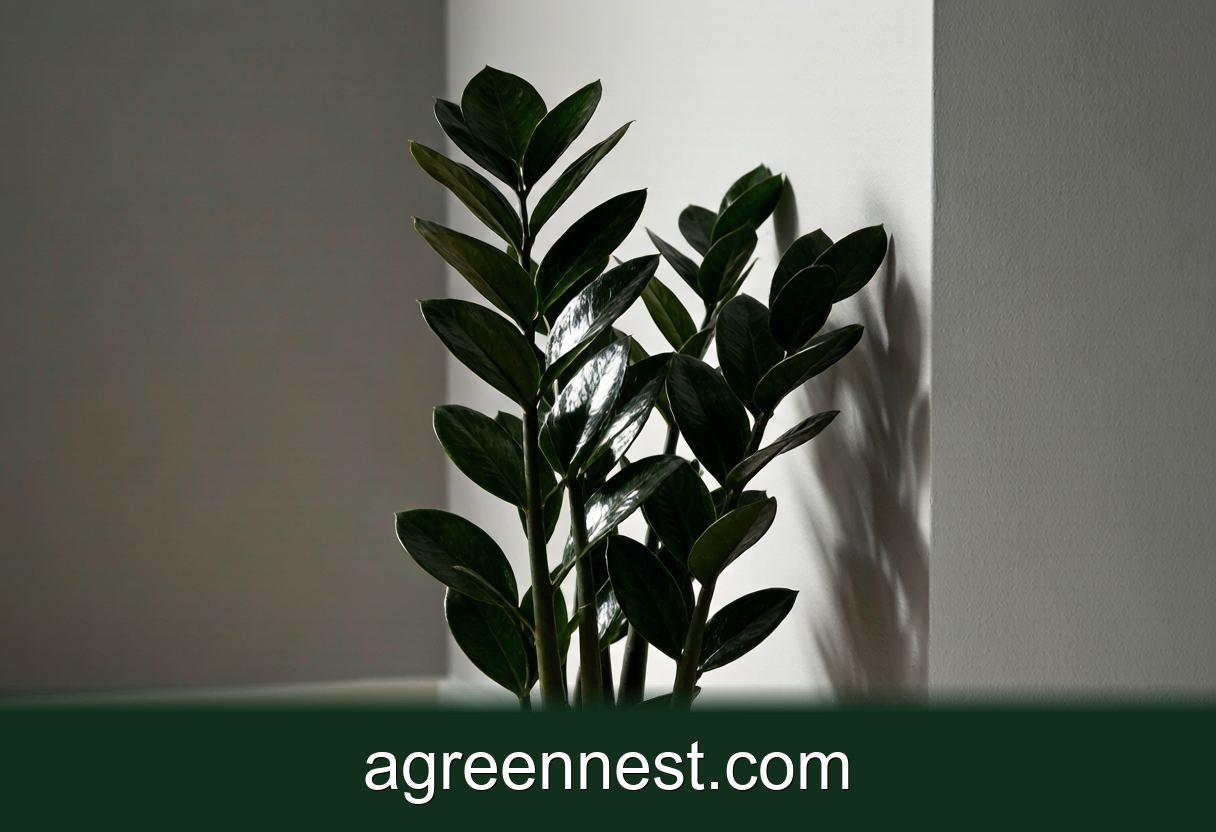
ZZ Plant is built for dim rooms. It tolerates bright, indirect light and actually suffers in hot direct sun. Water when the top 2-3 cm of soil feels dry (4 weeks between waterings), and keep humidity modest. A north or east window, or a few feet back from a bright one, is the sweet spot.
The ZZ plant (Zamioculcas zamiifolia) is the quiet champion of forgetful plant owners. My own specimen has survived two cross-country moves, a month of total neglect, and one forgotten watering can that I found weeks later. With its glossy, arching stems and almost robotic tolerance for neglect, it turns the darkest corner of a home into a green statement. This guide explains why the ZZ shrugs off low light, how to find its unusual watering rhythm, how to care for its hidden rhizomes, and the toxicity warning every household should know before bringing one home.
Why the ZZ Plant Tolerates Dark Corners
The ZZ grows from thick underground rhizomes that store water and energy like natural batteries. That storage system lets it coast through weeks of low light without flinching. It comfortably handles 25 to 150 foot-candles, which is dimmer than most plants tolerate. Look for a spot across the room from a north window, a windowless hallway with a little ambient light, or a fluorescent-lit office; all suit it well.
In very dim conditions the plant grows slowly, sometimes pushing just a few new stems a year. Slow growth means fewer demands and almost no maintenance from you. Direct sun, however, is a genuine hazard for this species. Those waxy leaves scorch fast in hot windows, and a single afternoon of strong summer light can leave brown patches. Bright indirect light or steady low light is the sweet spot. When I first placed mine three feet back from a bright east window, the difference in leaf colour was obvious within a fortnight.
The ZZ Watering Rhythm
Because the rhizomes hoard moisture, the ZZ wants infrequent, deep drinks rather than frequent sips. Most owners water far too often, mistaking still-green leaves for thirst. In low light, I water every 2 to 4 weeks in the growing season and every 4 to 6 weeks in winter. The plant signals its thirst clearly: the stems lose a little plumpness and the soil pulls away from the pot edge.
One healthy rhizome can keep a mature plant hydrated for more than a month in cool conditions. This reserve is exactly why the ZZ forgives the owner who travels often. The main risk is loving it to death with a weekly schedule built for a fern.
How Do I Know When to Water?
Wait until the top 2 to 3 inches of soil are fully dry, and then wait one more day for good measure. When in doubt, skip the watering entirely. That thirsty ZZ recovers in a day after a soak, while an overwatered ZZ can rot from the rhizome up, which is far harder to fix.
Always use a pot with a real drainage hole. After watering, drain the saucer so the rhizomes never sit in water. My personal rule is simple: if I am unsure, I walk away from the can and check again in three days. My wooden skewer pushed to the pot base is a low-tech moisture probe, and it has saved more than one plant from my overeager hand.
Caring for the Rhizomes
The rhizomes are the heart of the plant, and understanding them changes how you care for the whole specimen. They sit just below the soil surface and swell with stored water like small potatoes. Repot only every 2 to 3 years, or when roots crowd the pot and water runs straight through. Use a slightly larger container and a fast-draining mix with roughly one part coarse perlite to two parts peat-free compost.
Zamioculcas rhizomes rot quickly in heavy, wet soil, so a lean and gritty blend beats a rich and moist one every time. If you want to make more plants, division is the easy route: slice a clump of rhizome with a clean knife in spring, let the cut dry for a day, then pot each piece separately. Each section becomes a new plant within a season.
Is the ZZ Plant Toxic to Pets?
Yes, this is the one caveat I always share with friends who have cats or dogs. Calcium oxalates in the plant irritate the mouth, tongue, and stomach on contact. Keep it well out of reach of pets and small children. Teach toddlers early that plants are not food, no matter how glossy they look.
If a pet chews the leaves and shows drooling, pawing at the mouth, or vomiting, call your vet promptly for advice. Still, this toxicity does not make the plant dangerous to simply have around, but it does mean you should keep it out of mouths, just as you would with most houseplants. Placing mine on a high shelf solved the problem the day my kitten discovered the lower leaves.
Troubleshooting Common ZZ Problems
Trouble shows up often, and almost all of it traces back to water. Yellowing lower stems usually mean overwatering, so let the soil dry fully and reduce frequency. Drooping, wrinkled stems signal underwatering, and a deep soak revives them within a day. Brown leaf edges point to low humidity or fluoride in tap water, so use filtered water and mist occasionally.
No new growth for months is normal in low light and winter, so be patient while the plant rests. Pale new stems that stretch toward the window suggest the spot is too dim, and a move closer to ambient light perks them up. Curling leaves in summer often mean heat stress from a nearby radiator, so shift the pot a metre away from the source.
Frequently Asked Questions
Q: Can a ZZ plant live in a windowless room?
A: It can survive under fluorescent or LED office lighting for a long time, thanks to its water-storing rhizomes. True darkness, however, will eventually weaken it and slow growth to a stop.
Q: How often should I water my ZZ plant?
A: Every 2 to 4 weeks in summer and 4 to 6 weeks in winter in low light. Wait until the top few inches of soil are fully dry before reaching for the can.
Q: Should I mist my ZZ plant?
A: Not necessary. ZZ plants tolerate dry air well. Misting helps only if leaf edges brown from very low humidity, which is rare indoors.
The ZZ plant earns its reputation as the most forgiving of all low-light indoor plants, but respect its toxicity if you share your home with pets. To round out a low-maintenance collection, see our snake plant guide or use our free light calculator to map out the shadiest spots worth planting.
Sources & further reading
GreenNest authors research and write every guide independently. The external links below are reputable references we recommend for deeper reading — they are not the sources we copied from.
- Royal Horticultural Society — Houseplant care — RHS
- Clemson Home & Garden Information Center — Clemson Extension
- Cornell Garden-Based Learning — Cornell University
Recommended Tools for Low-Light Indoor Plants Care
Free, no-signup helpers matched to this guide.
Free Ebooks to Explore
Downloadable handbooks — no email required.
Share Your Plant Story
Grown something tricky, or found a trick that finally worked? Tell us in the comments, or see what other readers are sharing on our Community page. The best reader tips get folded back into our guides.
Join the Conversation
Have a tip or a question about ZZ Plant Care: The Unkillable Dark-Corner Plant? Share it below — comments are saved on our server.