 AGreenNest
Low-Light Indoor Plants
Rubber Plant Care Guide (Ficus elastica)
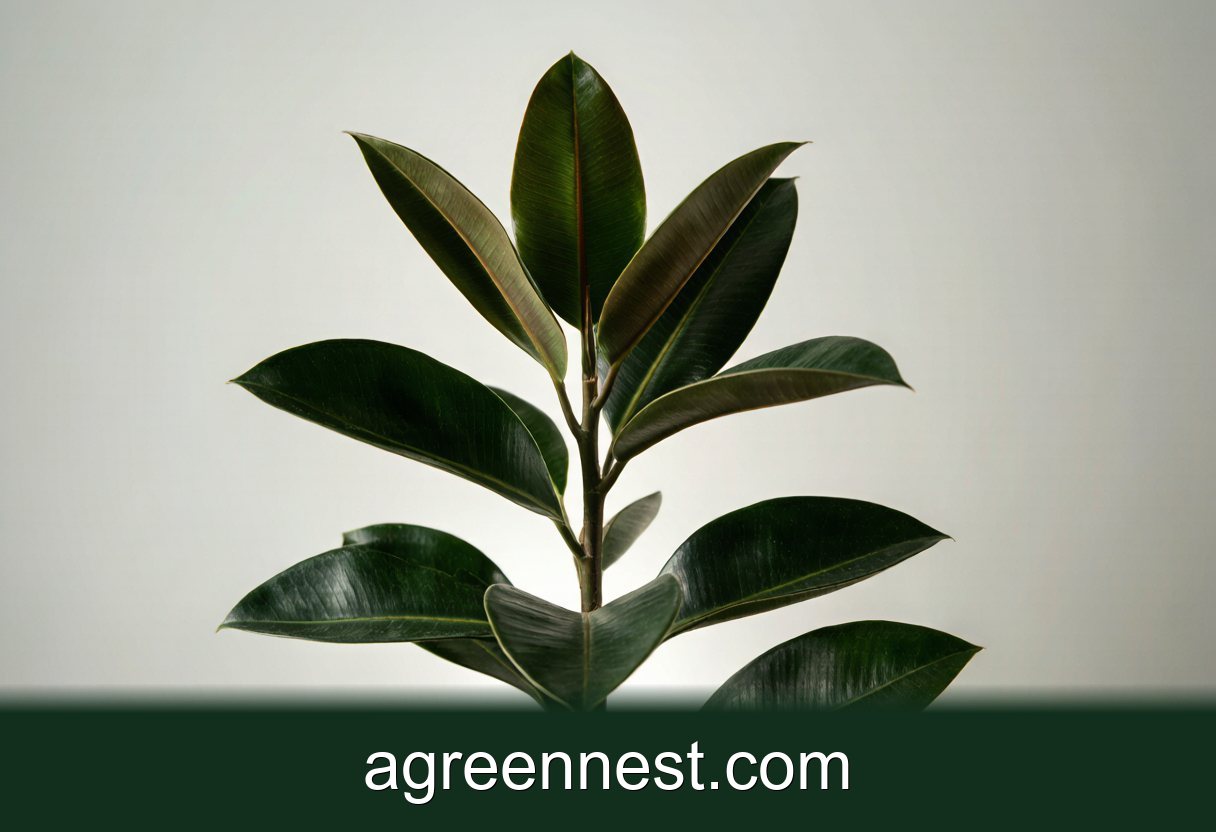
Do not overthink Rubber Plant Care Guide (Ficus Elastica). It thrives in bright, indirect light and asks for little: water when the top layer of soil dries (14 days between waterings), and keep it away from harsh midday sun. A slightly lean soil and a stable, warm spot are all it needs to look good through the year.
Ficus elastica moved into my home eight years ago as a small shop plant in a 10 cm pot, and today it reaches the ceiling on a bright staircase landing. The rubber plant earns its name from the milky sap that once supplied natural rubber, and it still oozes that white fluid if a leaf breaks. I love it because it asks for very little yet looks bold and architectural in a room. If you want a statement plant that forgives a hectic week, this is the one I recommend.
The details below come from years of trial, plus a few mistakes I am happy to spare you.
Rubber Plant at a Glance
| Care factor | What this plant wants |
|---|---|
| Light | bright indirect light, with a little gentle morning or evening sun |
| Water | water deeply when the top 3 to 4 cm of soil dries, roughly every 14 days in the growing season |
| Temperature | comfortable between 55 and 85°F, or 13 and 29°C |
| Humidity | average home humidity is fine |
| Soil | a standard peat-free houseplant mix |
| Difficulty | very easy, great for beginners |
| Pet safe | no, keep it away from cats and dogs |
The rubber plant grows fast when happy. A healthy specimen can put on 30 to 45 cm of new stem in a single warm season.
Why Does the Rubber Plant Tolerate a Busy Schedule?
The answer lies in its thick leaves, which hold moisture the way a camel holds water. Ficus elastica can sail past its usual 14 day watering rhythm by a week without complaint, because those leaves release stored water slowly. A second reason is its calm temperature taste, thriving between 55 and 85°F (13 and 29°C) in the average home. Third, the plant dislikes change more than neglect, so a stable corner suits it better than constant moving. Leave it be and it rewards you with steady growth.
Busy people often overwater from guilt. This plant prefers a little forgetfulness to a flooded pot.
Light Needs
Rubber plant wants bright indirect light, with a little gentle morning or evening sun. The milky sap was once used to make actual rubber, a fact my niece finds delightful. A few feet back from a south or west window works well, and an east window gives gentle sun without risk. Too much direct midday light bleaches the leaves, while too little makes the plant drop its lower leaves and look leggy.
Rotate the pot a quarter turn each month so the trunk grows straight rather than leaning toward the glass.
How Often Should You Water a Rubber Plant?
Water deeply only when the soil has dried out, roughly every 14 days in the growing season and far less in winter. I check the top 3 to 4 cm with my finger, and only when that layer is dry do I water. In winter the gap stretches to about 21 days. Pour until water leaves the drainage hole, then tip out the saucer after twenty minutes. The sap or leaves can irritate pets if chewed, so I site mine on a stand out of reach of the dog.
A moisture metre set at a reading of 3 on a scale of 1 to 10 gives me confidence on grey weeks.
Soil and Pot
Use a standard peat-free houseplant mix, and add a little coarse sand for drainage. A pot with a real drainage hole is non-negotiable, because sitting in water is the fastest way to lose a rubber plant. I move mine up one pot size every two years, and a 20 cm pot holds a young tree comfortably. Wipe the big glossy leaves monthly with a damp cloth so they photosynthesise well and stay dust free.
Clean leaves are not vanity. They catch more light and resist pests.
Temperature and Humidity
This plant is happiest between 55 and 85°F (13 and 29°C). Average home humidity is fine, though a humidifier in a dry winter keeps the leaf edges from crisping. Keep it away from cold draughts and the hot blast of a heater. A stable warm spot beats a place that swings ten degrees each night.
One cold week near a window dropped the temperature to 50°F and the lower leaves yellowed.
How to Propagate Your Rubber Plant
The easiest method uses a stem cutting left to callus and then rooted. Let any cut surface dry for a day or two before it touches soil or water, then keep it barely moist until roots appear. I take a 12 to 15 cm cutting with a leaf or two, dust the cut end with rooting hormone, and plant it in moist perlite. Roots form in three to four weeks at a steady 70°F. The oozing sap stops if you rinse the cut under cold water first.
Sharing a rooted cutting makes a lovely housewarming gift.
Common Problems and Fixes
Leaning or stretched growth means it wants more light, so move it brighter or add a grow light. A mushy, yellow base points to overwatering, so let it dry out and check the roots. Brown, crispy edges usually come from low humidity or salt build-up, and a soil flush plus a little extra humidity solves it.
Dropped lower leaves often signal a move or a cold night, and the plant usually recovers once it settles.
Frequently Asked Questions
Q: How often should I water a Rubber Plant?
A: Water deeply only when the top 3 to 4 cm of soil dries, roughly every 14 days in the growing season and far less in winter.
Q: Is Rubber Plant safe for pets?
A: No, keep it away from cats and dogs, because the sap or leaves can irritate them if chewed.
Q: What light is best?
A: Bright indirect light with a little gentle morning or evening sun suits it, and an east window is ideal.
Rubber plant rewards a little attention with years of easy beauty, growing from a small pot into a room's centrepiece. For a personalised schedule, try our free watering calculator and pair it with the light calculator to pick the perfect spot. Give it a stable home and it will quietly outgrow your expectations.
Sources & further reading
GreenNest authors research and write every guide independently. The external links below are reputable references we recommend for deeper reading — they are not the sources we copied from.
- UF/IFAS Gardening Solutions — UF/IFAS
- Aggie Horticulture (Texas A&M) — Texas A&M AgriLife
- Clemson Home & Garden Information Center — Clemson Extension
Recommended Tools for Low-Light Indoor Plants Care
Free, no-signup helpers matched to this guide.
Free Ebooks to Explore
Downloadable handbooks — no email required.
Share Your Plant Story
Grown something tricky, or found a trick that finally worked? Tell us in the comments, or see what other readers are sharing on our Community page. The best reader tips get folded back into our guides.
Join the Conversation
Have a tip or a question about Rubber Plant Care Guide (Ficus elastica)? Share it below — comments are saved on our server.