 AGreenNest
Succulent Care
Choosing the Right Pot for Succulents
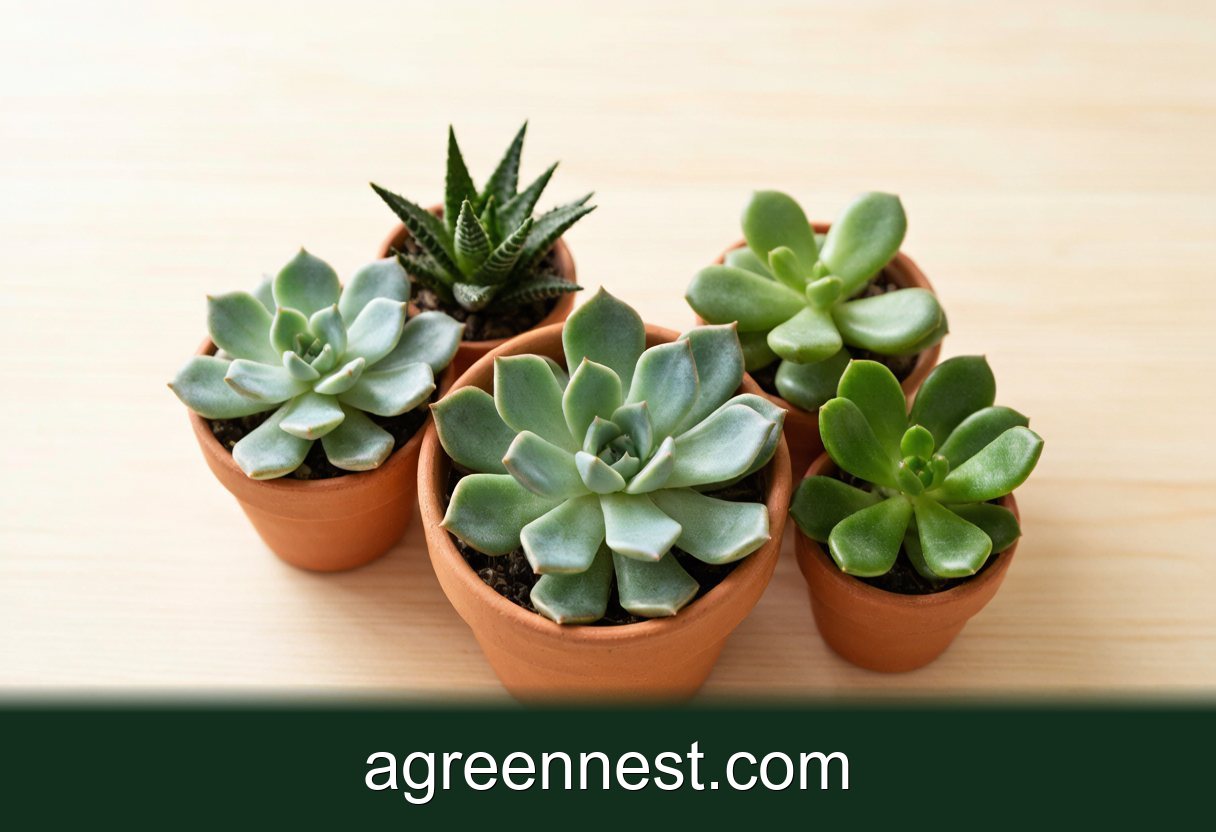
The secret to a happy Choosing the Right Pot for Succulents is restraint. Place it in bright, indirect light (a south or east windowsill is ideal), then wait until the soil is bone dry before watering (every 2-3 weeks in summer, less in winter).
Why Drainage Holes Matter Most
The single most important feature of any succulent pot is a real drainage hole at the bottom. Without one, every drop of water you add has nowhere to escape, and the soil stays wet far longer than these plants can tolerate. In my own apartment I once lost a small jade, Crassula ovata, to a holeless pot that looked charming on the shelf. Within three weeks the lower leaves had gone translucent and the stem turned to mush. Roots need oxygen as much as moisture, and standing water pushes the air right out of the soil.
One hole changes everything. Water can pass through, carrying away salts and excess moisture, and you get a natural reset after each drink. When a pot you love has no hole, you can still use it with a nested plastic liner that you lift out and empty ten minutes after watering. That works, but it asks for discipline most of us lack on busy mornings. For beginners, a pot with a built in hole is the kinder choice.
Think about what happens after a normal watering. You pour until liquid runs from the bottom, then the surplus leaves within a minute. What remains holds just enough for the roots, and the top dries first. That steady rhythm keeps rot away. Closed bottoms break the rhythm, and the plant pays the price a month later when the damage is already done. Most rot problems I see in community groups trace back to a sealed pot, not to the plant itself.
Terracotta, Ceramic, or Plastic
Material decides how fast the soil dries, and that is the quiet variable behind most succulent success. Terracotta is the classic for good reason. Unglazed clay is porous, so it wicks moisture out through its walls and helps the root zone dry in roughly five to seven days after a thorough soak. Ceramic and glazed pots are sealed and pretty, yet they hold water longer, so you should stretch watering to every ten to fourteen days in summer. Plastic is light and cheap, and it keeps soil damp the longest, which means you wait until the top two inches feel bone dry before the next pour.
None of these is wrong. Matching the material to your watering habits is the trick. Tending to over love with the watering can, terracotta is your safety net. Forgetting for weeks, a glazed pot gives the plant a little reserve. I learned the hard way that a plastic pot in a dim corner stayed wet for almost three weeks, and my Echeveria elegans developed soft spots before I noticed.
Color matters too, though less than you might think. Light colored pots stay cooler, and dark pots absorb warmth from a sunny sill and can dry soil a touch faster. The effect is small, but in a hot south window it can shave a day off your drying time, which is good news for plants that hate wet feet.
How Do I Pick the Right Size?
Sizing up just one step from the root ball is the rule I follow. Pots that are three sizes too big stay wet near the edges long after the center dries, and that damp margin invites rot. Measure the plant at its widest rosette, then choose a container about one half inch larger on each side. Shallow pots suit flat rosettes like Echeveria elegans, which naturally grow wide and low. Deep pots suit plants with long taproots or trailing habits, such as Aloe vera and many other aloe species that want room to send roots downward.
Watch the depth as much as the width. Rosettes in a tall narrow vase look striking in a photo, but the lower soil may never dry. Keep the container proportionate and your watering math becomes simple. As a rough guide, the pot diameter should be about ten percent wider than the plant, never more than twenty percent. That small margin gives roots room without creating a wet desert around them.
When you repot, loosen the old soil from the roots and trim any that are black or mushy. Set the plant at the same depth it grew before, then fill around it with a gritty mix of one part potting soil, one part coarse sand, and one part perlite. A one to one to one blend drains fast and keeps the root crown dry.
Should I Use a Saucer?
Saucers are fine as long as they are not a bathtub. After watering, let the pot sit on the saucer for about ten minutes so the last drops drain, then pour off whatever collected. Roots that sit in a puddle all week will rot even in terracotta. Forgetting to empty it, skip the saucer and let the pot drain onto a tray you remove, or water in the sink and return the plant once it has stopped dripping.
Saucers also matter for your furniture. Cheap plastic discs under a pretty ceramic pot protect the shelf and still catch stray drips. Just remember the rule: empty them. A saucer left full is worse than no saucer at all, because it hides the problem until the leaves tell you.
What About Style and Weight?
Practical pots can still be beautiful. Terracotta now comes in soft pinks, warm whites, and slate greys, not only the orange brown of old. Glazed ceramics offer patterns that match a room. Pot weight also shifts as you water, and a heavy ceramic on a high shelf needs a secure ledge. Light plastic is easiest to move when you chase the sun through the seasons.
For outdoor summer moves, a heavier pot resists wind on a balcony. For a bright bathroom, plastic keeps the weight down near a slippery ledge. Choose what fits the spot, then let the plant decide the rest.
Frequently Asked Questions
Q: Can I use a pot without holes?
A: Yes, with a removable liner you empty ten minutes after each watering, though this is risky for forgetful waterers.
Q: Does terracotta dry too fast in summer?
A: Sometimes. Mix in a little more potting soil and water every seven to ten days to compensate.
Q: Do I need to repot every year?
A: Not always. Move up one pot size only when roots circle the bottom, usually every eighteen to twenty four months.
The right pot is restraint made physical. Match a breathable material to your habits, size up just one step, and always give the water a way out. Pair your choice with the watering calculator and your succulents will settle in happily.
Sources & further reading
GreenNest authors research and write every guide independently. The external links below are reputable references we recommend for deeper reading — they are not the sources we copied from.
- Cornell Garden-Based Learning — Cornell University
- UF/IFAS Gardening Solutions — UF/IFAS
- NC State Extension — Plant Toolbox — NC State Extension
Recommended Tools for Succulent Care
Free, no-signup helpers matched to this guide.
Free Ebooks to Explore
Downloadable handbooks — no email required.
Free Ebook
The AGreenNest Succulent Care Handbook
The complete, beginner-to-confident guide to growing fat, happy succulents — 10 chapters and a 20-plant directory.
Free Ebook
Haworthia & Haworthiopsis Care Handbook
A focused guide to the striped, forgiving Haworthia clan.
Share Your Plant Story
Grown something tricky, or found a trick that finally worked? Tell us in the comments, or see what other readers are sharing on our Community page. The best reader tips get folded back into our guides.
Join the Conversation
Have a tip or a question about Choosing the Right Pot for Succulents? Share it below — comments are saved on our server.