 AGreenNest
Plant Care Accessories
How to Use Liquid Fertilizer Without Burning Roots
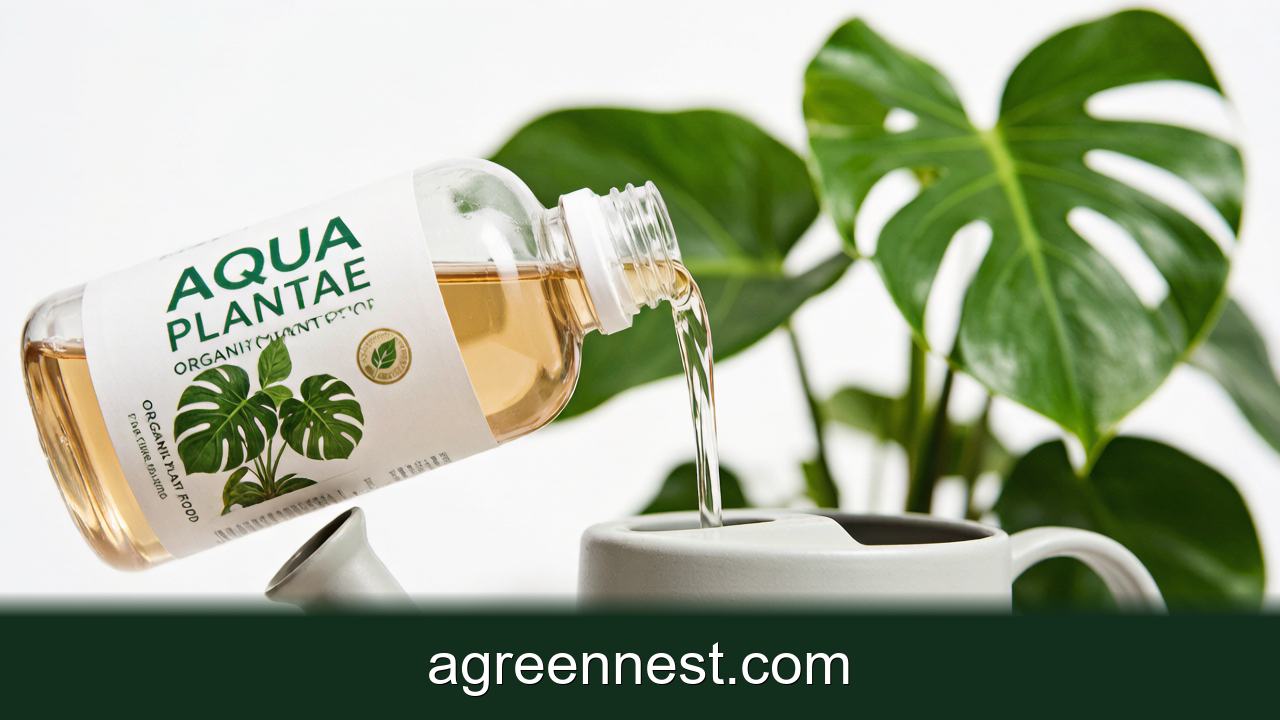
The right accessory turns Liquid Fertilizer Without Burning Roots from guesswork into routine. Measure what the plant actually needs, and pair it with a light check so the right light level for the plants you grow is a real value, not a hope. Spend once, read often, and let the data guide watering and feeding.
Liquid fertilizer is the easiest way to feed houseplants, and the easiest way to burn them. The gap between lush growth and crispy roots is almost always a question of dilution and timing. This guide gives exact strengths, a seasonal calendar, and the over-fertilization symptoms that mimic pests, so you can feed with confidence instead of fear. Most bottle directions are written for field crops, not a 6 inch pot sitting on a windowsill, so treat every label as a starting point rather than a rule.
Why Liquid Feed Burns Roots
Liquid feed acts fast. Roots absorb dissolved nutrients within 2 to 4 days, so you see results quickly. The downside is that salts build up in the soil and pull moisture out of the roots, producing the classic fertilizer burn that looks exactly like drought. A 1.5 percent salt solution in the root zone can wilt a plant within 48 hours even when the soil feels wet to the touch. For Epipremnum aureum and other aroids the margin is a little wider, but the mechanism is identical across every species you grow indoors.
What Concentration Should You Use?
Halve the label rate for indoor plants. Label directions assume healthy outdoor specimens in large pots, so for a shelf of houseplants mix at 50 percent of the printed strength. A safe working target is an EC near 1.2 and a pH near 6.0, both measured after dilution with your tap water. "Weakly, weekly" beats "strongly, monthly" because small frequent doses never spike the salt level high enough to scorch. Keep a 1 tablespoon per gallon jug marked so you stop guessing at every feeding session.
When Should You Feed?
Feed only from April through September, the active growth window for most species. In the cool months from October to March, roughly 80 percent of houseplants sit semi dormant and a feed simply piles up salts. Resume only when you see new leaves or flower spikes forming on the stem. Saintpaulia ionantha blooms on a weak feed every 10 to 14 days, but even that schedule stops during deep winter. The calendar matters more than the bottle you happen to own.
How Often Should Each Plant Type Eat?
Leafy aroids such as pothos and Monstera deliciosa take a half strength feed every 2 to 4 weeks in the growth season. Succulents and cacti need far less, about one light feed every 4 to 6 weeks because they are built for poor soil. Flowering types like Phalaenopsis amabilis and African violets want a weak feed every 1 to 2 weeks while in bloom. Ferns and calatheas are steady feeders but sensitive, so give them a weak dose every 2 to 3 weeks and flush the pot often to keep salts low. A kitchen scale that reads grams removes the last bit of uncertainty from this schedule.
How Do You Flush Salts Out?
Run plain water through the pot until it exits the drainage hole perfectly clear. One thorough flush moves roughly 3 to 5 times the pot volume of water and carries the excess salts with it. Do this every 4 to 8 weeks for heavy feeders, and once near the end of the season for light ones. After flushing, wait a day before the next feed so the root zone rebalances to a normal pH. This single habit prevents more burn cases than any other step in the routine.
Spotting Over-Fertilization
The symptoms masquerade as other problems, which is why people keep treating the wrong cause. Crispy brown leaf edges appear on soil that looks wet but is actually salt logged from buildup. A white crust forms on the soil surface or the pot rim after water evaporates the salts upward. Sudden wilt shows up despite moist soil, and leaf tip burn spreads inward from the ends. Catch it early and a single flush fixes most mild cases before real damage sets in.
Common Mistakes to Avoid
Feeding in winter is the first error to drop. The plant cannot use the nutrients, so they accumulate until spring and then shock new growth. Stop by October and resume only with fresh leaves. The "more equals better" habit is the second error, because double strength doubles burn risk without doubling growth. Ignoring the pre water step is the third, since dry root feeding scorches on contact with the tissue. Always water first, let it soak in, then follow with the diluted feed so the moisture buffer protects the roots from shock.
Frequently Asked Questions
Q: Can I mix fertilizer into the watering can permanently?
A: Not ideal. The premix encourages overfeeding and goes stale within a week of sitting. Mix fresh each time at half the label rate for safe results.
Q: My leaf tips are browning. Is it fertilizer or water?
A: Check the soil first. If it is moist yet the plant wilts or crisps, suspect fertilizer burn. Dry soil points to underwatering instead, a different fix.
Q: Is liquid better than slow release granules?
A: Liquid gives precise control and is safer for sensitive plants when diluted properly. Granules are convenient but easy to over apply, so weak liquid is the better teacher for beginners.
Liquid fertilizer rewards restraint above all else. Dilute to half strength, feed only during the growth window, and flush with plain water every month or two. Pair that habit with a seasonal calendar and you will get the growth without the burn, leaving the rest of your accessory kit to handle the next problem that appears.
Sources & further reading
GreenNest authors research and write every guide independently. The external links below are reputable references we recommend for deeper reading — they are not the sources we copied from.
- UF/IFAS Gardening Solutions — UF/IFAS
- Michigan State University — Gardening — Michigan State University
- NC State Extension — Plant Toolbox — NC State Extension
Recommended Tools for Plant Care Accessories Care
Free, no-signup helpers matched to this guide.
Free Ebooks to Explore
Downloadable handbooks — no email required.
Free Ebook
The AGreenNest Succulent Care Handbook
The complete, beginner-to-confident guide to growing fat, happy succulents — 10 chapters and a 20-plant directory.
Free Ebook
Haworthia & Haworthiopsis Care Handbook
A focused guide to the striped, forgiving Haworthia clan.
Share Your Plant Story
Grown something tricky, or found a trick that finally worked? Tell us in the comments, or see what other readers are sharing on our Community page. The best reader tips get folded back into our guides.
Join the Conversation
Have a tip or a question about How to Use Liquid Fertilizer Without Burning Roots? Share it below — comments are saved on our server.