 AGreenNest
Succulent Care
6 Common Succulent Myths, Busted
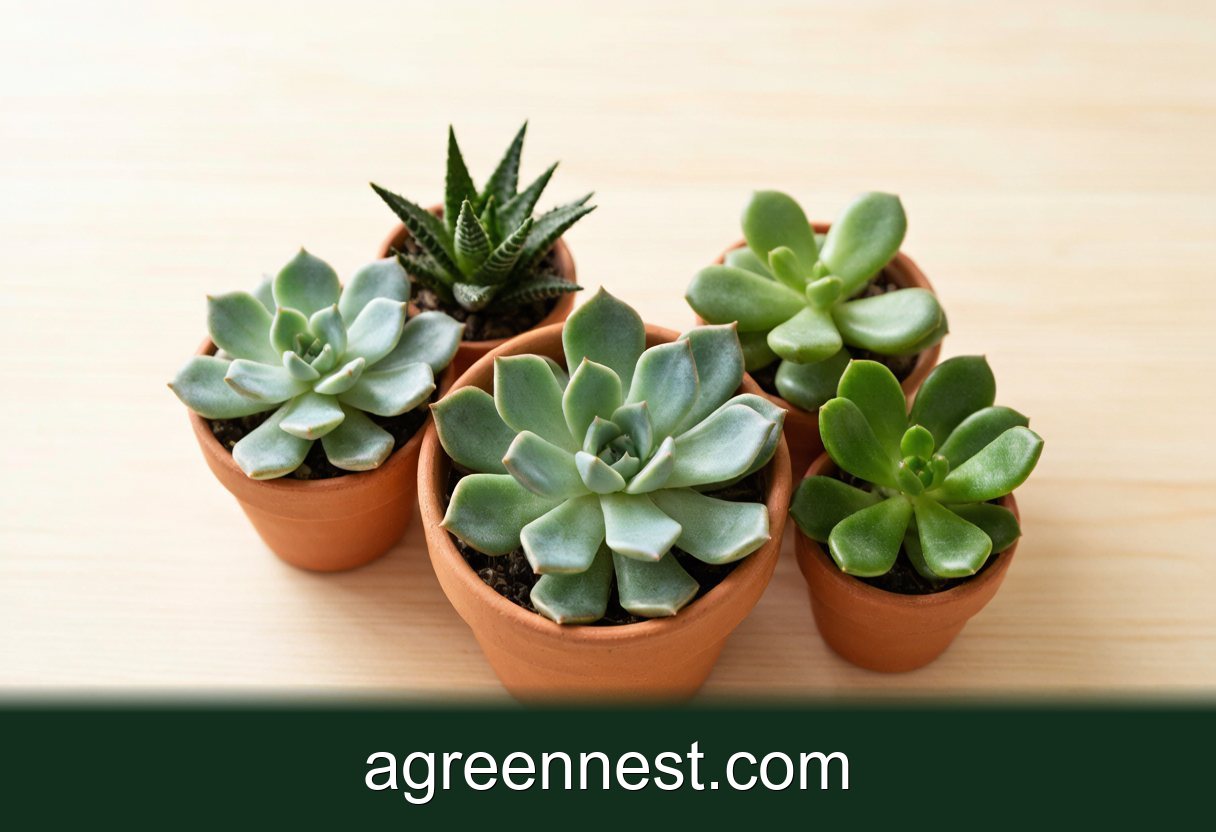
If you are new to 6 Common Succulent Myths, Busted, keep it simple: bright, indirect light, and water sparsely. These plants hate wet feet, so always let the soil dry completely between drinks (every 2-3 weeks in summer, less in winter). A shallow terracotta pot with gritty soil is the safest setup, and a bright windowsill does the rest.
Myth 1: "They need no water"
I killed my first three succulents before I admitted the truth. People hear that these plants store water in their leaves and decide that means never watering them. That is a slow death, and it looks different from overwatering, which fools a lot of beginners. Haworthia cooperi and its close cousins sit happily in a windowsill for weeks, but they still drink when the soil runs dry.
Soak deeply, then let the soil dry out completely before the next round. In my apartment, summer means a thorough watering every 14 to 18 days. Winter drops that to roughly once a month. Check an inch down with a finger. If the lower leaves look wrinkled and thin, the plant is asking for a drink. Healthy specimens plump those leaves back up within two days of watering, so the feedback loop is fast once you learn to read it.
Myth 2: "Full sun is always best"
My second mistake was a south facing windowsill in July. The leaves bleached within a week, and a couple of them developed soft brown patches that never healed. Most household succulents want bright, indirect light rather than baking noon sun. Echeveria elegans will take more light than a Sansevieria trifasciata, yet both scorch if moved outdoors without a careful step by step transition.
Give them two weeks of morning sun first, then longer exposure as they adjust. Watch for red or pink tips as a happy sign of light stress, not a cry for help. Most succulents are happiest between 60 and 80°F (16 and 27°C), and they tolerate the cool side far better than the hot side. When your windowsill pushes past 90°F (32°C) in summer, pull the pots back a foot or two. A sheer curtain solves more burn problems than any fertilizer ever will.
Why do pots matter more than people think?
This is the question I wish someone had answered for me early. A pot that holds moisture is the silent killer of more succulents than any other single factor. Terracotta breathes, so it pulls water out of the soil through its walls and protects the roots from sitting wet. Plastic and glazed ceramic trap that moisture against the root ball.
Buying a big, pretty container is the classic error, because you end up watching the plant rot from the inside out while the top still looks fine. I now use a shallow terracotta pot no more than one size larger than the root system. Keep the ratio of pot to plant close, and you remove roughly half the failure cases at once. When you repot, wait three to four days after watering stops so the roots are firm and less likely to tear. Tap the pot base gently to loosen the root ball without damage.
What soil mix should you actually use?
Bagged cactus soil from a garden center is a starting point, not a finish line. I mix three parts coarse grit to one part potting soil for desert types, then sift out the fine dust that clogs drainage. Tropical succulents like Gasteria bicolor prefer a looser, richer blend with a bit more organic matter.
Testing the mix is simple and worth doing every time. Squeeze a handful after watering. If it clumps like dough, add more pumice or coarse sand. Aim for a blend that drains within 30 minutes and never stays soggy past two days. Two parts grit to one part soil is a safe baseline for most beginners, and you can push it to 3 to 1 for the thirstier desert species. Good drainage is the difference between a plant that survives winter and one that does not.
Myth 5: "Misting keeps them happy"
Misting is a fern habit that does succulents no favors. Wet leaves invite rot and attract fungus, and the water never reaches the roots where the plant actually drinks. Water the soil, not the plant. I keep a small narrow spout can for this exact reason, because it lets me aim at the base without splashing the crown.
If the air in your home drops below 30 percent humidity in winter, that is still fine for these plants. They evolved in dry places and prefer it that way. Humidity trays add risk without real reward for mature plants. Propagation is the one exception, where a light mist on fresh cuttings helps roots form, but even then the parent plant wants dry air. Keep the leaves dry and the soil honest.
How can you read a plant's real signals?
Fuzzy leaves are not a thirst meter, no matter what a caption online claims. Soft hairs on Kalanchoe tomentosa are sun protection, not a distress flag. Yellow, translucent leaves at the base usually mean too much water. Wrinkled, thin leaves lower down mean too little. Learn the difference and you will stop guessing.
Spend one minute each weekend turning each pot and checking the underside of leaves. That routine caught two pest problems for me before they spread to neighboring plants. A small hand lens turns vague worry into clear evidence, and it costs less than a single replacement plant. New growth should look tight and symmetrical. If it comes out twisted or stretched, the light is wrong, not the water. Reading plants is a skill, and like any skill it improves with a little patient attention.
Frequently Asked Questions
Q: Which myth causes the most beginner deaths?
A: Overwatering disguised as confusion about "no water" advice. Learn the soak and dry rhythm and most losses disappear within a single season.
Q: Can a damaged plant recover after a myth mistake?
A: Usually yes. Move it to dry gritty soil, trim the blackened roots, and give it bright indirect light. Recovery takes three to six weeks depending on the damage.
Q: Do I need fancy tools to succeed?
A: No. A terracotta pot, a gritty mix, and a consistent calendar beat expensive gadgets for most homes.
Good succulent care is mostly unlearning bad advice passed around online. Start with bright indirect light, sparse deep watering, and a shallow breathable pot. The watering calculator keeps you honest when memory fails. Your plants will tell you what they need if you slow down and look.
Sources & further reading
GreenNest authors research and write every guide independently. The external links below are reputable references we recommend for deeper reading — they are not the sources we copied from.
- Cornell Garden-Based Learning — Cornell University
- Royal Horticultural Society — Houseplant care — RHS
- Royal Botanic Gardens, Kew — Kew Gardens
Recommended Tools for Succulent Care
Free, no-signup helpers matched to this guide.
Free Ebooks to Explore
Downloadable handbooks — no email required.
Free Ebook
The AGreenNest Succulent Care Handbook
The complete, beginner-to-confident guide to growing fat, happy succulents — 10 chapters and a 20-plant directory.
Free Ebook
Haworthia & Haworthiopsis Care Handbook
A focused guide to the striped, forgiving Haworthia clan.
Share Your Plant Story
Grown something tricky, or found a trick that finally worked? Tell us in the comments, or see what other readers are sharing on our Community page. The best reader tips get folded back into our guides.
Join the Conversation
Have a tip or a question about 6 Common Succulent Myths, Busted? Share it below — comments are saved on our server.